On This Page
If there is a silver oak tree on your boundary, or a nursery has offered you saplings, the question is usually the same: is it worth anything? Most pages on this tree say it is fast-growing and stop there. This one gives the growth figures, the rotation age, what sawn silver oak lists for this month and the Karnataka felling rule, with every source named.
Silver oak (Grevillea robusta) is a fast-growing Australian tree that adds at least 2 m in height and about 2 cm in diameter a year when young, and is usually cut between 10 and 20 years. Its wood is light and low in durability, so it sells mainly into packing cases, shuttering and cores for utility plywood, which is why one tree fetches modest money. In Karnataka you can fell it on private land without permission, and it earns its place as a boundary, shade and windbreak tree rather than a main crop.
Silver oak at a glance
| Detail | What the sources say |
|---|---|
| Botanical name and family | Grevillea robusta, family Proteaceae. Not a true oak (Fagaceae) |
| Origin | Endemic to eastern Australia |
| Other names | Southern silky oak, silk oak, Australian silver oak |
| Typical height | 8 to 40 m |
| Height growth when young | At least 2 m a year, about 3 m a year on the best sites |
| Diameter growth | At least 2 cm a year in the first few years. 1.31 cm a year measured across 2008 to 2010 in Kodagu coffee farms |
| Typical rotation | Firewood rotations of 10 to 20 years. Growth declines after about 20 years |
| Wood density | 540 to 720 kg/m3 at 15% moisture, about 570 kg/m3 at 12% |
| Durability | Hard and elastic but low in strength. Moderately to non-durable. Sapwood liable to borer and termite attack |
| Silver oak tree uses | Packing cases, tea chests, cores for utility plywood, shuttering, panelling, light furniture, flooring, turnery, firewood |
| Karnataka felling permission | Exempt from felling permission on private land under the Karnataka Preservation of Trees Act, 1976 |
| Planting density | 800 to 1,200 trees per hectare at 2.5 to 3 m by 3 to 4 m spacing, about 324 to 486 trees per acre |
| Sawn timber listings | ₹380 to ₹495 per cubic foot, October 2026 |
What is a silver oak tree, and is it really an oak
No, it is not an oak. The silver oak tree is Grevillea robusta, a member of the Proteaceae family and endemic to eastern Australia. True oaks sit in a different family, Fagaceae, so advice written for oak trees does not apply to this one.
It also goes by southern silky oak, silk oak and Australian silver oak. Mature trees run 8 to 40 m tall, with fern-like leaves that are paler and silvery on the underside, which is where the name comes from.
The silver oak tree in India is planted far beyond its native range, widely enough to be taken for a local species. A study of farms in Kodagu recorded it as the species farmers mentioned most often across more than 100 tree-planting instances recalled over two decades. Weighing it against other timber species starts with which timber trees are worth planting, or with tree and fruit crops compared on what they pay. The first thing most owners want to know is how fast it puts on size.
How fast does silver oak grow
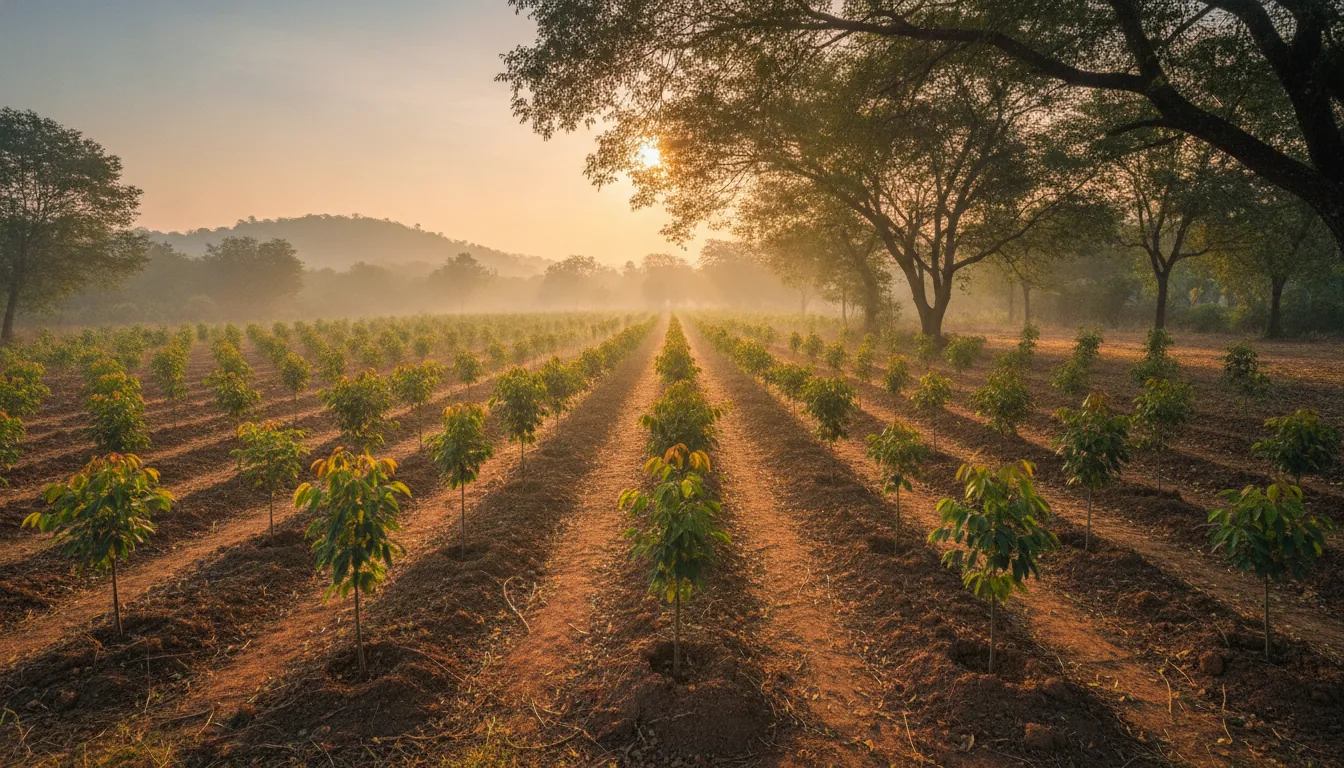
Silver oak grows fast. On farms in row planting it typically adds at least 2 m in height and 2 cm in diameter a year during its first few years, and about 3 m a year in height has been recorded on the best sites.
Measured growth over a longer run is lower. A field study of Kodagu coffee farms between 2008 and 2010 put average diameter growth at 1.31 cm a year, 1.37 cm in the eastern zone and 1.24 cm in the western. That was the highest of five shade species measured, and the best long-term growth in both zones.
It is not fussy about where it sits: sea level to 2,300 m, 600 to 1,700 mm of rainfall a year, well-drained mildly acidic to neutral soils, loam best of all. Melia dubia, the other fast-growing timber is planted in Karnataka for much the same reason. Speed is not the same as a sale, which brings up when the tree is ready.
When is a silver oak ready to cut
There is no single felling age. The World Agroforestry Centre puts firewood rotations at 10 to 20 years, yielding about 5 to 15 cubic metres of wood per hectare a year, and reports that growth declines after about 20 years.
Figures online range from 6 to 30 years, usually with no source. Trees first flower at about six years, which is not the same as a merchantable log. No single merchantable age appears here, because no verifiable source gives one for Indian conditions.
Waiting longer gets you a bigger log. It does not change what the wood is good for, and that is what sets the price.
What is silver oak wood used for
Silver oak wood goes mainly into packing cases, tea chests, cores for utility plywood, shuttering, panelling, light furniture, flooring, turnery and firewood. It is a working timber rather than an heirloom one.
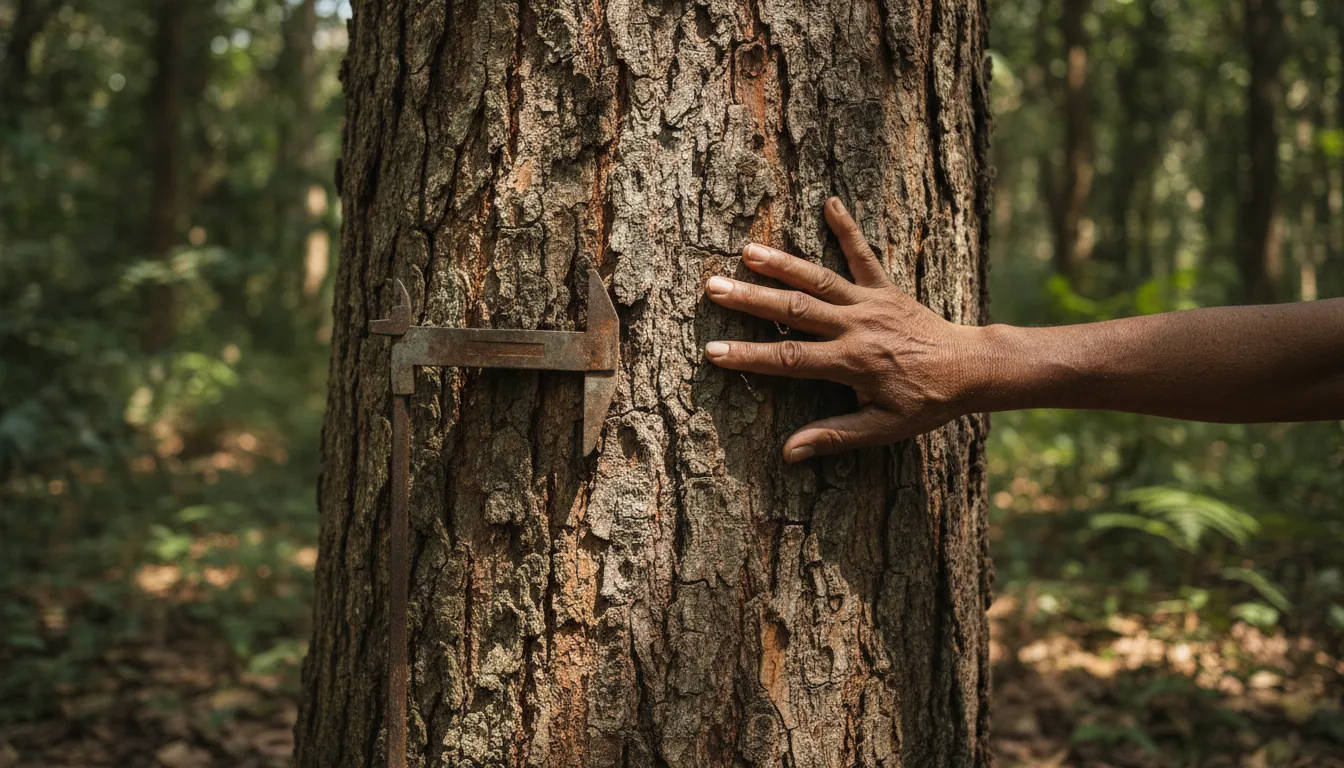
The properties explain the use list. It is a medium-weight hardwood at 540 to 720 kg per cubic metre at 15% moisture, about 570 kg at 12%. Hard and elastic but low in strength, and rated moderately to non-durable. It air-dries slowly and tends to warp and check when dried fast, and it is open to marine borers, pinhole borers and termites. The pale sapwood should be left out wherever durability matters
That puts it indoors, under low stress, or treated. Sawn silver oak is widely sold as shuttering timber in 6 to 10 ft lengths, 1.5 to 3 in thick, a fair signal of where the market places it. That market sets what a standing tree is worth.
How much is a silver oak tree worth
No official silver oak tree price is published. Trader listings for sawn silver oak and silver wood runners ran from ₹380 to ₹495 per cubic foot in October 2026, and a grower selling standing trees received less than the sawn rate.
| Listing | Location | Price per cubic foot |
|---|---|---|
| Sawn silver oak or silver wood runners | Dindigul | ₹380 |
| Sawn silver oak or silver wood runners | Bengaluru | ₹400 |
| Sawn silver oak or silver wood runners | Hyderabad | ₹400 and ₹495 |
| Sawn silver oak or silver wood runners | Mumbai | ₹410 |
| Shuttering-grade silver oak | Mumbai | ₹410 to ₹440 |
Sawn timber has been felled, cut, graded and carted before a trader lists it. A grower selling standing trees to a contractor gets what is left after felling, sawing, transport and the buyer’s margin. Price turns on girth, straightness, distance to the nearest sawmill and who is buying, so take two or three contractor quotes.
Two numbers in wide circulation are not published by any source we could verify: a farm-gate rate per tonne or per tree in Karnataka, and a plywood-grade rate. Forum posts and videos quote both without naming a source, so neither appears here.
The Kodagu study adds one point. Planters there value silver oak partly because it sells on the open market, while native timber goes through government auctions at lower value. Selling assumes you are allowed to fell it.
Do you need permission to cut silver oak in Karnataka
No permission is needed to fell silver oak on private land in Karnataka. The species sits on the exemption list under the Karnataka Preservation of Trees Act, 1976, cited to a Karnataka Gazette notification of 21 July 1976.
The same list covers casuarina, eucalyptus, coconut, mango, melia dubia (Hebbevu) and acacia hybrid, and the Act applies only in notified rural areas. Moving the timber is a separate question: a notification of 7 December 2016 exempted 42 species from transit rules, but the species list was not available to us, so confirm the transit position with your local Range Forest Office before anything leaves the land. At national level, Ministry of Environment, Forest and Climate Change guidelines of 18 November 2014 place Grevillea robusta in List A, species for which felling and transit permits may not be required, though these are guidelines to states, not a Karnataka rule.
The full process is set out in how felling and transit permissions work, and why sandalwood rules are stricter covers the species where none of this applies.
Why do farmers plant silver oak on boundaries and as shade
Farmers plant silver oak on boundaries because it grows fast, takes lopping well, keeps its roots out of the way of shallow-rooted crops and breaks wind with its spreading branches.
It has a long record as a shade tree in coffee and tea plantations in South India. It responds well to pruning, lopping and pollarding, which can be repeated to produce wood and to control shade and competition with adjacent crops, and it regrows after complete defoliation. Its deep root system interferes little with shallow-rooted crops, although its open canopy makes it a poor choice on erosion-prone land. Kodagu farmers said they favoured it for fast growth and because it does not compete with their crops.
Planting a block rather than a boundary row, the recommended density is 800 to 1,200 trees per hectare at 2.5 to 3 m by 3 to 4 m spacing, roughly 324 to 486 trees per acre. None of that makes it a trouble-free tree.
What are the downsides of silver oak
Silver oak’s real drawbacks are weak and borer-prone timber, poor wind resistance, slow-rotting leaf litter, limited shade control, suppression of its own seedlings, invasive potential outside its native range, and sap compounds that irritate skin.
- Low in strength and moderately to non-durable, with sapwood liable to borer and termite attack .
- Susceptible to high winds and fungal attack, as reported by Kodagu planters.
- Leaves decompose very slowly, so they are unsuitable for organic compost.
- Allows only limited shade manipulation .
- Produces substances toxic to its own seedlings.
- Non-native, with invasive potential that concerns environmentalists in the Western Ghats . It is treated as invasive in Hawaii and South Africa and as a weed in parts of New South Wales and Victoria.
- Tridecylresorcinol in the plant causes contact dermatitis, and the flowers and fruit contain hydrogen cyanide . Wear gloves when handling leaves and flowers.
Keep it in proportion. The same Kodagu report concludes that replacing all silver oak with the native Balanji is not an appropriate solution either. The question is what role you give the tree.
Is silver oak worth planting as a main crop
As a main crop, rarely. As a boundary, shade or windbreak tree on land you are already farming, often yes. The timber value is modest, the wood is low in durability, no farm-gate rate is published, and the wait is 10 to 20 years for a log that sells into packing and shuttering.
If timber is the goal, which timber trees are worth planting sets out the species that carry more value per tree. Teak and its 20-year wait and whether mahogany lives up to the nursery pitch cover two of them in detail. The honest position on silver oak: keep it, lop it, sell it when the time comes, and choose a different species if the money is the point.
Before you plant or fell
Any tree on your land, even a boundary row, needs years of watching, lopping and a decision at harvest. That is the part most owners underestimate, and it is hard to run from a city.
Hasiru Farms has operated since 2021, with 300+ acres delivered and 250+ families. Every buyer receives individual ownership of their farmland through a registered Sale Deed executed in their own name, and a maintenance agreement is executed between Hasiru and the buyer, under which Hasiru undertakes the management and maintenance of the farmland. Hasiru Care is the in-house team that does the work. Read what managed farmland actually means, or look at the Vruksha project on Kanakapura Road and Parva, our timber and sandalwood project.
Silver oak FAQs
How long does a silver oak tree take to grow?
Silver oak adds at least 2 m in height a year when young, about 3 m on the best sites. Typical rotations run 10 to 20 years, and growth declines after about 20. Felling ages quoted elsewhere range from 6 to 30 years, usually without a source.
What is the price of a silver oak tree?
Two answers, depending on what you mean. Saplings list at about ₹20 per silver oak plant in bulk orders of 2,500 or more . Sawn silver oak lists at ₹380 to ₹495 per cubic foot. A standing tree depends on its size and the buyer, and no official rate is published.
Which tree is known as the Indian silver oak?
Grevillea robusta. It is Australian rather than Indian and not a true oak, but it has been planted so widely across South India that it is often taken for a local species. Its other names are southern silky oak, silk oak and Australian silver oak.
Is silver oak poisonous or harmful?
The plant contains tridecylresorcinol, which causes contact dermatitis, and its flowers and fruit contain hydrogen cyanide. It is not a tree to avoid, but wear gloves when you handle leaves, flowers or fruit.
Does silver oak damage the soil or nearby crops?
Its deep root system interferes little with shallow-rooted crops, one reason farmers plant it on boundaries . Two things to plan for: the leaves decompose very slowly, so they are no use as compost , and the tree produces substances toxic to its own seedlings.
Who looks after trees on farmland if I do not live there?
On managed farmland, a maintenance agreement is executed between the managing company and the buyer, under which the company undertakes the management and maintenance of the farmland. At Hasiru Farms that work sits with Hasiru Care, the in-house team.