On This Page
Sandalwood farming in India has never had a louder reputation or a thinner reality. Production has fallen from roughly 4,000 tonnes a year in the 1960s to about 350 to 400 tonnes now, while global demand sits near 20,000 tonnes. This page is the 2026 read on where the market, the price and the policy actually stand, and what a grower is really signing up for.
The short answer
Sandalwood farming in India means cultivating Santalum album, the Indian white sandalwood, on private land, legal since Karnataka’s 2001 reform, using a host plant the tree roots onto, and harvesting heartwood after 12 to 15 years or more. In 2026 it is a high-value, high-patience, tightly regulated crop: strong demand, thin supply, rising prices and real risk. For the full evergreen walkthrough, read our complete guide to sandalwood farming in India.
TL;DR India makes about 90% of the world’s sandalwood but only 350 to 400 tonnes a year against roughly 20,000 tonnes of global demand, which is why heartwood now fetches around ₹7,000 to ₹12,500 per kg. The crop is legal and steadily deregulated, yet it locks up capital for 15 years or more, full heartwood can take 20 to 25 years, and theft and mortality are real. Treat it as a long-horizon asset, not a quick return.
What does sandalwood farming in India look like in 2026
In 2026, India remains the world’s dominant sandalwood producer, responsible for about 90% of global output, yet it grows only 350 to 400 tonnes a year against global demand near 20,000 tonnes. The result is a wide, structural supply gap.
The decline is the real story. Output has slid from roughly 4,000 tonnes a year in the 1960s to about 500 tonnes in 2007 and around 350 tonnes by 2014. Over the same decades, prices climbed more than 600% as supply thinned. India still leads world production and remains the largest exporter, but it now imports sandalwood too, reportedly around ₹100 crore worth from Australia across 2019 to 2024. That gap between what India can grow and what the world wants is the engine behind every price number below.
INDIA SANDALWOOD AT A GLANCE, 2026
| Metric | India, 2026 read |
| Domestic production | ~350 to 400 tonnes a year, down from ~4,000 tonnes in the 1960s |
| Share of world output | ~90% of global sandalwood production |
| Global annual demand | ~20,000 tonnes, against thin domestic supply |
| Heartwood price | ~₹7,000 to ₹12,500 per kg by grade, reportedly rising ~25% year on year |
| Sandalwood oil price | reported around ₹1.5 lakh per kg |
| Area under cultivation | ~23,100 hectares, of which ~20,755 planted in the last decade |
| Commercial harvest window | 12 to 15 years quoted; full heartwood can take 20 to 25 years |
Figures above are drawn from published industry and government data and are stated as ranges, not fixed guarantees.
How much does sandalwood sell for per kg right now
Sandalwood heartwood sells at roughly ₹7,000 to ₹12,500 per kg in 2026, depending on grade. Government auctions are reported around ₹6,500 to ₹7,500 per kg, with top grades near ₹12,500. Prices have reportedly risen about 25% year on year.
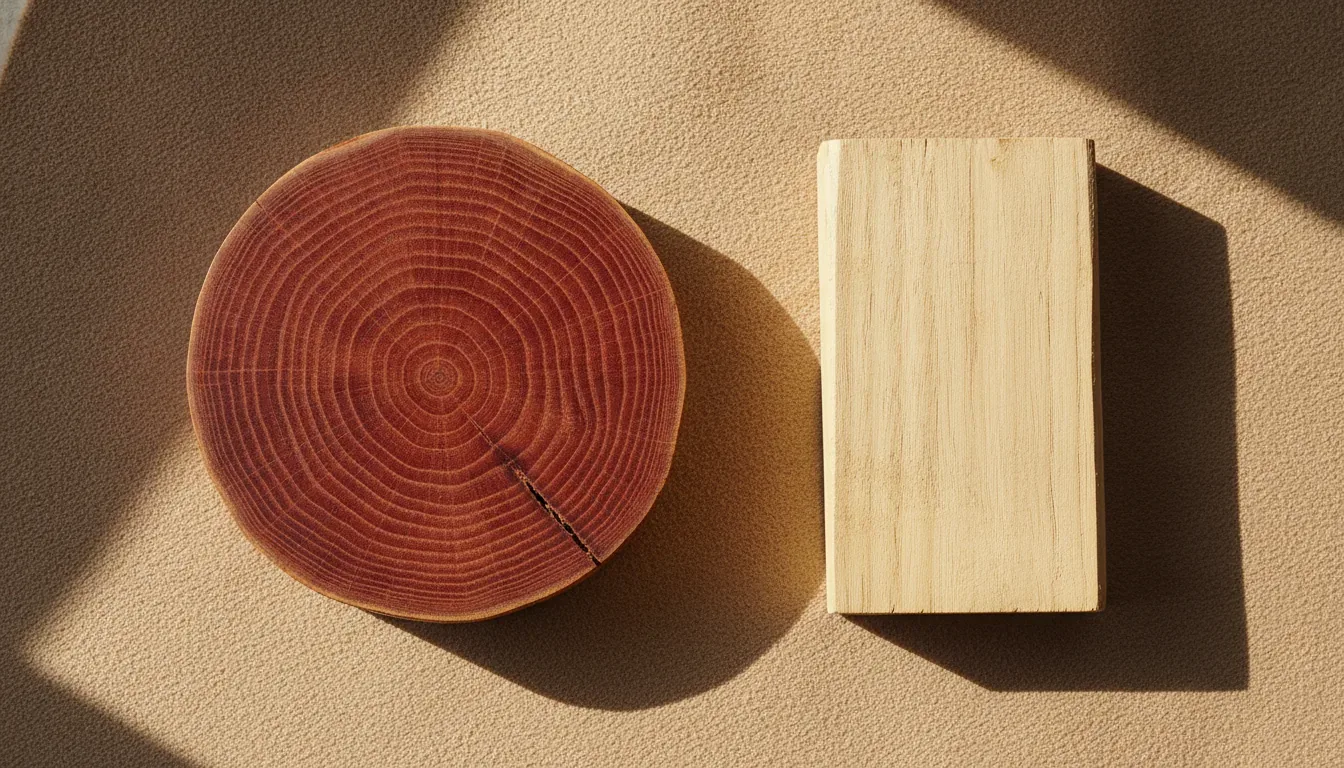
Two things shape the number. First, grade: only the fragrant heartwood carries value, and quality varies tree to tree. High-quality wood has been cited at roughly ₹78 lakh per tonne, and steam-distilled sandalwood oil is far dearer, reported around ₹1.5 lakh per kg. Second, yield: a 15-year tree typically weighs 120 to 180 kg but yields only about 12 to 18 kg of heartwood, and a plot holds roughly 300 to 400 trees per acre, about 302 at 12 by 12 foot spacing.
So a single tree’s wood, at these ranges, can be worth a meaningful sum, but only when heartwood has actually formed. For the full acre-level maths, see sandalwood profit per acre in Karnataka.
How long does it really take, and how is it grown
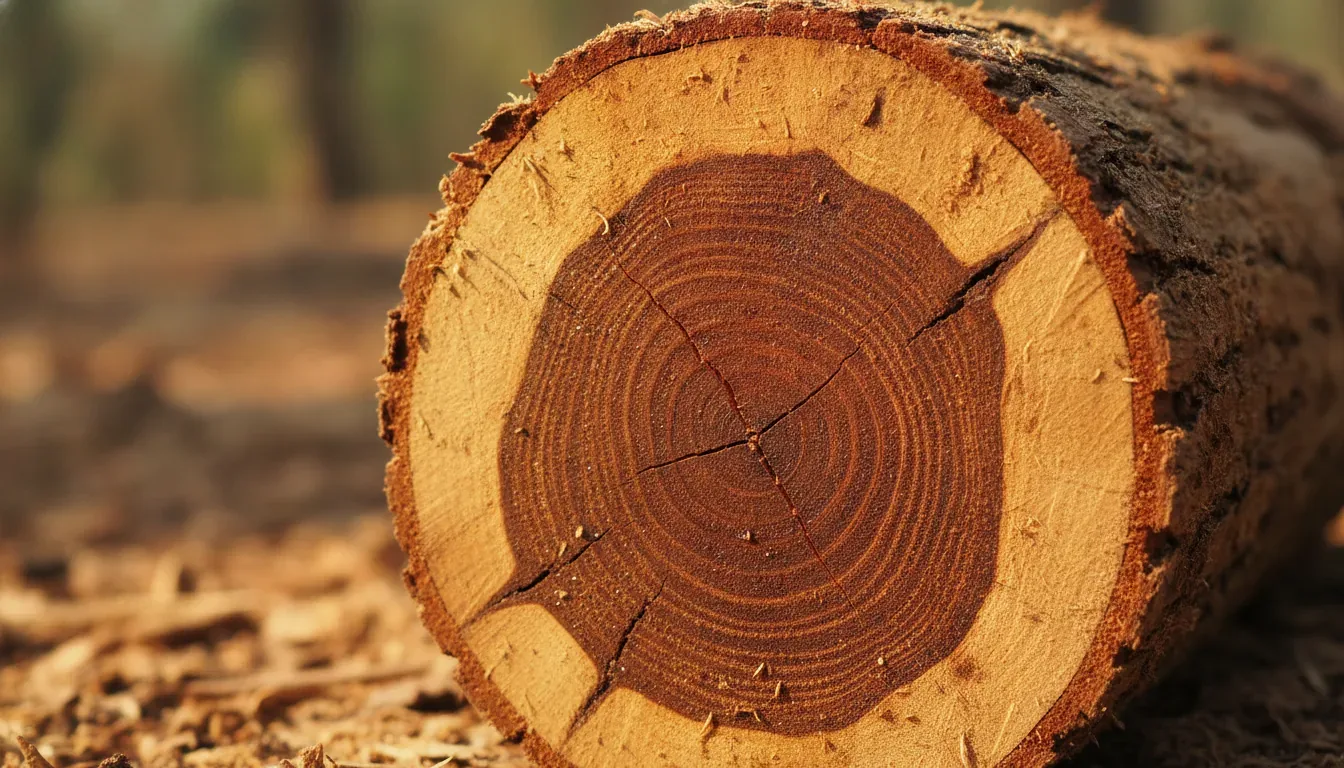
Sandalwood is a hemiparasite: it must root-graft onto a host plant to survive, and it needs 12 to 15 years for a commercial harvest, though full heartwood development can take 20 to 25 years. Heartwood only begins forming around year eight.
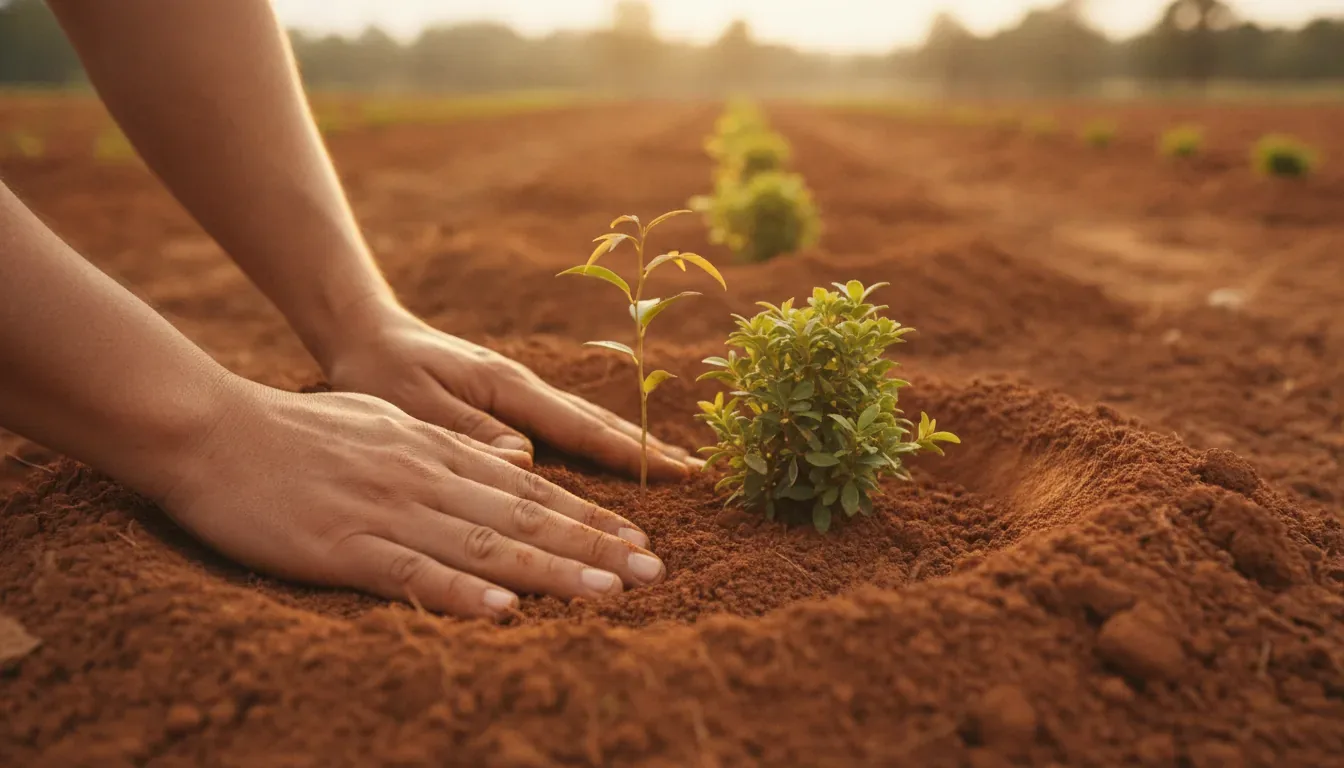
Because the tree feeds off a host, growers plant it alongside species like pigeon pea or red gram, custard apple, casuarina, melia dubia, sesbania and moringa, often in a quincunx pattern. Chosen well, those hosts do double duty: a short-cycle host such as red gram can carry some income across the early years while the sandalwood is nowhere near harvest. The tree prefers red sandy or ferruginous well-drained loam, a soil pH around 6.0 to 7.5, and a warm climate.
The honest part is the timeline. Pages routinely quote 12 to 15 years as if it were a settled harvest date. On the ground it is slower and less certain: at a 2024 inspection, a Karnataka plantation of 650 surviving trees, from 1,000 planted in 2009, showed no significant heartwood at 15 years in. Not every sapling survives to maturity either. Plan for 15 years as a floor, not a promise.
This page is about Santalum album, the white or Indian sandalwood. Red sandalwood is a different tree with different rules, covered in the difference between red and white sandalwood. For tree-level planting steps, see how to grow a sandalwood tree.

Is sandalwood farming legal in India, and what has changed
Yes, sandalwood farming is legal in India. Karnataka legalised private cultivation with its Forest Amendment Bill in 2001, and the rules have loosened since: under Karnataka’s Sandalwood Policy 2022 growers may now sell to buyers beyond State Government undertakings, and Maharashtra deregulated felling permissions in 2021.
The practical mechanics still matter. Trees must be registered with the state or district forest department, and felling and transport need permits. Harvested wood has typically been routed through government-managed auction depots, with one grower guide citing a roughly 20% deduction on the government-facilitated sale. On the support side, the National Medicinal Plant Board offers subsidies covering about 75% of cultivation cost.
That is the outline. For the full permit-by-permit answer and the current licensing route, read whether sandalwood farming is legal in India.
How fast is sandalwood cultivation growing across India
Sandalwood cultivation is expanding quickly. About 23,100 hectares are now under the crop in India, with roughly 20,755 hectares of that planted in the last decade alone. Growing has spread well beyond the traditional southern belt.
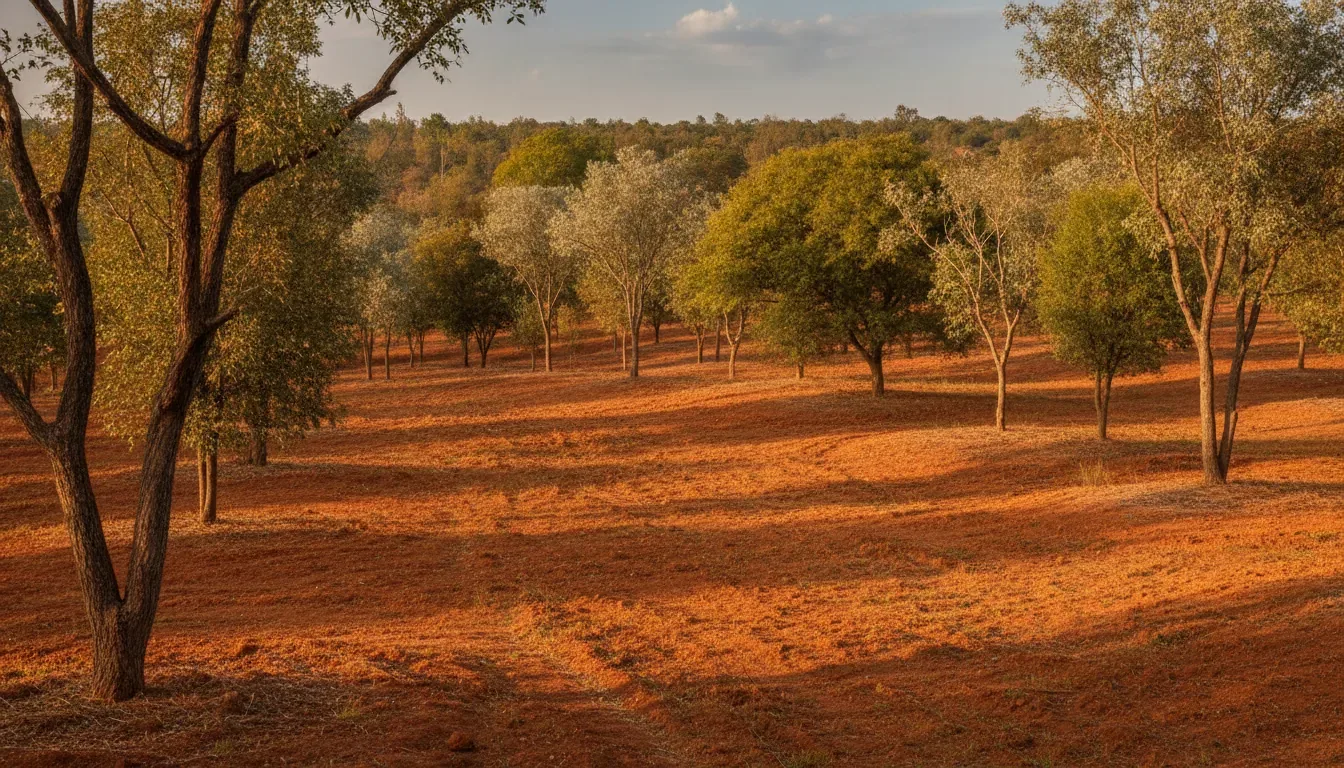
Once concentrated in Karnataka, Tamil Nadu and Kerala, plantations have moved into non-traditional states including Madhya Pradesh, Gujarat, Rajasthan, Uttar Pradesh, Haryana and Punjab. There is no official grower count, but an estimated 1,000 farmers across three states have entered, with around 550 registered with the Karnataka growers’ association. Karnataka remains the heartland; sandalwood farming in Karnataka covers that state in full.
Worth saying plainly: a decade of heavy new planting means a wave of supply will mature together in the 2030s. That is good for buyers and a genuine saturation risk for growers banking on today’s scarcity prices holding.
Is sandalwood farming a good investment, honestly
Sandalwood can be valuable, but it is not a quick or guaranteed return. A mature tree’s heartwood can be worth a large sum, yet capital is locked for 15 years or more with no interim income, the harvest price 15 years out cannot be predicted, and theft and mortality routinely erode the crop.
The risks are concrete. Theft of mature trees is a recurring loss: one grower running 8,000 trees still lost mature trees worth about ₹40,000 in a single year despite spending roughly ₹2.5 lakh on ten CCTV cameras. Mortality thins the plot before harvest. And because selling depends on registration, permits and auction routing, regulatory approvals shape whether and when you realise value. The honest framing is a long-horizon, illiquid asset with a real downside, not the crore-per-acre certainty the hype pages sell.
If you want the crop’s upside without personally carrying 15 years of registration, guarding, host management and permit paperwork, one route is owning managed farmland where specialists handle the long-horizon work on your behalf. For the full profitability breakdown, read is sandalwood farming profitable.
FAQ
How many years does a sandalwood tree take to grow?
A sandalwood tree is usually harvested for heartwood at 12 to 15 years, but full heartwood development can take 20 to 25 years. Heartwood only starts forming around year eight, so early years show little of the valuable wood.
How much does 1 kg of sandalwood cost?
Sandalwood heartwood costs roughly ₹7,000 to ₹12,500 per kg in 2026, depending on grade, with government auctions reported around ₹6,500 to ₹7,500 per kg. Sandalwood oil is far dearer, reported around ₹1.5 lakh per kg.
What is a 10, 20 or 30 year old sandalwood tree worth?
A tree’s value tracks its heartwood weight and grade, not its age alone. A 15-year tree may yield about 12 to 18 kg of heartwood, so at ₹7,000 to ₹12,500 per kg its wood can be worth roughly ₹85,000 to ₹2.2 lakh, and only if heartwood has actually formed. Age is a poor proxy on its own.
How much profit is in 1 acre of sandalwood?
There is no reliable fixed figure. Profit depends on survival rate, whether heartwood forms, the grade achieved and the auction price 15 years out, all of which vary. For an honest, sourced range see sandalwood profit per acre in Karnataka.
Do I actually own the land and trees, and what if the company managing it stops?
With managed farmland from Hasiru, each buyer receives individual ownership through a registered Sale Deed in their own name, conveying title to a specific parcel. Because the title is registered in your name, the land remains yours regardless of what happens to the company, and day-to-day upkeep runs under a formal Hasiru Care management agreement.
Where to go next
Sandalwood farming rewards patience over speed. To understand the full picture, read our complete guide to sandalwood farming in India, check whether sandalwood farming is legal in India, or work through sandalwood profit per acre in Karnataka.
If you would rather own a real, managed farmland parcel and leave the long-horizon operational work to specialists, Hasiru’s Parva managed farmland project offers ownership of a managed place, with individual registered title in your own name, not a return promise. Hasiru has operated since 2021, delivering 300+ acres to 250+ families, with land held under individual Sale Deed and managed through Hasiru Care.