On This Page
Growing a sandalwood tree is entirely possible on your own land, but it asks for patience and steady attention across more than a decade. This guide covers white sandalwood, Santalum album, and follows a single tree through every growing stage: seed, sapling, establishment and harvest. It states the hard parts plainly, including the two most guides leave out.
The short answer
To grow a sandalwood tree, plant a healthy six-month sapling in well-drained red loamy soil at a pH of 6.5 to 7.5, set a nitrogen-fixing host plant beside it, water moderately, and give it full sun. Heartwood begins forming around year eight, and the tree reaches harvest maturity in 12 to 15 years.
TL;DR: Sandalwood grows from a nursery-raised sapling planted in well-drained red loamy soil beside a nitrogen-fixing host it cannot survive without. Water moderately, guard against incurable spike disease, and expect heartwood harvest in 12 to 15 years.
Where does sandalwood grow best – (soil, climate and site)
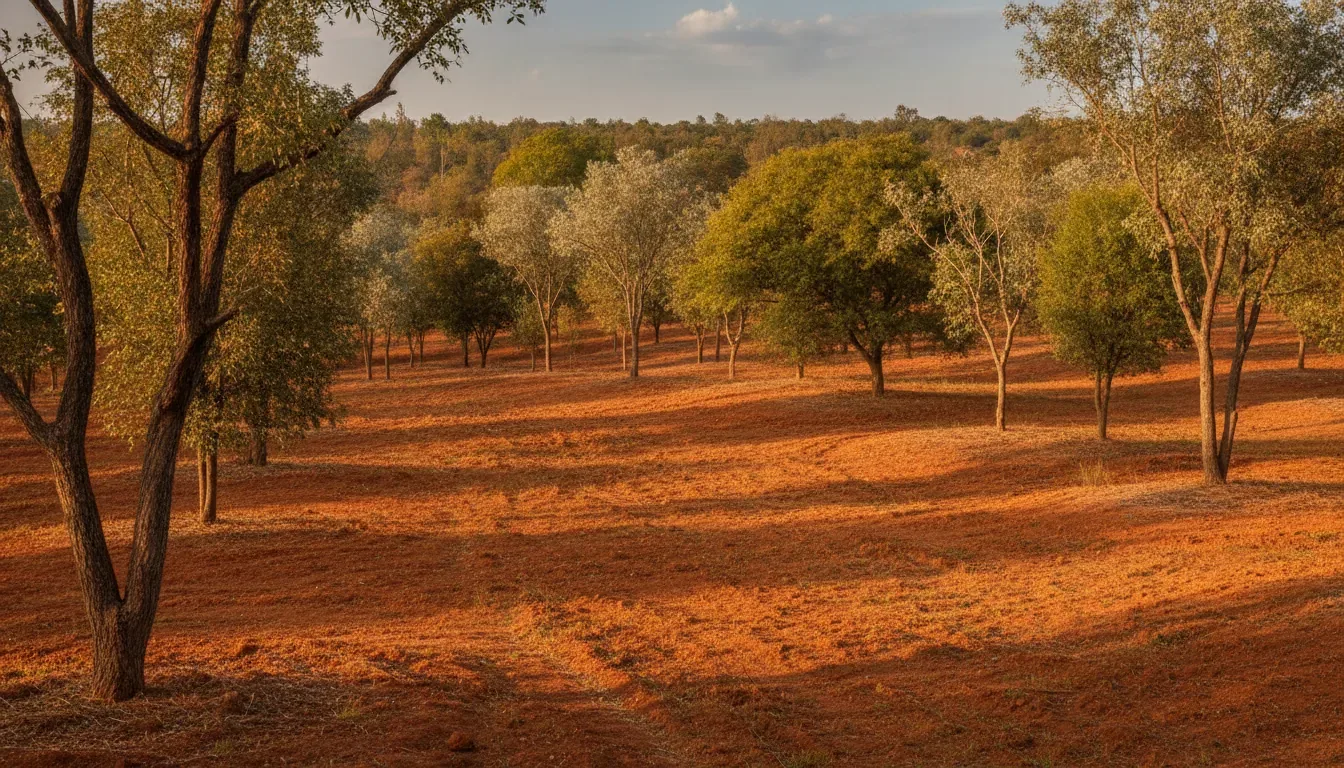
Sandalwood grows best in well-drained red ferruginous or sandy loam soil with a pH of 6.5 to 7.5, in full sun, at altitudes between 300 and 1100 metres. It tolerates temperatures of 10 to 40 degrees Celsius and rainfall between 500 and 3000 mm.
Drainage is the part of site selection you cannot compromise on. Sandalwood roots rot in standing water, so avoid low-lying plots and heavy clay that holds moisture. A gentle slope or raised ground that sheds rain suits it well. The tree wants full sunlight through the day, which means an open site rather than a shaded understorey. Within those ranges the tree is fairly adaptable. Once the site is right, the next question is how the tree begins, and that starts in the nursery.
How do you grow sandalwood from seed
You grow sandalwood from seed by depulping and shade-drying fresh fruit, soaking the seeds for 16 hours in gibberellic acid at 500 ppm to break dormancy, then sowing them on fine river-sand beds. Seedlings are then raised in root trainers alongside a host.
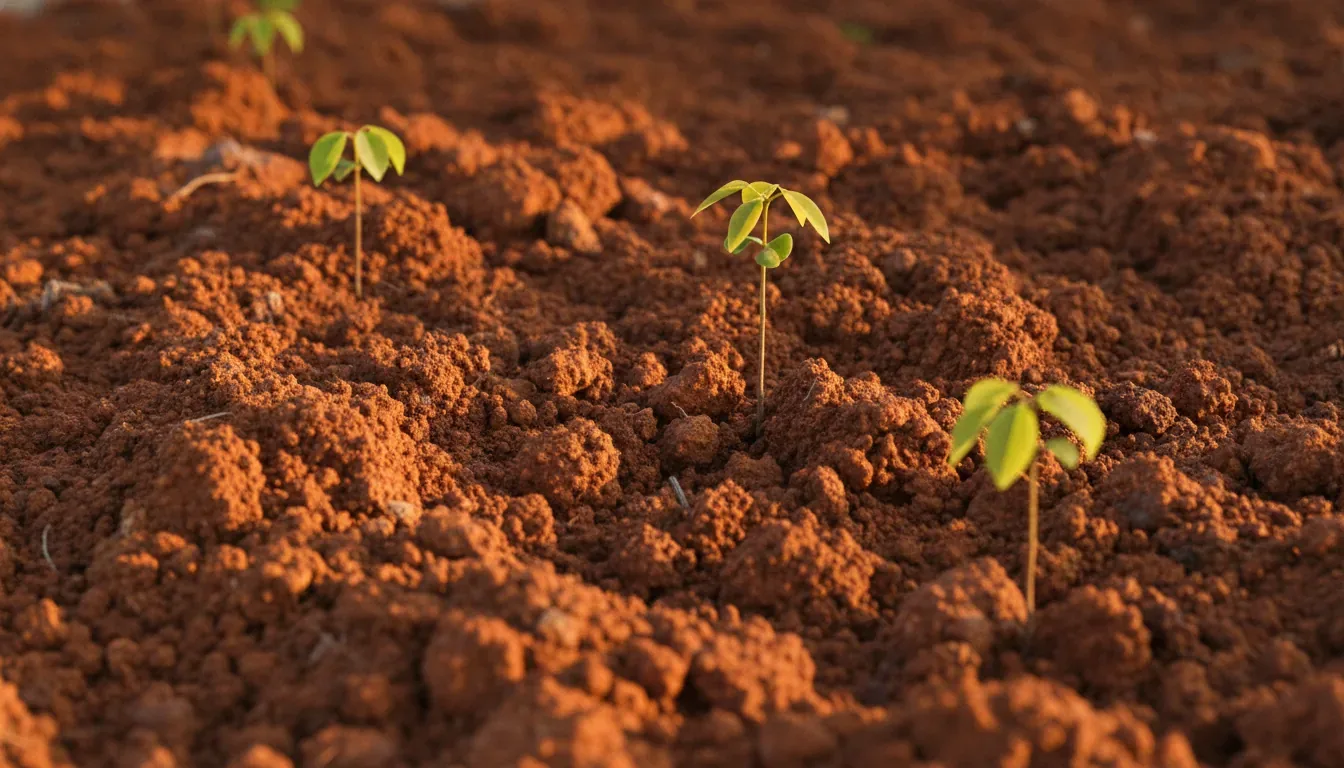
Sandalwood seed carries a natural dormancy, which is why the gibberellic acid (GA3) soak matters: without it germination is slow and uneven. After the 16-hour soak at 500 ppm, seeds are sown thinly on fine river-sand beds kept moist and shaded. Once seedlings can be handled they are moved into root trainers, and this is where a primary host goes into the same container, usually Mimosa pudica or pigeon pea (Cajanus cajan), so the young sandalwood attaches early. A plantable seedling reaches about 30 to 50 cm tall with a collar diameter near 3 mm in roughly six months. Many growers skip this stage and buy six-month saplings ready to plant, which is the simpler route.
Why does a sandalwood tree need a host plant
A sandalwood tree needs a host plant because it is a hemi-parasite. Its roots form small attachments called haustoria that connect to a neighbouring plant to draw water and nutrients. Without a host, seedlings survive only one to three years, then growth stunts and the tree dies.
This is the single fact that decides whether a planting succeeds. Sandalwood makes its own food through its leaves, but it cannot meet its water and nutrient needs alone, so it taps a companion through those root attachments. Hosts work in tiers. Early or primary hosts are leguminous, nitrogen-fixing species that establish fast: pigeon pea (Cajanus cajan), red gram, Sesbania and Mimosa pudica. Secondary, long-term hosts carry the tree through its later years and include Casuarina and Wrightia tinctoria, along with horticulture hosts such as amla, guava, pomegranate, mango, citrus and moringa. Plant a host roughly 1.5 to 2 metres from each sandalwood plant so the roots can reach it without the two competing directly. A common mistake is treating the host as optional, or removing it once the tree looks established. The tree depends on a living host for its whole life.
How do you plant and space sandalwood saplings
Plant sandalwood saplings at the start of the rains in pits about 18 inches on each side, filled with a mix of topsoil and organic manure. Space them to your target density: 10 by 10 feet gives roughly 435 trees per acre, 12 by 12 feet about 302, and 15 by 15 feet about 193.
Timing the planting to the onset of the monsoon gives the young tree a settled, moist establishment period without hand-watering every day. Dig each pit to roughly a 1.5 foot cube, let it weather, then refill with loosened topsoil and well-rotted organic manure so the roots move into friable ground. Set the sapling at the depth it sat at in the nursery and firm the soil gently around it. Wider spacing gives each tree more room and light and suits long rotations. Closer spacing packs more trees in but increases competition, so choose the density against how long you intend to grow before harvest. Position the host plant beside each sapling as you plant, not months later.
How do you care for a sandalwood tree – (water, weeding, protection)
Care for a sandalwood tree by watering once every two to three weeks through summer, never letting the soil waterlog, keeping weeds down, and pruning host trees so they do not overshadow it. The critical risk to watch through the whole life of the tree is spike disease.
In the dry months a soaking once every two to three weeks is enough. The tree dislikes constant wet feet far more than a dry spell, so err towards less water rather than more. Keep the base clear of aggressive weeds that compete for water in the early years, and prune the host if it grows vigorously enough to shade the sandalwood, since the tree needs full sun even while it depends on that host below ground.
Spike disease is the most serious threat to a sandalwood planting, and there is no cure for it. It is caused by a phytoplasma and kills an infected tree within two to three years. Because it cannot be treated, the only defence is prevention: start with healthy, disease-free planting material, inspect trees regularly, and remove and destroy any infected tree quickly so it does not spread to its neighbours. Any honest account of growing sandalwood has to put this risk on the table, because it is the reason a planting can fail despite good soil and a good host.
How many years does a sandalwood tree take to grow
A sandalwood tree takes about 12 to 15 years to reach harvest maturity. It spends its first six months in the nursery, years one to three establishing with its host, and begins forming heartwood, the scented inner core, at around year eight.
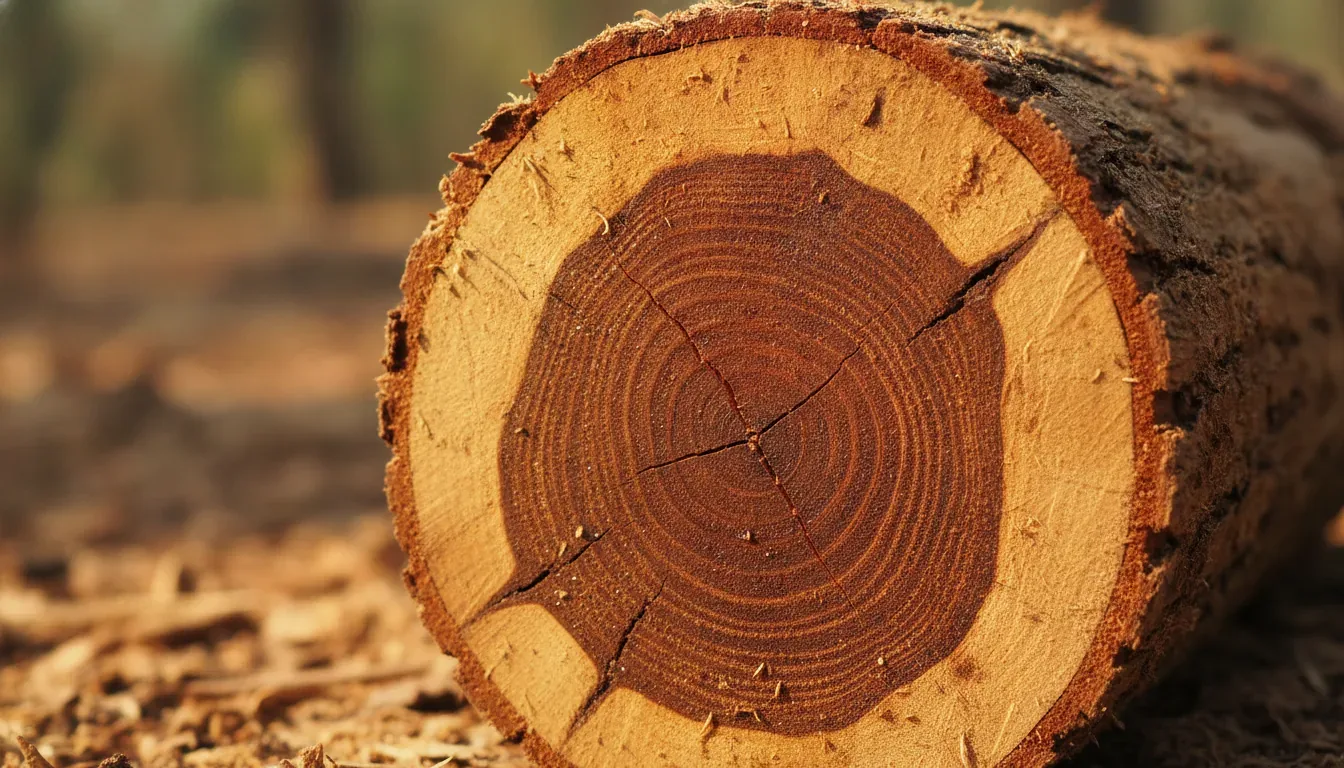
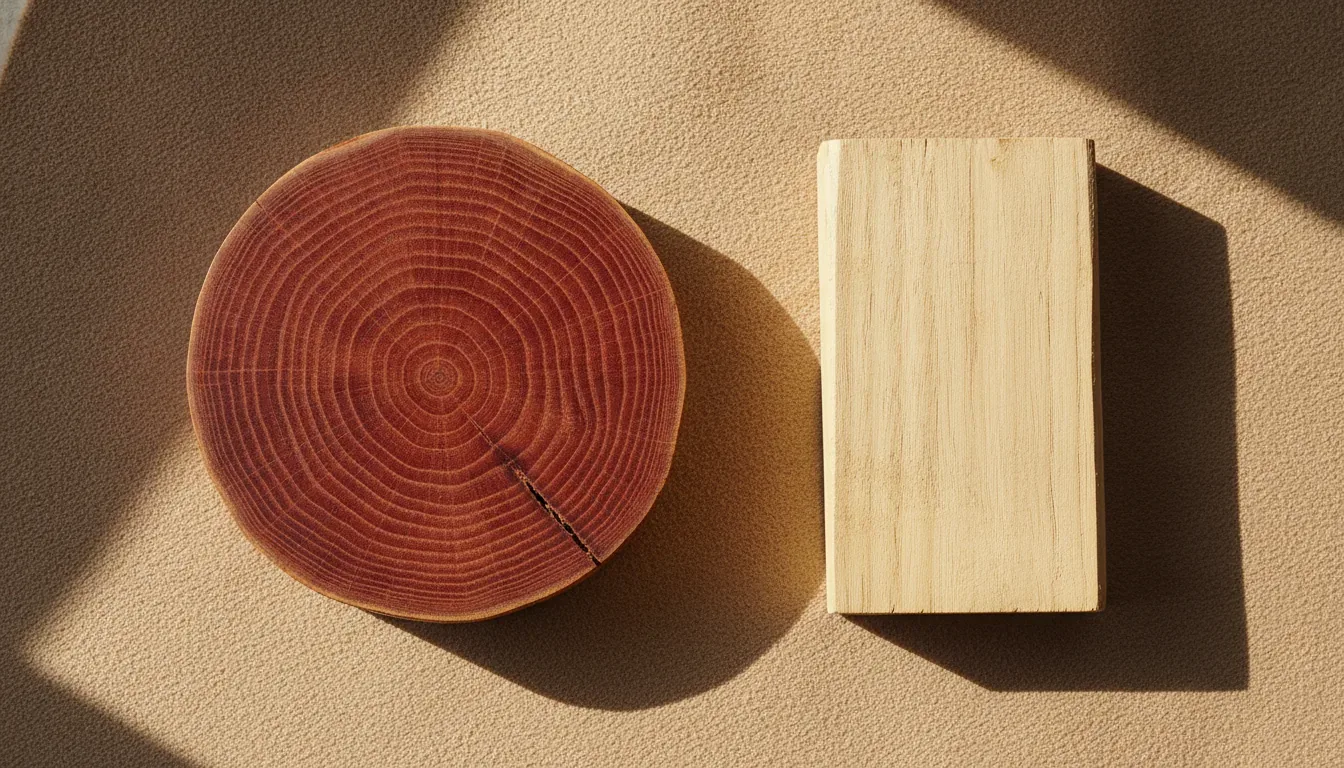
The growth runs in clear stages. The nursery stage takes roughly six months to a plantable seedling. Establishment covers years one to three and is entirely host-dependent, the window that most decides survival. Heartwood, the fragrant core the tree is prized for, starts to form from around year eight and thickens as the tree ages, while the paler outer sapwood surrounds it. By around 15 years a tree yields roughly 12 to 18 kg of heartwood and 50 to 70 kg of sapwood, and some growers run longer rotations of 25 to 30 years to build larger heartwood cores. Those figures describe what the tree produces, not what it earns. Price and profit questions are answered on separate pricing pages and are deliberately kept off this guide, so this page stays on the biology.
Is it legal to grow a sandalwood tree in India
Yes, it is legal for a private landowner in India to grow sandalwood on their own land. Following the relaxation of the rules in 2001 to 2002, growing the tree is permitted. The controls apply to harvesting, transport and sale, which the state forest department regulates.
In practice the tree in your ground is yours to grow, but felling it, moving the wood and selling it go through the forest department, typically with permission to fell from the range officer and sale routed through government channels. The detail of permissions, paperwork and the sale process is a subject in its own right, covered in the guide to whether sandalwood farming is legal in India, while the wider picture of the crop sits in the complete guide to sandalwood farming in India. This page keeps to the growing.
Frequently asked questions
How do you identify a sandalwood tree?
The defining feature of white sandalwood, Santalum album, is the fragrant heartwood at its core, which forms only in mature trees from around year eight, so young plants are not identified by scent. In the field, a genuine sandalwood always grows attached to a host plant, because it cannot survive alone.
Do snakes live on sandalwood trees?
No. There is no scientific basis for the belief that sandalwood trees attract snakes through their scent or a cooling quality. Snakes shelter near many kinds of tree for shade, cover and prey such as insects and rodents. The sandalwood link is folklore, not botany.
Can you make a sandalwood tree grow faster?
There is no shortcut that beats the tree biology, but growth is fastest when the basics are right: a healthy host attached early, well-drained red loamy soil, full sun and moderate watering. Weak or missing host support is the usual reason a young tree stalls.
What is the scientific name of white sandalwood?
The scientific name of white sandalwood, also called Indian sandalwood, is Santalum album. It is the species grown for its fragrant heartwood, and it is different from red sandalwood, Pterocarpus santalinus, which is a separate species covered on its own page.