On this page
Red sandalwood and white sandalwood get talked about as if they were two grades of the same wood. They are not. They are two different species, and the choice between them decides your soil, your region, your permits, and how many years you wait before there is anything to harvest.
The short answer
Red and white sandalwood are two separate species, not two grades of one wood. White sandalwood, Santalum album, is a fragrant, oil-bearing tree that depends on host trees to grow. Red sandalwood, Pterocarpus santalinus, is a slow-growing, protected hardwood valued for its coloured timber, and it does not yield the aromatic oil white sandalwood is prized for. The two differ in biology, maturity, legality, geography, and how they earn their value.
What is the difference between red and white sandalwood
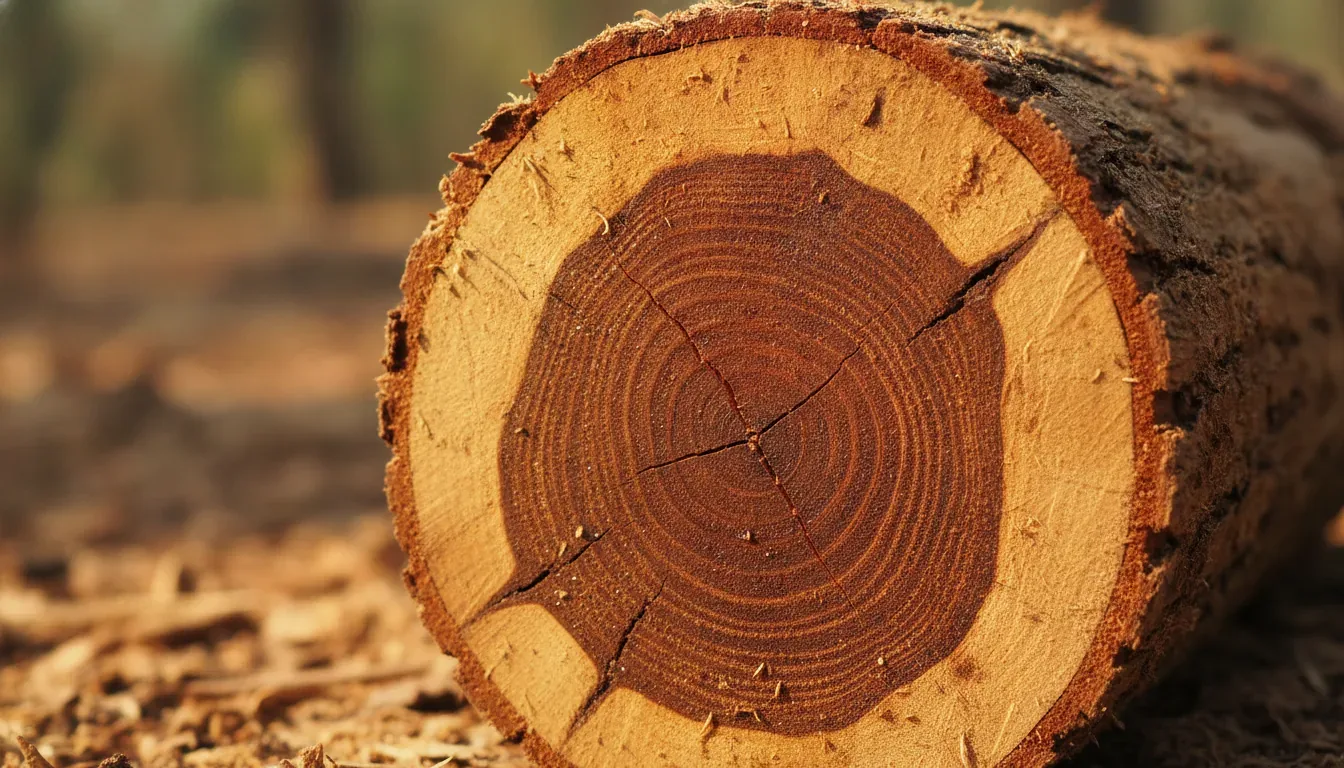
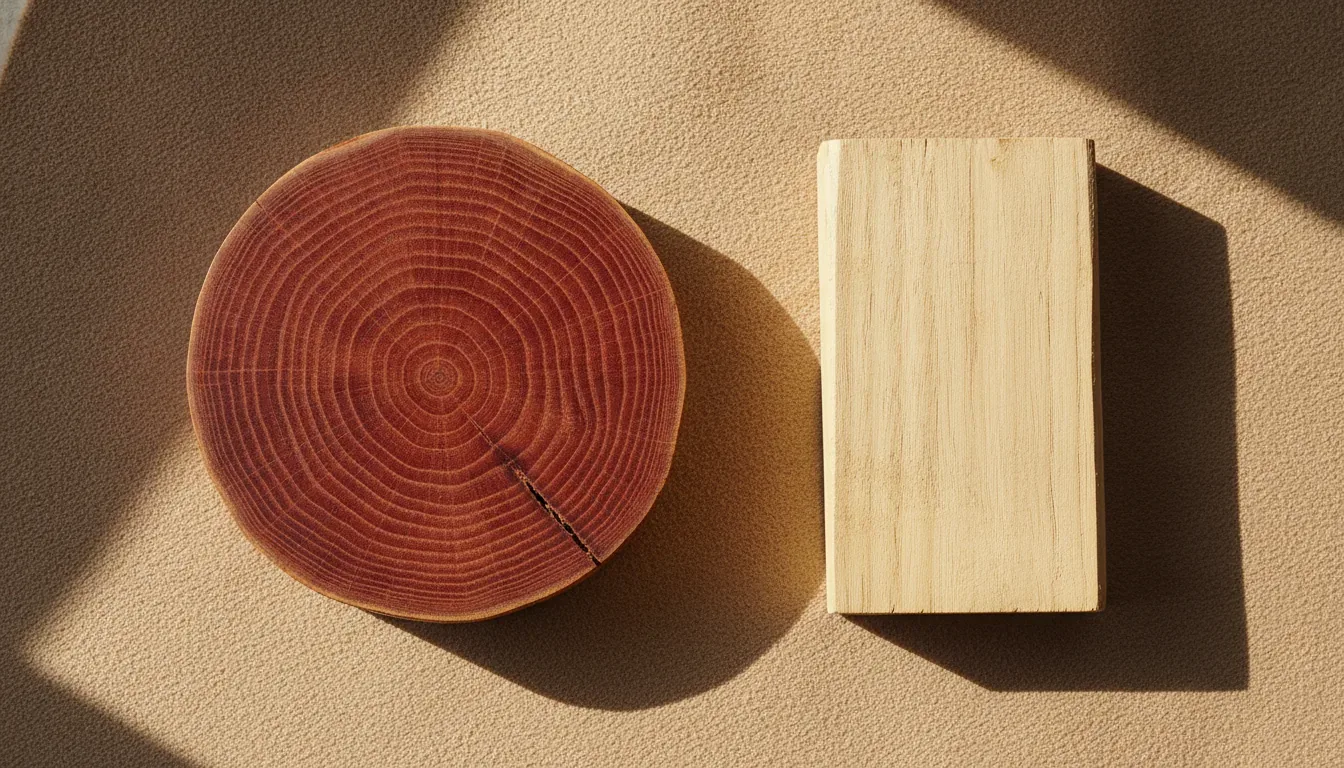
The core difference is that red and white sandalwood are different species. White sandalwood, Santalum album, is an aromatic tree grown for its scented heartwood and oil. Red sandalwood, Pterocarpus santalinus, is a hardwood grown for dense red timber, and it produces no aromatic oil.
| Attribute | White sandalwood | Red sandalwood |
|---|---|---|
| Botanical name | Santalum album | Pterocarpus santalinus |
| Common names | Indian sandalwood, white sandalwood | Red sanders, red sandal |
| Type | Aromatic, host-dependent tree | Slow-growing hardwood timber tree |
| Aromatic oil | Yes (santalol) | No |
| Wood colour | Pale, scented heartwood | Dense red heartwood |
| Host trees needed | Yes, hemi-parasite (about 300 host species) | No, grown as a standalone tree |
| Rough maturity | Workable heartwood in about 12 to 15 years; oil peaks after 25 | Multiple decades for usable heartwood |
| Main uses | Fragrance, oil, cosmetics, incense | Timber, furniture, musical instruments, dye, traditional medicine |
| Value basis | Aromatic heartwood and oil | Dense coloured timber |
| Legal headline | Private cultivation allowed in Karnataka (2001 and 2022) | Cultivable on titled land, permit-gated; CITES Appendix II |
The shared name causes most of the confusion. Both are called sandalwood, both are valuable, and both are associated with southern India, so buyers assume they are picking a grade. In practice they are choosing between two crops that behave nothing alike, from the soil they need to the decade they mature in.
Do red and white sandalwood need host trees to grow
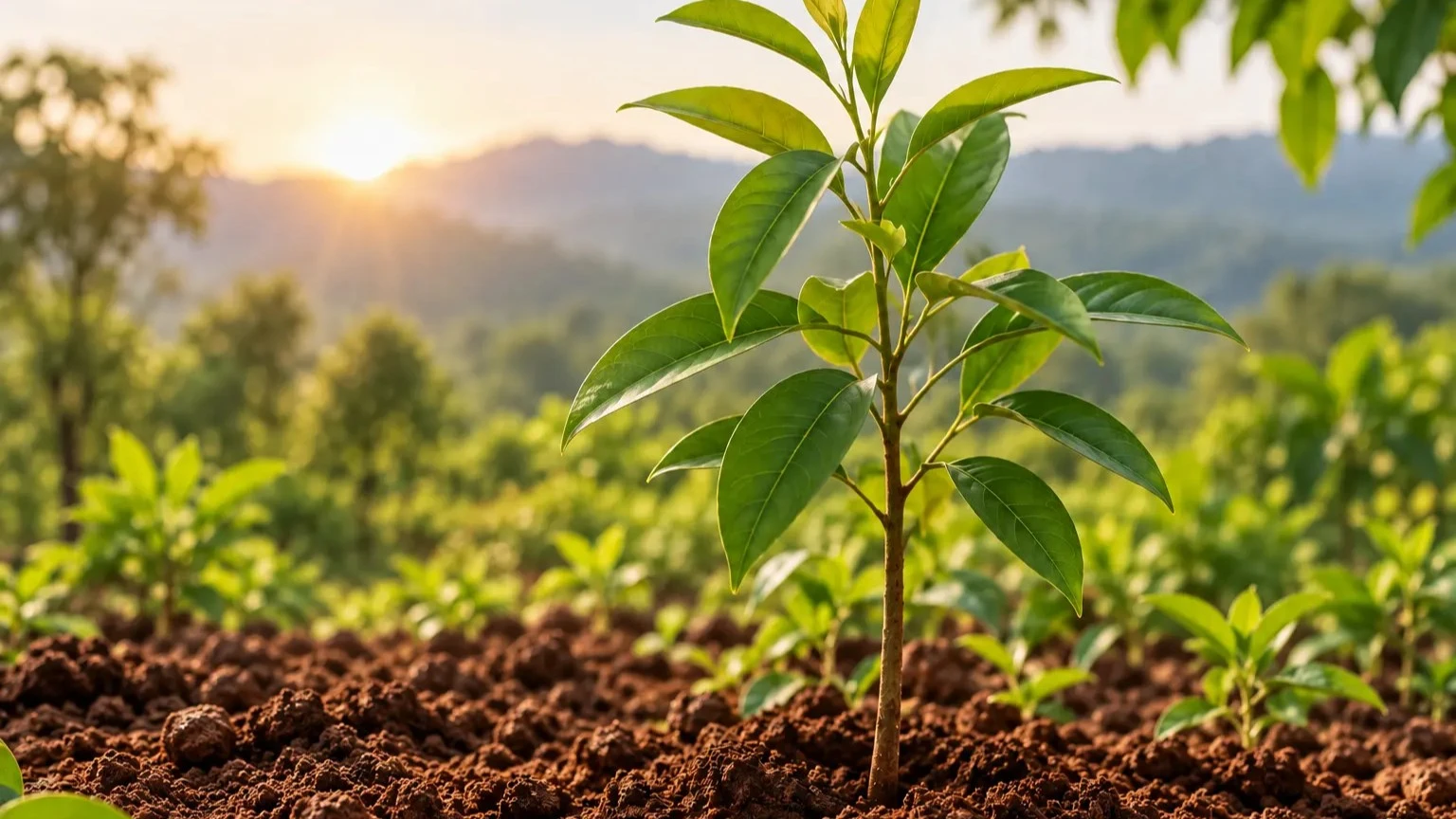
Only white sandalwood needs host trees. Santalum album is a hemi-parasite: it grows special root structures called haustoria that draw water and minerals from nearby host plants throughout its life. Red sandalwood is grown as a standalone timber tree, without that host-tree dependence.
White sandalwood can attach to a very wide range of hosts, reported at about 300 compatible species, which is why a sandalwood plot is really a two-plant system: the sandalwood trees, and the host trees planted to feed them. Get the hosts wrong and the sandalwood struggles, whatever else you do right.
Red sandalwood does not work this way. It is planted and grown on its own as a timber crop, without the host relationship white sandalwood relies on. That single contrast, one tree that cannot feed itself alone and one that can, is the clearest sign these are not the same crop wearing two colours.
How long does each take to harvest
White sandalwood gives workable heartwood in roughly 12 to 15 years, with oil content peaking in trees over 25 years old. Red sandalwood takes multiple decades to build usable heartwood. Fast early height growth in red is not the same thing as harvestable wood.
The web contradicts itself badly here, with pages quoting white at anything between 12 and 20 years and red at anything between 15 and 60. The honest reading separates two things that often get merged: how tall a tree gets, and how much valuable heartwood sits inside it.
In white sandalwood, heartwood begins forming around the seventh year, becomes commercially workable at roughly 12 to 15 years, and reaches its richest oil content in trees over 25. Red sandalwood can put on height quickly, growing several metres in its first few years, but that early growth is trunk, not the dense coloured heartwood that carries the value. That heartwood develops slowly, over decades. So a young red tree can look established long before it holds anything worth harvesting.
Where does each grow best in India
White sandalwood grows across Karnataka and much of India on near-neutral soil, around pH 7.5. Red sandalwood is endemic to the southern Eastern Ghats in Andhra Pradesh, on semi-arid shale soils at acidic pH between 4.5 and 6.5, and it is sensitive to frost.
White sandalwood is the more adaptable of the two. It is cultivated across northern and southern India, with Karnataka as its historic heartland, and it prefers soils near neutral. That wide tolerance is part of why most managed sandalwood in Karnataka is the white species.
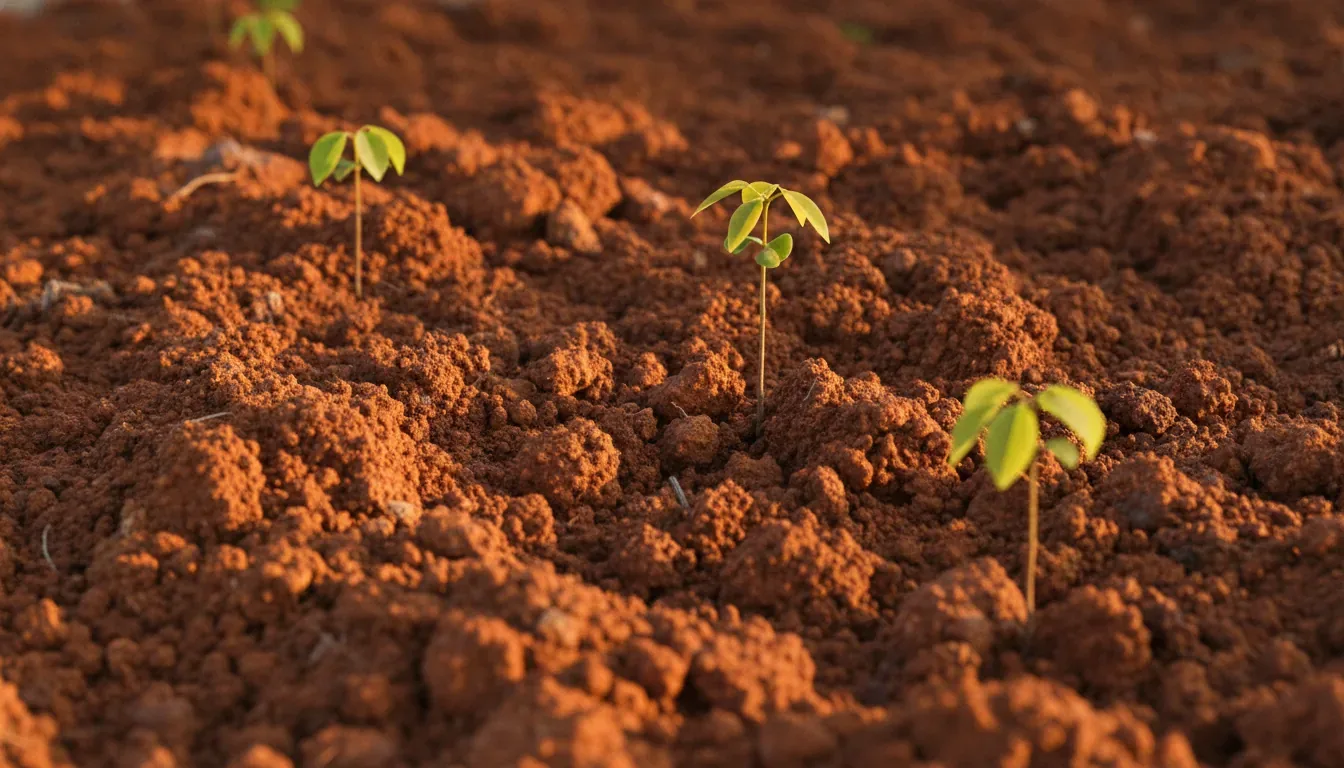
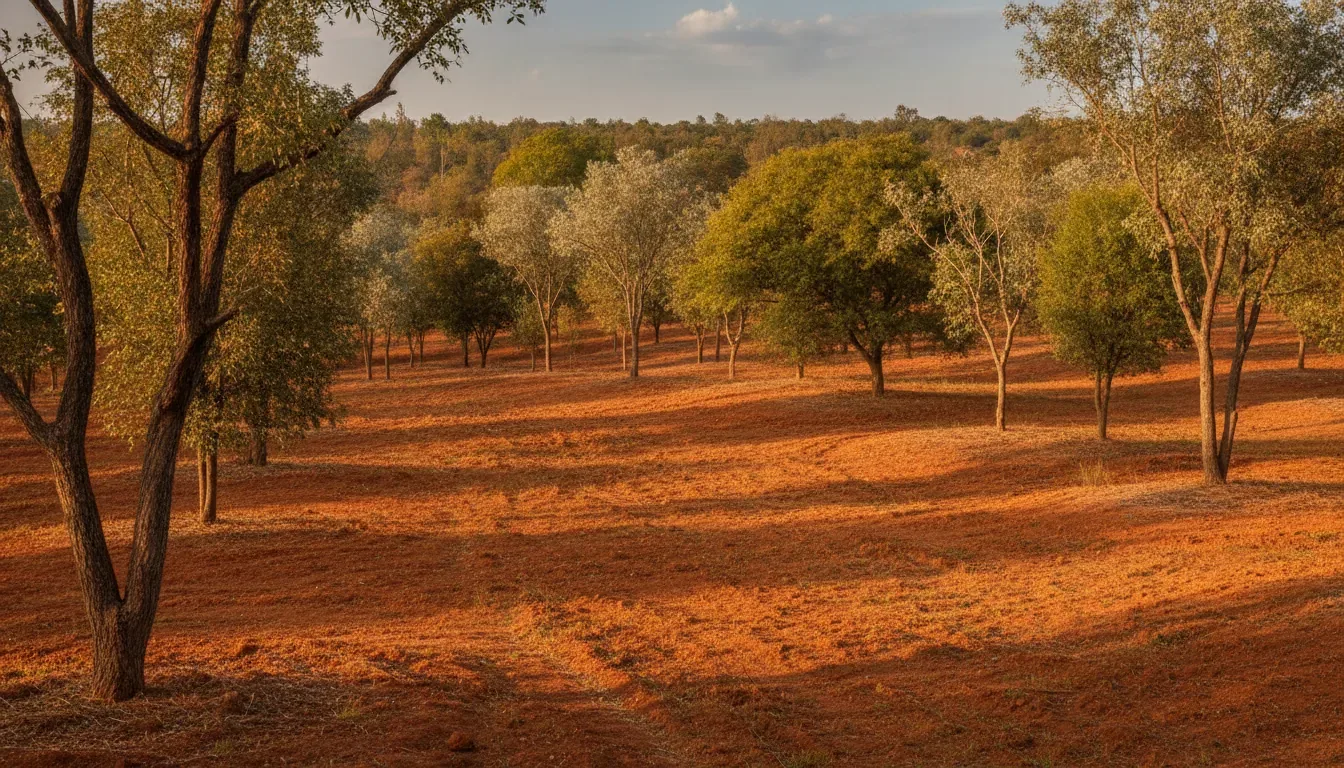
Red sandalwood has a much narrower home range. It occurs naturally in the southern Eastern Ghats, on shale subsoils at around 750 metres, in a semi-arid climate, and it does not tolerate frost, with cold near minus one degree proving lethal. If your land does not resemble that, red is the harder species to grow well.
Is it legal to grow red and white sandalwood in India
Both are legal to grow on privately titled land, under different rules. White sandalwood can be cultivated and sold openly by private landowners in Karnataka, following the 2001 forest amendment and the 2022 state policy. Red sandalwood is legal to cultivate but is registered and permit-gated for felling and transport.
For white sandalwood, the Karnataka Forest Amendment of 2001 first allowed private landowners to cultivate it, and the 2022 Karnataka Sandalwood Policy lets individuals grow the tree and sell it in the open market. Rules vary by state, and some states may still require forest-department conversion or transit permissions.
For red sandalwood, cultivation is legal on patta, or titled, land, but the controls are tighter. Each tree is registered with the forest department, reported at around 300 rupees per plant in Andhra Pradesh, felling needs a permit and inspection, and moving the wood needs a Transit Permit. Red sanders is listed as Near Threatened by the IUCN and sits on CITES Appendix II, so exporting it needs proper documentation and traceability.
This is a summary for the comparison. For the full picture, read the rules for growing sandalwood legally in India, and for the Andhra Pradesh detail specifically, see growing red sandalwood in Andhra Pradesh.
Which is more valuable, red or white sandalwood
They do not compete on a single price; they earn value on different bases. White sandalwood is paid for its aromatic heartwood and oil. Red sandalwood is paid for its dense coloured timber. Comparing the two by one number misreads what each is actually sold for.
White sandalwood’s value sits in its scent. Its heartwood carries a high santalol content, reported between 66.7 and 79.5 percent, and reference figures place heartwood in the range of 7.9 to 12.5 million rupees per tonne, with government heartwood rates cited around 6,500 to 7,500 rupees per kilogram and oil around 150,000 rupees per kilogram. These are reported market and government references, not a projection of what any plot will earn.
Red sandalwood earns differently. It has no aromatic oil, so its worth comes from dense red timber used in furniture, carving, musical instruments, dye and traditional medicine. Because the two are priced on different foundations, the real question is not which number is bigger but which value basis suits your land and your timeline. For per-acre economics rather than headline prices, see sandalwood profit per acre in Karnataka.
Which should you grow, and is there an easier way to own sandalwood
Choose white if you have near-neutral soil in a region like Karnataka and can manage host trees. Choose red if you have acidic, frost-free southern land and the patience for decades and permits. Either way, growing sandalwood yourself is a long, hands-on commitment.
The decision comes down to a few honest questions. What does your soil test say, neutral or acidic? Is your land in white’s broad range or red’s narrow southern one? Can you plant and manage host trees for the whole life of a white plot? Are you prepared for red’s tree registration, felling permits and transit rules? And can you wait 12 to 25 years or more before there is anything to harvest?
For many people the answer to that last question is where enthusiasm meets reality. Growing either species means securing agricultural land, getting the soil and hosts or permits right, and managing the plot for well over a decade. That is the gap Hasiru’s Parva is built to close. Parva is a sandalwood-themed managed-farmland project, managed by Hasiru, for people who want to own a sandalwood plot without running the plantation themselves.
Ownership is structured so the usual doubts are answered up front. Every buyer receives individual ownership through a registered Sale Deed in their own name, so the land is legally theirs. Because that title is individual and registered, the land stays yours regardless of what happens to the company. A formal Maintenance Agreement covers management and upkeep, and Hasiru Care manages the farmland after the sale. Non-agriculturist buyers are eligible to purchase, and owners are free to sell or transfer their plot under a Right of First Refusal policy. Hasiru has operated since 2021, with 300 plus acres delivered and 250 plus families as owners.
One thing to be clear about: managed farmland here is not a quick financial-return product, and it is not sold as one. The theme is the point. Owning a plot at Parva means belonging to a real, managed sandalwood place, not buying into a promised yield. If that is the kind of ownership you want, explore a managed sandalwood plot at Parva.
Frequently asked questions
Is red sandalwood better than white sandalwood?
Neither is better; they are different species for different purposes. White sandalwood is grown for aromatic oil and heartwood, red sandalwood for dense coloured timber. The right choice depends on your soil, region, patience and willingness to handle permits, not on a simple ranking.
What is the cost of 1 kg of red sandalwood?
Red sandalwood is sold as graded timber, so its price turns on age, wood density and legal documentation, all inside a regulated market. This page compares the two species rather than tracking prices. For figures, see the Andhra Pradesh guide and the per-acre economics guide.
How many red sandalwood trees can be planted in one acre?
Planting density depends on spacing, soil and the plantation plan, which sits outside a species comparison. For layout and per-acre planning, see the guide to growing red sandalwood in Andhra Pradesh.
Is it good to invest in red sandalwood farming?
Growing red sandalwood is a multi-decade, permit-gated commitment on titled land, not a quick or guaranteed venture. Whether it suits you depends on your land, capital and patience. For the economics, see the sandalwood profit per acre guide.
Is sandalwood farming legal in India?
Yes, both species are legal to grow on privately titled land, under different rules. White sandalwood is openly cultivable in Karnataka, while red sandalwood is registered and permit-gated for felling and transport. For the full rules, see the guide to growing sandalwood legally in India.