On this page
Karnataka has been the home of Indian sandalwood for centuries, from the Mysore royal monopoly to the soap that still carries the state’s name. A private grower can now legally take part, though the reality is longer, stricter, and riskier than most plantation pitches admit. Hasiru Farms has delivered managed farmland on this corridor since 2021, across 300+ acres and 250+ families, so the picture below is the honest one.
How sandalwood is farmed in Karnataka
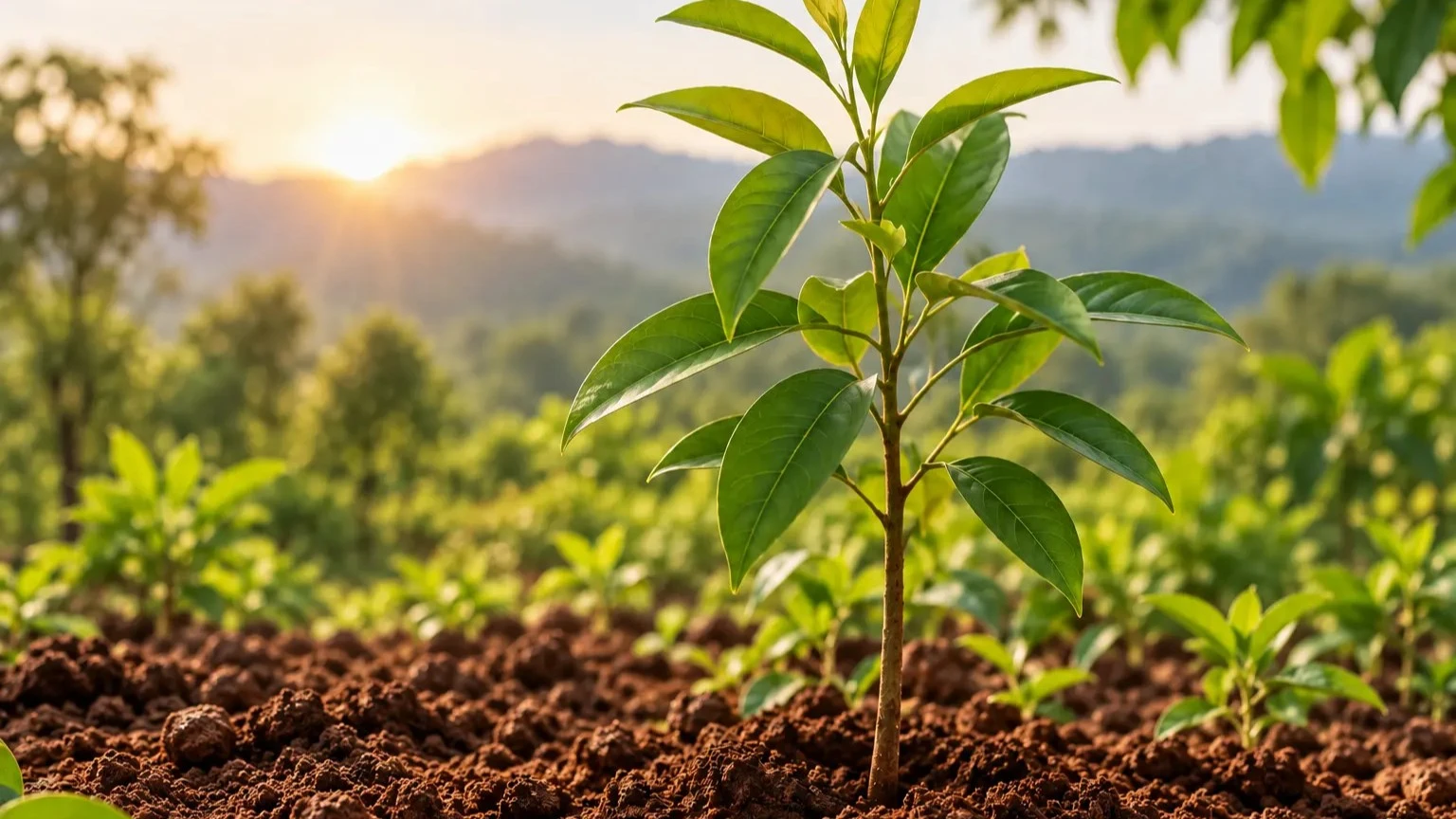
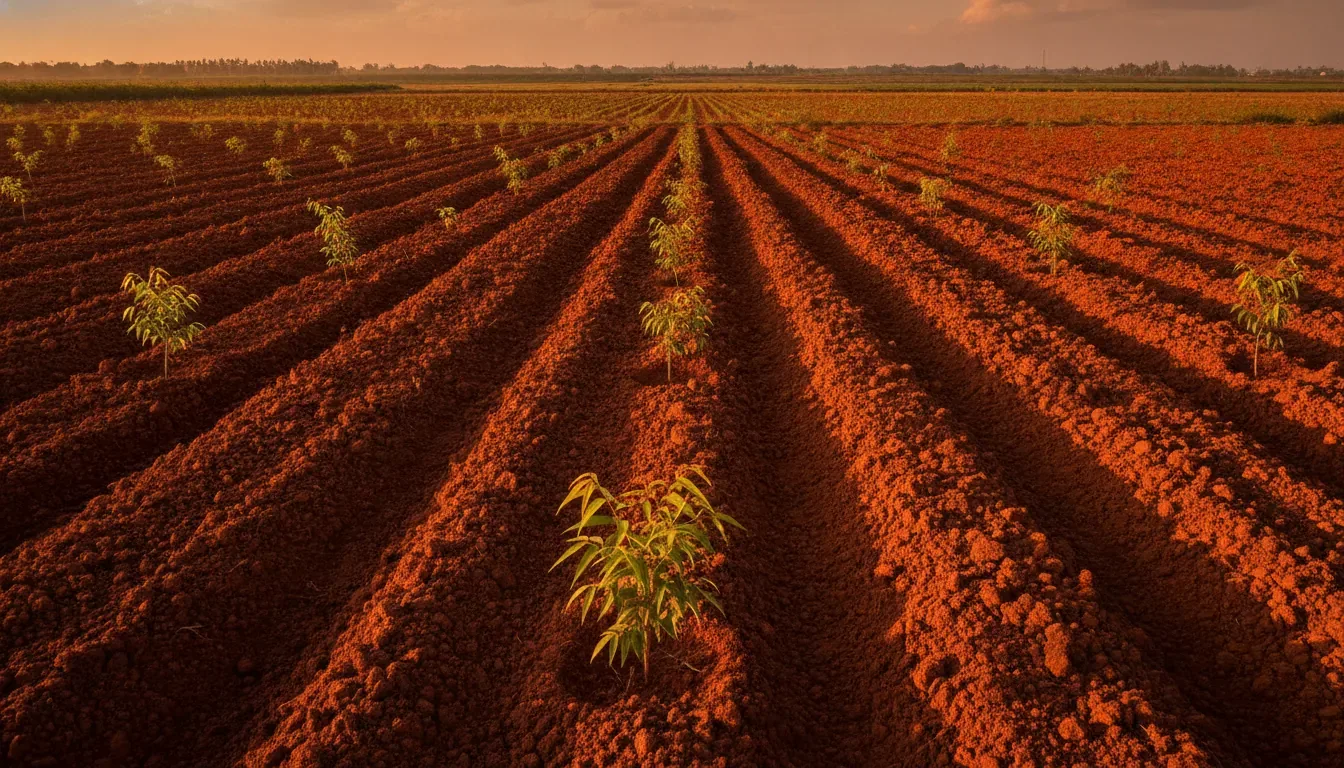
Private growers raise Santalum album, the Indian white sandalwood, alongside host trees on red loamy soil, then register the plantation with the Karnataka Forest Department and tag the trees. Harvest comes after roughly 12 to 15 years and needs Forest Department permission and a transit permit. Since 2022, growers may sell to any buyer, not only government agencies.
TL;DR. Karnataka holds most of India’s natural sandalwood, private cultivation has been legal since 2002, and the state supplies subsidised seedlings through named schemes. The hard parts are the 12 to 15 year wait, tree mortality, and theft. Owning the asset through managed farmland with individual registered title removes the operational burden.
Why is Karnataka the natural home of sandalwood
Karnataka holds close to 60% of India’s natural sandalwood and, together with Tamil Nadu, more than 90% of the country’s total. The Mysore royal monopoly over the tree dates to 1792, and the state still owns Karnataka Soaps and Detergents Ltd, the maker of Mysore Sandal Soap.
Sandalwood is known locally as Srigandha, and it is woven into the state’s identity and industry. That heritage sits against a supply story that has thinned over decades. India’s sandalwood output fell from around 4,000 tonnes in the 1960s to roughly 350 tonnes by 2014, and the country now imports Australian sandalwood, close to 20,000 kg worth about Rs 100 crore between 2019 and 2024. Demand outstripping supply is the backdrop against which private cultivation was opened up, and it is why Karnataka land keeps drawing grower interest.
Is it legal for a private person to grow sandalwood in Karnataka
Yes. The Karnataka Forest (Amendment) Act of 2001, effective from 2002, made private sandalwood cultivation legal and let growers own the trees standing on their own land. Growing is free to do. Harvest, transport, and sale still require Forest Department approval.
Before 2002, all sandalwood belonged to the state even when it grew in someone’s field, which is why the tree was long treated as a liability rather than an asset. The current position is that ownership of the growing tree rests with the landholder, while the state keeps control over the point of extraction and movement. You register and tag the plantation early, then work within that permission system when the trees mature.
The Karnataka rules above are the operational summary. For the full national picture and the finer legal questions, read the complete legal position on sandalwood farming in India.
Where in Karnataka does sandalwood grow best
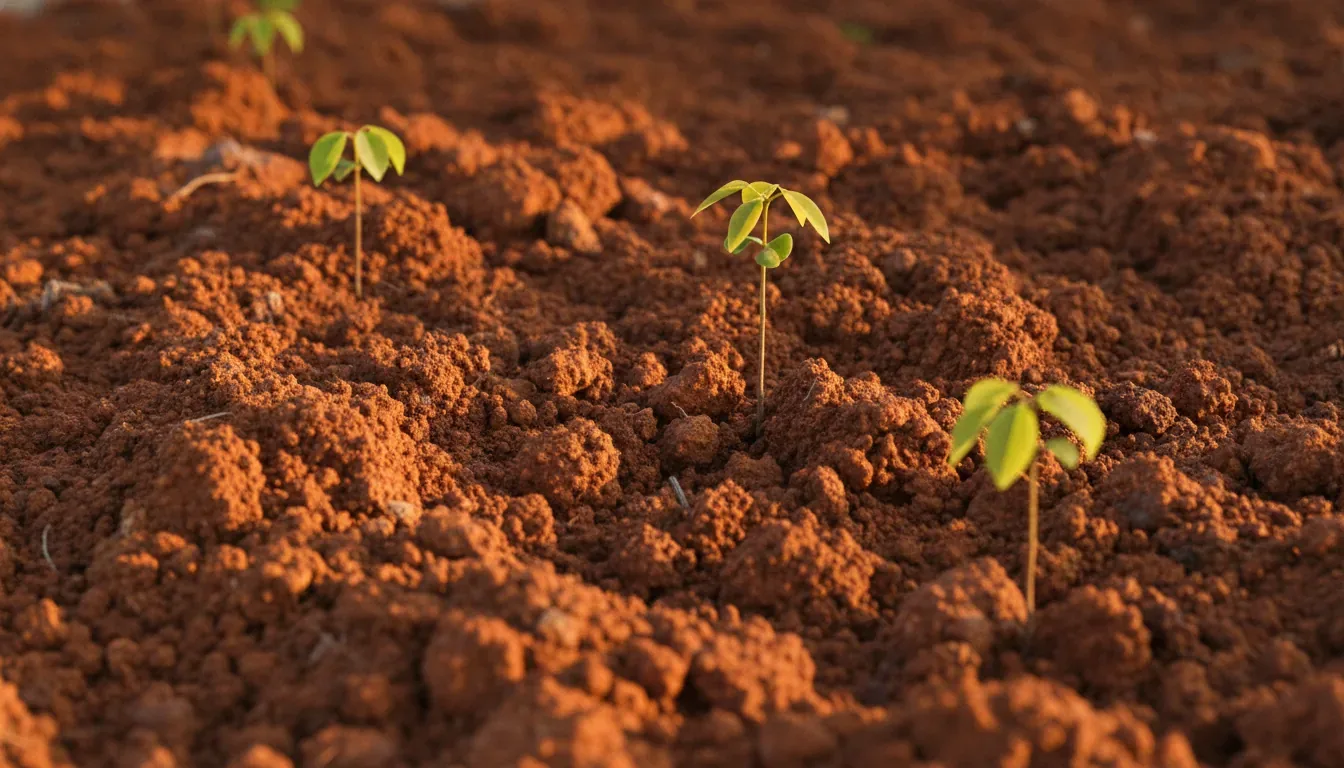
Sandalwood grows best on red loamy or sandy soils with a pH between 6.5 and 7.5, in semi-arid conditions with temperatures between 10 and 40 degrees Celsius. Within Karnataka, Kanakapura, Devanahalli, Tumkur, and Bengaluru rural are among the suited corridors.
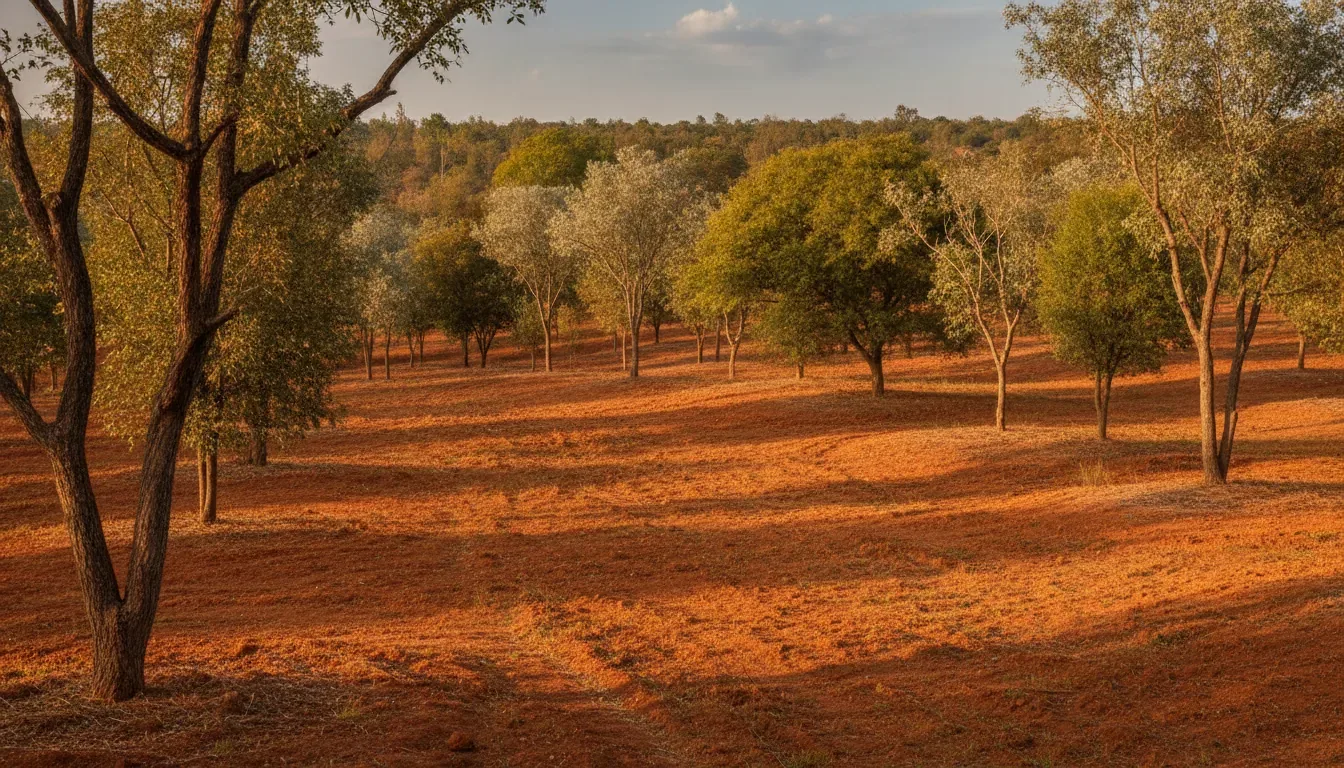
Kanakapura in particular is named for its undulating terrain and fertile red soils, the kind of ground the tree prefers. Good drainage matters more than rich soil, since waterlogging harms the roots. This band of districts around Bengaluru is where private plantations and managed farmland have concentrated, because the soil, the climate, and access to the city all line up.

What host trees does sandalwood need, and how many trees per acre
Sandalwood is a hemiparasite, so it draws part of its nutrients through the roots of host trees and cannot thrive alone. Growers pair each sandalwood with two to three hosts. At about 3 metres by 3 metres spacing, an acre holds roughly 300 to 450 trees in total.
Common hosts used in Karnataka plantations include the following. The mix usually blends a fast early host with longer-lived ones so the sandalwood has support across its full life.
| Host tree | Role in the plantation |
|---|---|
| Red gram (pigeon pea) | Nitrogen-fixing legume, a quick early host in the first years |
| Casuarina | Fast-growing, doubles as a windbreak and a long-term host |
| Neem | Hardy host suited to semi-arid conditions |
| Silver oak | Tall host commonly interplanted in Karnataka |
| Pongamia | Nitrogen-fixing and drought-tolerant host |
| Amla | Fruiting host that adds a secondary crop while the sandalwood matures |
The host trees are not decoration. Without them the sandalwood starves, so the planting plan is as much about the companions as the sandalwood itself.
Does the Karnataka government support or subsidise sandalwood farming
Yes. Karnataka supports growers through named schemes rather than a vague registration. The Sirichandana Vana programme and the Krishi Aranya Yojana provide free or subsidised seedlings, and certified saplings are available through the Forest Department at roughly Rs 35 to Rs 60 each.
Buying certified saplings from the Forest Department route also helps later, because provenance and plantation records are what the department checks at harvest. The table below sets out the schemes and agencies a Karnataka grower deals with.
| Scheme or agency | What it provides |
|---|---|
| Sirichandana Vana (Forest Dept) | Certified sandalwood saplings, roughly Rs 35 to Rs 60 each |
| Krishi Aranya Yojana | Free or subsidised seedlings distributed to farmers |
| Karnataka Soaps and Detergents Ltd (KSDL) | State-owned authorised buyer of harvested heartwood |
| Karnataka State Handicrafts Development Corporation | Authorised buyer of sandalwood since 2008 |
| Range Forest Officer and Form 16 | Harvest inspection and the transit permit needed for legal sale |
For subsidy amounts and any current grower support, the Forest Department’s own listings are the primary source. If you are weighing the money side, see the full profit-per-acre breakdown for Karnataka sandalwood.
How, and to whom, do you sell sandalwood in Karnataka
To sell, a grower applies to the Range Forest Officer with land and plantation records. Officials inspect and mark eligible trees, then issue a transit permit, known as Form 16. Trees below about 60 cm girth measured at 1.3 metres are generally not approved, and the process usually takes three to six months.
The buyers have widened. Karnataka Soaps and Detergents Ltd and the Karnataka State Handicrafts Development Corporation have been authorised buyers since 2008. The bigger shift came in 2022, when Karnataka changed the rules to let growers sell sandalwood to any buyer, not only government agencies. That opened a private market for the first time and is one of the most important recent facts most guides still miss.
Sandalwood is a high-value crop, which is exactly why the numbers around it are quoted so freely and so unevenly. The realistic economics, per acre and per kilogram, are covered separately so this page stays on law, land, and process.
What are the real risks: theft, survival, and the 12 to 15 year wait
The three real risks are the long wait, tree mortality, and theft. Commercial heartwood forms only after about year 10, and dense, high-grade heartwood can take 20 to 25 years. Survival is far from guaranteed, and mature trees are a standing target for thieves.
Two documented Karnataka cases show the honest picture. In Koppal, a grower named K Sharanappa planted 1,000 saplings in 2009. Only about 650 survived, and a 2024 inspection found little developed heartwood, years after the payoff was expected. In Uttara Kannada, Jaya Gowda lost mature trees worth around Rs 40,000 in a single year and spent close to Rs 2.5 lakh on ten CCTV cameras, yet the theft continued. Smuggling is driven by strong demand in markets such as China and Japan, and a lone farm with valuable trees is hard to defend.
None of this makes sandalwood a bad asset. It makes it a long, management-heavy one that rewards patience and punishes neglect. Anyone planning to grow it directly should budget for security, accept a mortality rate, and treat the 12 to 15 year figure as a floor, not a promise.
Can you own a Karnataka sandalwood asset without running the plantation yourself
Yes. Managed farmland lets you own titled land on the sandalwood corridor while a management team handles the ground work. With Hasiru Farms, every buyer receives a registered Sale Deed in their own name, and the in-house Hasiru Care team manages the land after handover.
The ownership is individual and documented, which answers the question almost every buyer asks first. Each plot is surveyed and demarcated before sale, the 11E sketch is approved in your name, the khata is mutated to you, and an individual survey number is assigned. Your document set includes the registered Sale Deed, the RTC in your name, the Encumbrance Certificate, Akarband, Mutation Register Extract, Patta Book, and current tax receipts, alongside a maintenance agreement with Hasiru. Because you hold individual registered title, the land remains yours regardless of what happens to the company.
The land stays agricultural and keeps its agricultural character, so no RERA registration applies, and both non-agriculturists and NRIs are eligible to buy. Due diligence before any project traces parent title back 60 years or more and checks EC, RTC, mutation entries, survey records, PTCL status, pending litigation, tenancy, and zoning. On exit, you are free to sell or transfer, with Hasiru holding a Right of First Refusal: if you wish to sell, Hasiru gets the first opportunity, and if it declines, you may sell to a third party on agreed terms.
What Hasiru does not do is promise a return. Speculative crore figures are not part of how the model is sold, and that is deliberate. The theme-based managed place, held in your own name and maintained for life after the sale, is the point, not a projected yield. On the sandalwood question specifically, the value here is a titled asset on the Kanakapura corridor with the operational burden of forest-department process, host planting, irrigation, and theft handled for you.
See Parva, our managed farmland project on the Kanakapura Road sandalwood corridor, or step back to the complete guide to sandalwood farming in India for the national picture.
Frequently asked questions
How many days will it take to grow a sandalwood tree?
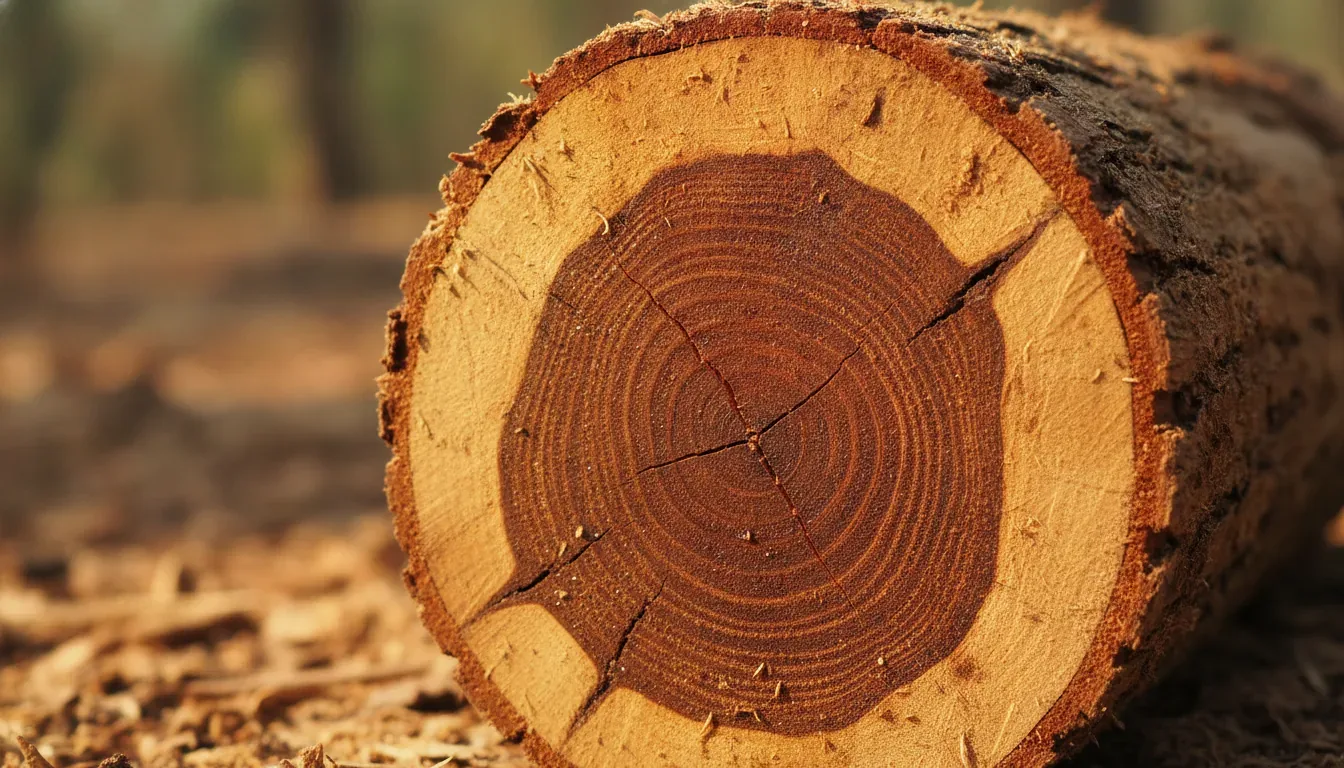
A sandalwood tree reaches commercial maturity in roughly 12 to 15 years. Heartwood, the valuable part, only begins forming around year 10, and dense high-grade heartwood can take 20 to 25 years. It is a long-horizon crop, not a fast one.
How much does 1 kg of sandalwood cost?
Sandalwood is among India’s most valuable woods, and per-kilogram prices are quoted widely but inconsistently across sellers. Because figures vary so much and realisation is uncertain, the actual pricing is handled on our profit-per-acre page rather than stated as a single number here.
What is the price of a 20 year old sandalwood tree?
Per-tree value depends on heartwood weight and grade, which vary tree to tree, so any single price quoted online is an estimate, not a guarantee. We keep verified price and yield ranges to the profit-per-acre page and treat them as external estimates only, since realisation is genuinely uncertain.
Do I own the land in my own name?
Yes. With Hasiru Farms every buyer receives a registered Sale Deed executed in their own name, with the khata mutated to them and an individual survey number assigned. Because the title is individual, the land remains yours regardless of what happens to the company.
Who maintains the land, and what if I rarely visit?
The in-house Hasiru Care team manages the farmland after handover, under a formal maintenance agreement, with on-ground staff present at the Kanakapura Road corridor sites. The model is built for owners who cannot visit often.
Can I exit or transfer my plot later?
Yes. Owners are free to sell or transfer. Hasiru follows a Right of First Refusal: if you wish to sell, Hasiru gets the first opportunity, and if it declines, you may sell to a third party through Hasiru on agreed terms.
Is there security against theft on managed farmland?
Managed sites on the Kanakapura Road corridor have on-ground staff presence, which is one practical reason owners prefer a managed model over defending an isolated plantation alone. Theft is a real risk for lone growers of a high-value tree.