If you work in IT in Bangalore, chances are:
- Someone on your team has bought a managed farm plot
- Your WhatsApp is full of “farm visit” photos
- You’ve seen reels about “weekend life in the countryside”
At the same time, you’ve probably heard the other side too:
“It’s all hype.”
“Prices are inflated.”
“Resale is a nightmare.”
So what’s the truth?
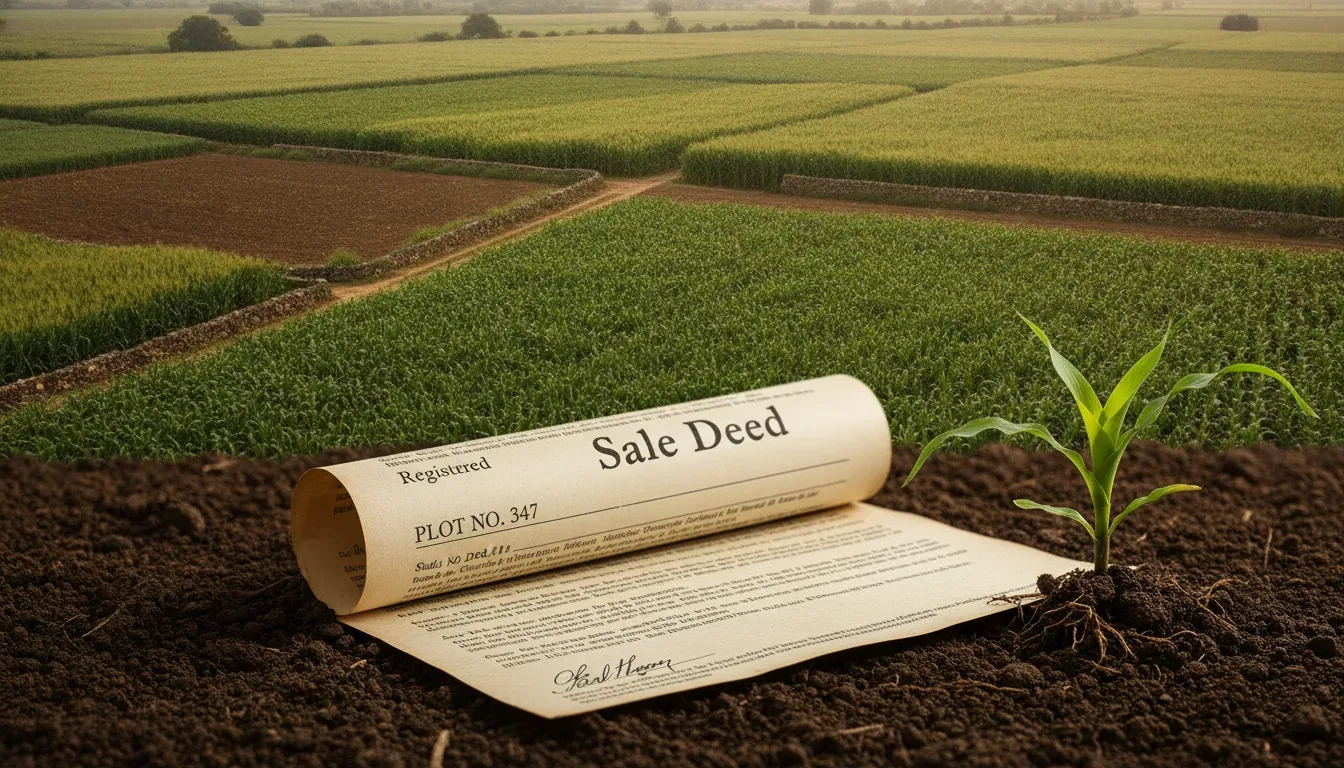
Is buying a farm plot around Bangalore actually a good investment, or just a beautiful mistake?
This guide is a no-nonsense breakdown specifically for Bangalore / Karnataka IT professionals. By the end, you’ll know:
- When a farm plot can be a sensible long-term move
- When you should definitely avoid it
- How to evaluate any managed farmland project brindavan(including ours at Hasiru Farms) with a clear head
Table of Contents
Why Bangalore IT Professionals Are Even Considering Farm Plots
City real estate fatigue is real
If you’ve looked at apartments or sites in Bangalore lately, you know the feeling:
- Prices keep climbing
- Quality of life doesn’t always match the EMI
- You’re still surrounded by traffic, noise, and concrete
After a point, another flat in another crowded locality doesn’t feel like “upgrading life”. It feels like more of the same.
That’s where farm plots start looking attractive:
“Instead of another box in the city, why not land, trees, open sky… and a place my kids love?”
The hunt for a weekend escape + better lifestyle
IT jobs are intense:
- Long hours, screens, deadlines
- Limited time outdoors
- Parents / kids wanting more nature and calm
A farm plot offers:
- Somewhere to go every weekend without booking homestays, book a visit with hasiru farms
- Fresh air, open space, slower pace
- A tangible connection to food and soil
For many, it’s less about “pure ROI” and more about quality of life.
Social proof and FOMO
You see colleagues:
- Visiting “their” farm every month
- Posting harvest photos
- Talking about “getting in early before prices shoot up”
You start wondering:
“Am I missing out on something big… or just being smart by waiting?”
That’s exactly why you’re reading this, and it’s a good sign — you’re not jumping blindly.

The Tough Truth: Common Concerns About Farm Plot Investments
Let’s be brutally honest about what people worry about (often with good reason).
“Aren’t managed farm plots just overpriced agricultural land?”
In many projects, you’re not just buying raw agricultural land. You’re paying for:
- Infrastructure (internal roads, fencing, electricity, water systems)
- Common amenities (clubhouse, seating areas, landscaping)
- Management setup (staff, tools, systems)
- Brand / marketing / margin
This naturally creates a premium over purely local land rates.
The problem is when:
- You’re paying a huge premium
- But you still don’t see decent infra, planning, or professional management
A fair premium is okay. An unjustified markup is not.
“What if I can’t resell it later?”
Resale is a real concern. Farm plots are usually:
- Less liquid than city apartments
- Dependent on demand from similar buyers (urban professionals, second-home seekers)
- Strongly influenced by how well the corridor develops (roads, tourism, nearby projects)
If you think of this like buying a stock you can sell any day, you’ll be disappointed.
If you think of it like a slow, long-term, niche asset, expectations are more realistic.
“I’m scared of legal issues and scams”
This is probably the #1 fear for urban buyers:
- Confusing land records
- Unclear conversion status
- Vague ownership models
- “This will become residential layout later” kind of promises
There are bad actors and sloppy projects out there. That’s why legal due diligence (ideally with an independent lawyer) is non-negotiable.
“Are returns exaggerated in marketing pitches?”
Sometimes, yes.
You may hear lines like:
- “Land value will double in 3–4 years”
- “You’ll earn huge income from crops”
- “This is better than any other investment”
The reality:
- Appreciation is heavily tied to location + infra + time horizon, not just branding
- Agriculture income is usually a bonus, not a guaranteed fixed return
- Short-term flips rarely work out well in this category
You’re right to be cautious.
But that doesn’t mean farm plots are always a bad idea. It just means you need a framework.
When Buying a Farm Plot Around Bangalore Can Be a Good Investment
Here’s the practical framework. A farm plot can be a sensible move if most of these conditions are true.
1. The location has growth, connectivity, and lifestyle value
Look for corridors that balance:
- Drive time: usually within 1.5–3 hours of your home in Bangalore
- Roads: National/State highways, decent internal roads
- Growth drivers: tourism, ring roads/expressways, education or industry, eco-tourism potential
- Lifestyle value: greenery, water availability, pleasant climate, nearby attractions , Nabard reports
A farm plot 50–100 km away in a promising corridor is very different from obscure interior land bought just because it’s cheap.
2. The pricing premium is understandable (not blind markup)
A managed farmland project will always cost more than raw land from a local broker.
That’s fine if you can answer:
- What is the approximate raw land rate in this area?
- How much extra am I paying for infra, common amenities, management, and brand?
- Do I actually see that value on the ground?
If the pricing logic makes sense and you can see the quality of development, the premium is justified.
If the pricing is hazy and you’re told “Sir, this is future appreciation, don’t worry about details” — that’s a red flag.
3. Your time horizon is at least 7–10 years
This is critical.
Farm plots are long-term assets. They typically make sense if:
- You’re willing to hold for 7–10+ years
- You’re okay with slow, steady appreciation rather than quick jumps
- You view it like owning part of a growing lifestyle corridor, not a stock to flip
If you think, “I’ll sell in 2–3 years and double my money” — this category is probably not for you.
4. You’re investing surplus, not stretching your finances
Farm plots work best when:
- Your basics are covered (emergency fund, essential insurance, key life goals)
- You’re not putting every last rupee into it
- You’re not over-leveraging yourself with risky EMIs
It should be:
“Even if I don’t sell this for 10 years, I’m okay — and I’ll enjoy using it.”
Not:
“If something goes wrong, I’m in serious trouble.”

Understanding the Two Kinds of Returns: Money and Life
Financial returns – what’s realistic?
Possible financial benefits:
- Land appreciation:
Over 7–10+ years, if the corridor develops well
- Potential agri income:
Depending on the crop (fruits, timber, spices, etc.), and the model used by your managed farmland provider
However, it’s safer to think like this:
- “I’m entering a growing corridor; land here may appreciate over time”
- “Any agri income is a bonus, not a guaranteed main return”
If a project frames this like a fixed-return financial product, be careful. It’s land + agriculture, not a bank FD.
“Life returns” – the part people don’t talk about enough
This is where many IT buyers feel the real value:
- Regular weekend visits that help you reset mentally
- A place where your kids can run around, climb trees, and see how food grows
- A quiet corner of the world that’s yours — to host friends, celebrate festivals, or work from under a tree
For a lot of owners, the internal dialogue becomes:
“Even if the money return is moderate, the life return has been totally worth it.”
If you care about mental health, nature, and family experiences, this part matters a lot.
Major Risks You Must Control Before Buying
A farm plot can still be a bad decision if you ignore these.
Legal and documentation risk
Non-negotiable checks:
- Clear title and chain of documents
- Transparent explanation of who owns what
- Whether the land is agricultural and how the project is structured
- Independent legal opinion (not just the developer’s lawyer)
If you feel rushed, confused, or pressured to “just trust and sign”, step back.
Developer and execution risk
You’re not just buying land. You’re also trusting people to:
- Develop internal roads, fencing, and basic infra
- Manage water and soil properly
- Plant, maintain, and harvest crops
- Keep you updated and involved
Look for:
- Completed projects, not just promises
- Real photos, not only renders
- Reviews and word-of-mouth feedback
- Clarity on what’s included in ongoing management fees
Liquidity and exit risk
Ask yourself honestly:
- “Am I okay if I hold this for 10 years?”
- “Do I have other financial assets that are easy to liquidate if needed?”
Some projects help connect buyers and sellers later, but it’s never as instant as liquidating a mutual fund or selling a city flat.
Expectation mismatch risk
Most disappointment comes from wrong expectations, for example:
- Expecting fast, guaranteed returns
- Believing maintenance will always be free or minimal
- Assuming a resort/clubhouse/XYZ infra will come “soon” without timelines
The best way to avoid regret is to understand exactly what you’re signing up for, in writing.
A 7-Question Checklist: Is a Farm Plot Near Bangalore Right for You?
Use this as a quick decision filter:
- Can I comfortably hold this investment for 7–10 years or more?
- Will my finances be okay if this stays illiquid during that time rainfall updates?
- Do I clearly understand the legal structure and documents involved?
- Do I trust the developer’s track record, based on completed work (not just brochures)?
- Is the location on a believable growth path with good connectivity?
- Am I genuinely excited about using the farm for weekends, wellness, and family time?
- Have I compared this option with flats, city plots, or other investments for the same budget?
If most answers are “yes”, a farm plot could be a good fit.
If many answers are “no”, you might be forcing yourself into the category because of FOMO.
How to Evaluate Any Managed Farmland Project (Including Ours) Objectively
Here’s a simple framework you can use with any project.
Land & location questions
- How far is it (realistically) from my home?
- Are roads good enough that I’ll actually want to travel often?
- What’s happening around that area in terms of tourism, infra, or development?
- Is there decent water availability and soil quality?
Developer questions
- How many acres have they already developed and are currently managing?
- Can they show completed communities, not just future plans?
- How do they share updates – tech dashboard, WhatsApp, visits?
- What exactly is included in the management service?
Legal & documentation questions
- Will I get clear, individual ownership of my plot?
- What land records and approvals can I see and verify?
- What does the management agreement say about responsibilities, fees, and exits?
If a developer welcomes these questions and answers clearly, it’s a good sign.
If they dodge or give vague answers, walk away.
So… Is a Farm Plot Near Bangalore a Good Investment for You?
It can be a great idea if:
- You have surplus capital and don’t need quick liquidity
- You want a mix of long-term land appreciation + lifestyle value
- You’re willing to hold for 7–10+ years
- You’re excited about visiting and using your farm, not just owning it on paper
It may be a bad idea if:
- You’re expecting fast, guaranteed returns
- You’re stretching financially to make it happen
- You dislike travel or don’t see yourself spending time there
- You’re not willing to dig into legal and project details
There’s no single right answer. But an informed “yes” or “no” is far better than an emotional decision.
Why Many IT Professionals Choose Hasiru Farms
If your checklist points towards “yes, this category fits me”, the next question is: with whom?
Here’s how Hasiru Farms is positioned for Bangalore / Karnataka IT buyers legal checklist:
1. Theme-based, wellness-focused communities
We don’t do random land aggregation. Our projects are designed as theme-based farmland communities – think:
- Fruit orchards
- Coffee & misty Western Ghats vibes
- Nature + culture experiences
- Spaces that are meant to be lived in and experienced, not just traded on paper
The idea is simple: your farm should feel like a second home, not just a “remote asset”.
2. Managed farmland built for busy professionals
Most IT buyers don’t have the time to:
- Find and vet local labour
- Manage irrigation, fencing, crop planning
- Visit every week just to “check on things”
Hasiru’s model focuses on end-to-end management so that you can:
- Visit when you want
- Enjoy the space
- Trust that the day-to-day is taken care of by a professional team
3. Tech-enabled transparency (not just promises)
We know you live in dashboards and metrics. That’s why we bring tech into farmland too:
- Regular updates
- Photos and progress sharing
- Structured communication on operations and milestones
So even if you can’t visit often, you’re not in the dark about what’s happening on your farm.
4. Carefully chosen locations around Bangalore & Karnataka
Our communities are located in carefully evaluated corridors around Bangalore and Karnataka – with an eye on:
- Realistic drive times from the city
- Good connectivity
- Water and soil quality
- Long-term potential and lifestyle appeal
We’d rather say “no” to a location than put our owners in a place we wouldn’t personally choose.
5. Community & culture, not just plots
Hasiru isn’t only about land + trees. It’s about:
- Community events
- Harvest days
- Cultural gatherings and shared experiences
Because the real joy of a farm is multiplied when it’s shared with others on the same journey.
FAQs: Buying a Farm Plot Near Bangalore
1. Is buying a farm plot near Bangalore a good investment for an IT employee?
It can be, if:
You’re using surplus capital
You’re okay with a 7–10+ year horizon
You value both financial and lifestyle returns
You choose a good corridor and a trustworthy developer
If you need quick returns or guaranteed income, it’s not the right fit.
2. Are managed farm plots near bangalore overpriced compared to local agricultural land?
They do carry a premium, because you’re paying for:
Development (roads, fencing, basic infra)
Common amenities
Professional management
Brand and planning
The key is whether that premium is justified and visible. Always compare with the underlying land value and what is delivered on top.
3. How long should I plan to hold a farm plot near Bangalore?
Ideally, think in terms of 7–10 years or more.
Short-term flipping expectations usually lead to disappointment. Farmland is best treated as a long-term lifestyle + asset story.
4. Is it hard to resell a farm plot?
Resale is generally slower than with city flats or popular plotted layouts.
Your chances of a smoother exit improve if:
The location has developed well over time
The community and project are well-maintained
The developer or community helps connect buyers and sellers
Still, always assume lower liquidity compared to typical urban real estate.
5. What should I check legally before buying a farm plot?
At minimum:
Title and chain of documents
Clear explanation of your ownership structure
Relevant land records and approvals for the project model
Terms of the management agreement
Ideally, an independent lawyer reviewing everything
Never skip due diligence because of social proof or pressure.
6. Why should I consider Hasiru Farms specifically?
Because if your checklist points to “yes, I want a managed farm near Bangalore”, Hasiru aims to provide:
Theme-based, wellness-focused communities
End-to-end management for busy urban professionals
Tech-enabled transparency
Thoughtfully chosen locations with long-term potential
A growing community of like-minded owners
If that resonates with you, the next step is simple: