Most managed farmland decisions do not stall because buyers lack interest. They stall because the information sits in too many places. One detail is in the brochure. Another comes up on a sales call. Something else appears during the site visit. Costs get explained later. Maintenance sounds clear until you ask what is actually included.
That is why a one-page investment memo works so well.
Instead of collecting endless notes and still feeling unsure, you create a single-page decision document that tells you whether a managed farmland opportunity fits your goal, budget, risk comfort, and time horizon. It is not a legal opinion and it is not a financial forecast. It is a practical filter that helps you move faster, ask better questions, and avoid slow confusion.
A good managed farmland investment memo should answer one question clearly: Should I proceed, proceed after verification, or walk away?
Table of Contents
What this memo helps you do
A one-page memo is useful because managed farmland is rarely bought on price alone. Buyers usually care about a mix of things: ownership clarity, farm management quality, water security, crop suitability, maintenance transparency, long-term usability, and portfolio fit.
That makes this asset class different from a simple land listing. The land matters, but the operating system around the land matters too. Hasiru Farms itself positions managed farmland as a theme-based ownership model supported by farm management, sustainability practices, and reporting visibility, which is exactly why buyers need a sharper screening tool before they commit.
Use this memo if you are:
- comparing two or more managed farmland projects
- trying to decide whether to schedule a second visit
- evaluating whether the operator is credible
- checking if the asset fits your broader investment mix
- preparing for a family decision or token payment discussion
The 1-page managed farmland investment memo template
Copy this template into a doc, note app, or printed worksheet.
1) Buyer goal
Why am I buying this?
Choose the primary reason:
- long-term land appreciation
- passive farm ownership
- weekend lifestyle use
- family legacy asset
- diversified real asset exposure
- future farmstay or retreat use
Holding period:
3 to 5 years / 5 to 10 years / 10+ years
Budget ceiling:
Land cost + registration + development + annual maintenance + contingency
Decision note:
If your actual goal is lifestyle, do not evaluate the project only on yield. If your actual goal is income, do not ignore operating transparency just because the site looks attractive.
2) Asset snapshot
- Project name:
- Location:
- Plot size:
- Theme or concept:
- Freehold title or other structure:
- Who handles day-to-day farm operations:
- Is the use case clear from day one:
3) Legal and access check
- RTC / Pahani checked:
- Mutation status checked:
- Survey boundaries clear:
- Access road clarity:
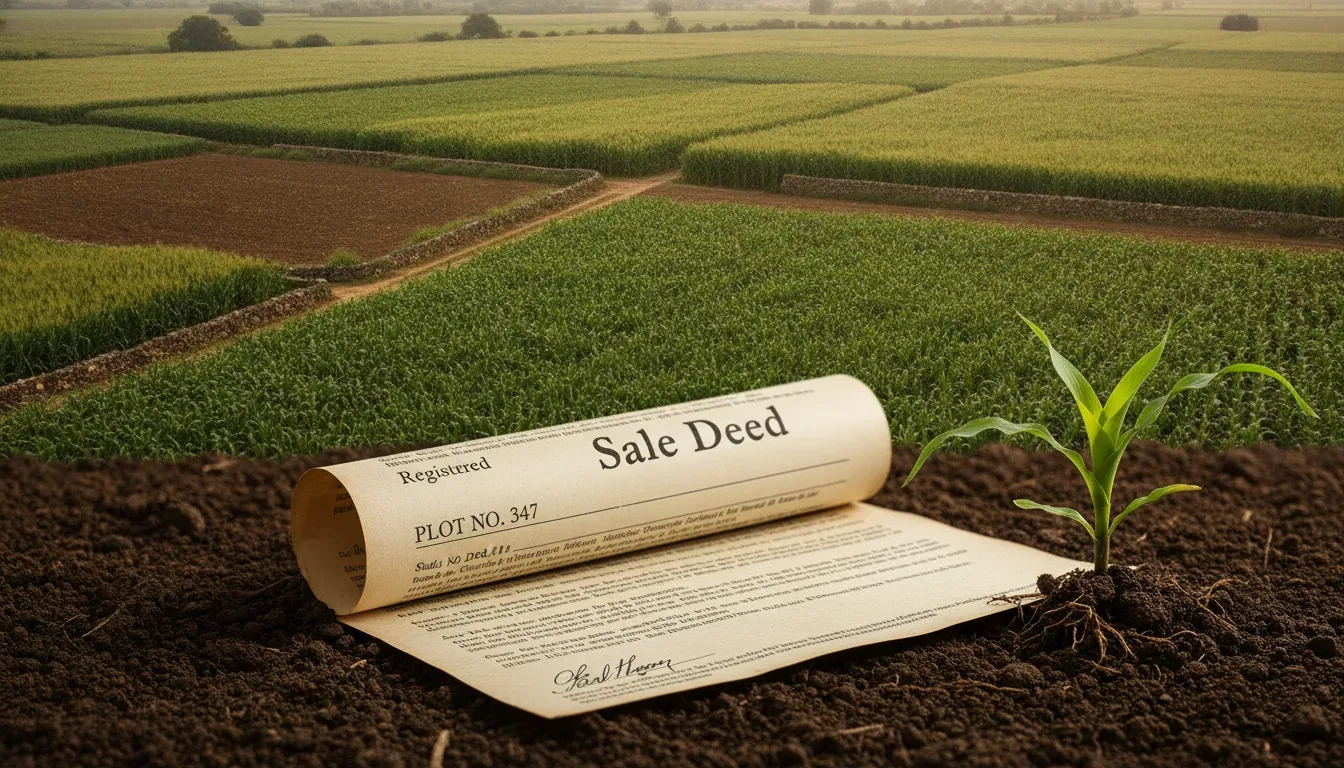
- Sale deed draft reviewed:
- Any usage limitations understood:
In Karnataka, the official Bhoomi portal is a key source for checking land records such as RTC and related ownership data, so your memo should always mark whether official records were independently verified.
4) Water, soil, and crop viability
- Main water source:
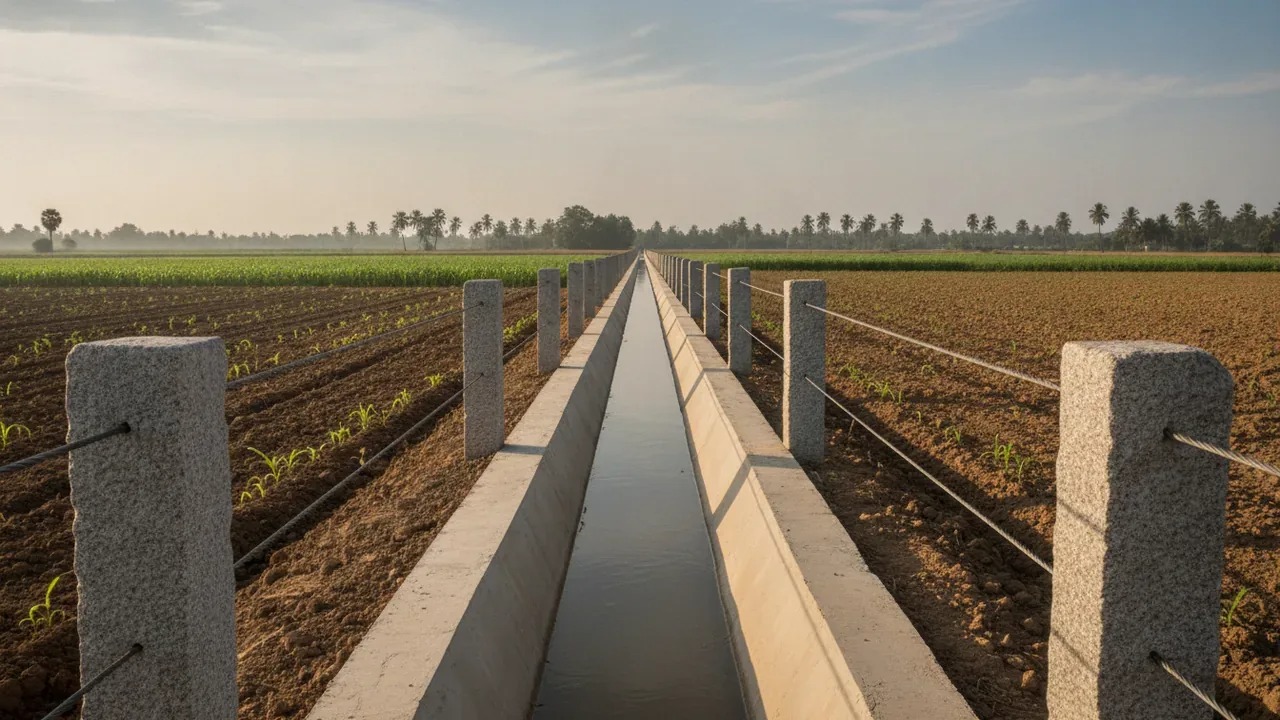
- Irrigation system present:
- Soil readiness explained:
- Crop plan shared:
- Time to first meaningful output:
- Is the crop model realistic for the location:
Sustainable land management depends on how soil, water, and biodiversity are protected and used over time, so your memo should treat these as core decision variables, not nice extras.
5) Operator capability
- What exactly is included in maintenance:
- On-ground farm team visible:
- Reporting frequency:
- Response process if something fails:
- Crop planning responsibility:
- Harvest handling clarity:
- Escalation point named:
This section is where many decisions become clearer. A beautiful brochure cannot compensate for vague farm operations. If the operator cannot explain who maintains irrigation, who monitors crop health, how updates are shared, and how issues are handled, your memo should reflect that weakness immediately.
6) Cost stack
- Base land price:
- Registration and statutory costs:
- Development charges:
- Annual maintenance charges:
- Crop operations cost:
- Optional add-ons:
- Hidden exclusions:
- GST or other taxes where applicable:
A memo becomes powerful when it separates one-time costs from recurring costs. Many buyers compare only headline land price, then later discover that infrastructure, maintenance, or operating assumptions change the actual decision.
7) Return realism
- Appreciation thesis:
- Farm income thesis:
- Best-case scenario:
- Base-case scenario:
- Slow-case scenario:
- What is projected vs what is contractually committed:
This section should be sober. A memo is not a pitch deck. It should distinguish between expected performance, possible upside, and assumptions that still need evidence.
8) Exit and flexibility
- Who is the likely future buyer:
- Is resale demand location-led or operator-led:
- Can the land also serve personal use:
- Does the project stay attractive if resale takes time:
- Am I comfortable holding this through a slower cycle:
9) Final recommendation
Use one of these three outcomes:
- Proceed
- Proceed after verification
- Do not proceed
Then add one line only:
Why this is my decision:

A simple scorecard you can add to the memo
Use a 1 to 5 score for each category.
| Category | Score (1-5) | What to check |
|---|---|---|
| Goal fit | Matches your real reason for buying | |
| Legal clarity | Records, boundaries, access, documentation | |
| Water and crop viability | Water source, irrigation, crop realism | |
| Operator quality | Management, reporting, accountability | |
| Cost clarity | Transparent all-in cost structure | |
| Exit comfort | Resale logic, holding flexibility |
Interpretation
- 24 to 30 = strong fit, proceed with normal verification
- 18 to 23 = possible fit, verify gaps before moving
- Below 18 = likely mismatch or weak visibility
How to fill this memo in 15 minutes
The fastest way to use this template is not to answer everything at once. Use three passes.
Pass 1: Fill known facts
Take the brochure, website, and project sheet. Fill only what is clearly stated.
Pass 2: Mark unknowns
Anything unclear should be marked as unknown, not guessed. Unknowns are often more important than the facts you already have.
Pass 3: Score only verifiable items
Do not give full marks to marketing language. Score only what was shown, documented, or explained with enough detail to test.
This structure is also aligned with basic portfolio thinking. SEBI’s investor education materials note that investment choices should be judged against goals, risk tolerance, time horizon, and overall financial situation, which is exactly why your memo should begin with buyer fit before land features.
Sample filled memo for a hypothetical buyer
Let us say a Bangalore-based professional is comparing two managed farmland opportunities.
Buyer goal: long-term land ownership with occasional family use
Holding period: 7 to 10 years
Budget ceiling: fixed, with moderate comfort for annual maintenance
Must-have: credible operator and clear records
Nice-to-have: wellness or retreat value
Project A
- Strong concept and location appeal
- Attractive visuals
- Water explanation is broad
- Cost sheet is partially clear
- Maintenance scope sounds good but not itemized
- Reporting process is vague
Project B
- Less glamorous presentation
- Better document readiness
- Clear irrigation explanation
- Maintenance scope listed clearly
- Reporting cadence defined
- Slightly higher annual fee
Memo outcome: Proceed after verification with Project B.
Why? Because decision speed improves when ambiguity drops. The more investable option is often the one with better operating clarity, not better storytelling.

Red flags that should change the memo outcome
A managed farmland memo becomes most valuable when it helps you say no early.
Watch for these red flags:
- the project sounds premium but the operating scope is not documented
- water source is described loosely without practical detail
- costs are grouped into vague labels with no breakup
- updates are promised but no reporting rhythm is defined
- site boundaries or access discussions stay unclear
- returns are discussed more confidently than the operating plan
- lifestyle language hides weak maintenance visibility
- the seller pushes speed before your due diligence is complete
Common mistakes buyers make with this template
Mistake 1: Turning the memo into a brochure summary
A decision memo is not a place to repeat the seller’s claims. It is a place to test them.
Mistake 2: Scoring only on price
Cheaper land is not automatically the better choice if legal clarity, water access, or management quality is weak.
Mistake 3: Mixing lifestyle and investment logic
If you want a family retreat, admit that. If you want stronger passive income potential, admit that too. The wrong decision often begins with a hidden goal.
Mistake 4: Ignoring recurring operating quality
Managed farmland is not just a purchase. It is a purchase plus an operating relationship.
Mistake 5: Confusing confidence with proof
The more important the point, the more it should be verified, not narrated.
When this memo is especially useful
This one-page memo works best when:
- you are comparing multiple projects
- family members need a common decision sheet
- you want clarity before a token payment
- you feel emotionally drawn to one project and need a reality check
- you want a repeatable way to assess future opportunities
In short, the memo helps you move from excitement to judgment.
Conclusion
Managed farmland can be a meaningful long-term asset, but only when the decision is made with enough structure. A one-page memo does not remove all risk, but it does remove a lot of avoidable confusion. It helps you organize facts, expose gaps, compare options fairly, and decide with more confidence.
The best outcome is not always an immediate yes. Sometimes the best outcome is a cleaner maybe. Sometimes it is a faster no. Both save time and capital.
If you are exploring managed farmland opportunities, use this memo before your next site visit, before your next sales call, and definitely before any booking decision.
FAQ
What is a managed farmland investment memo?
It is a one-page decision sheet that helps you assess whether a managed farmland opportunity fits your goals, budget, risk tolerance, and verification standards.
Is this memo only for first-time buyers?
No. It is just as useful for experienced buyers because it creates a repeatable screening process and makes project-to-project comparison easier.
Should I prioritize appreciation or farm operations?
That depends on your goal, but in practice, weak operations often create future problems even if the location looks strong. A smart memo tests both.
What should matter most before I pay a token amount?
Legal clarity, cost transparency, water and operations visibility, and whether the project truly fits your holding period.
Can I use one memo for multiple projects?
Yes. In fact, that is one of its biggest advantages. A consistent memo format helps you compare opportunities without getting distracted by presentation style.