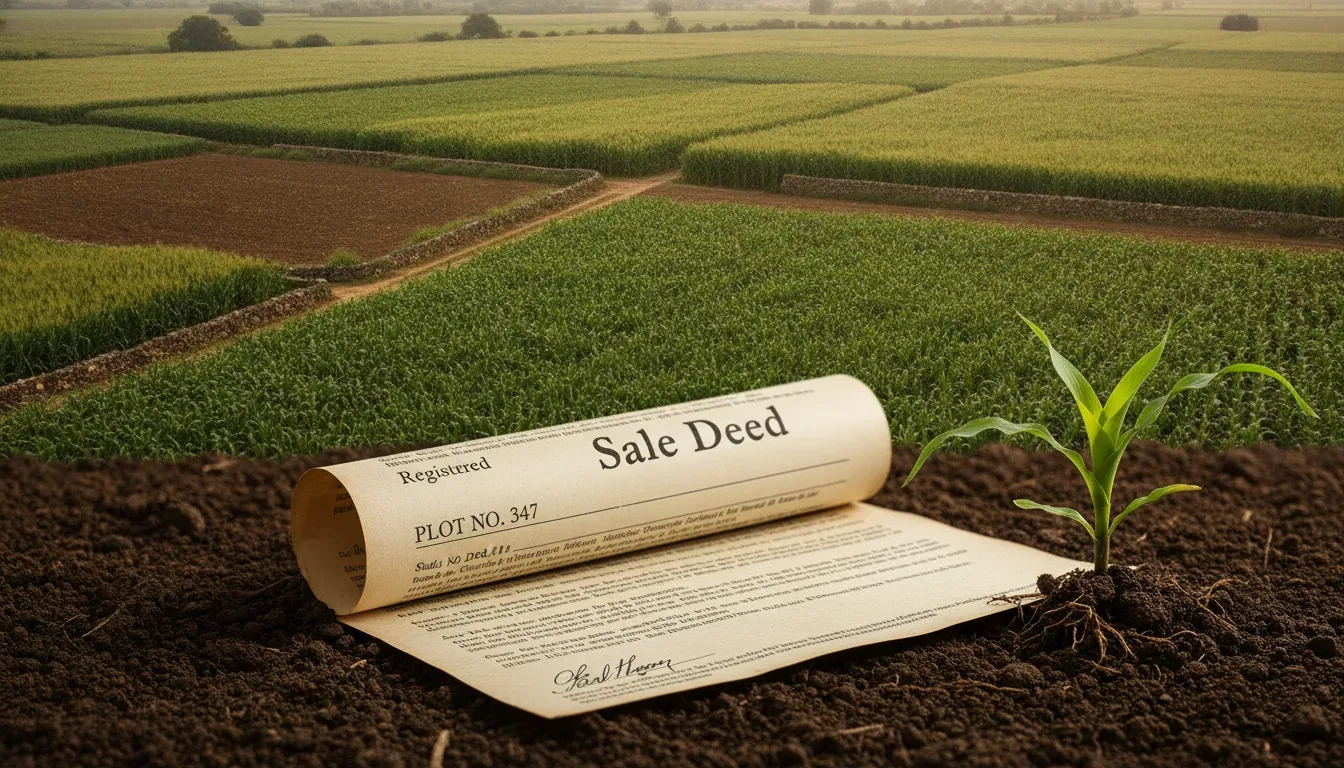
If you work in IT in Bangalore, you’ve probably heard this line:
“Sir, you own the farm. We manage everything.”
It sounds amazing… and also a little suspicious.
- Do you really own the land?
- Who actually does the farming?
- What about legal issues, costs, and returns?
- Is this just a fancy way of selling overpriced land?
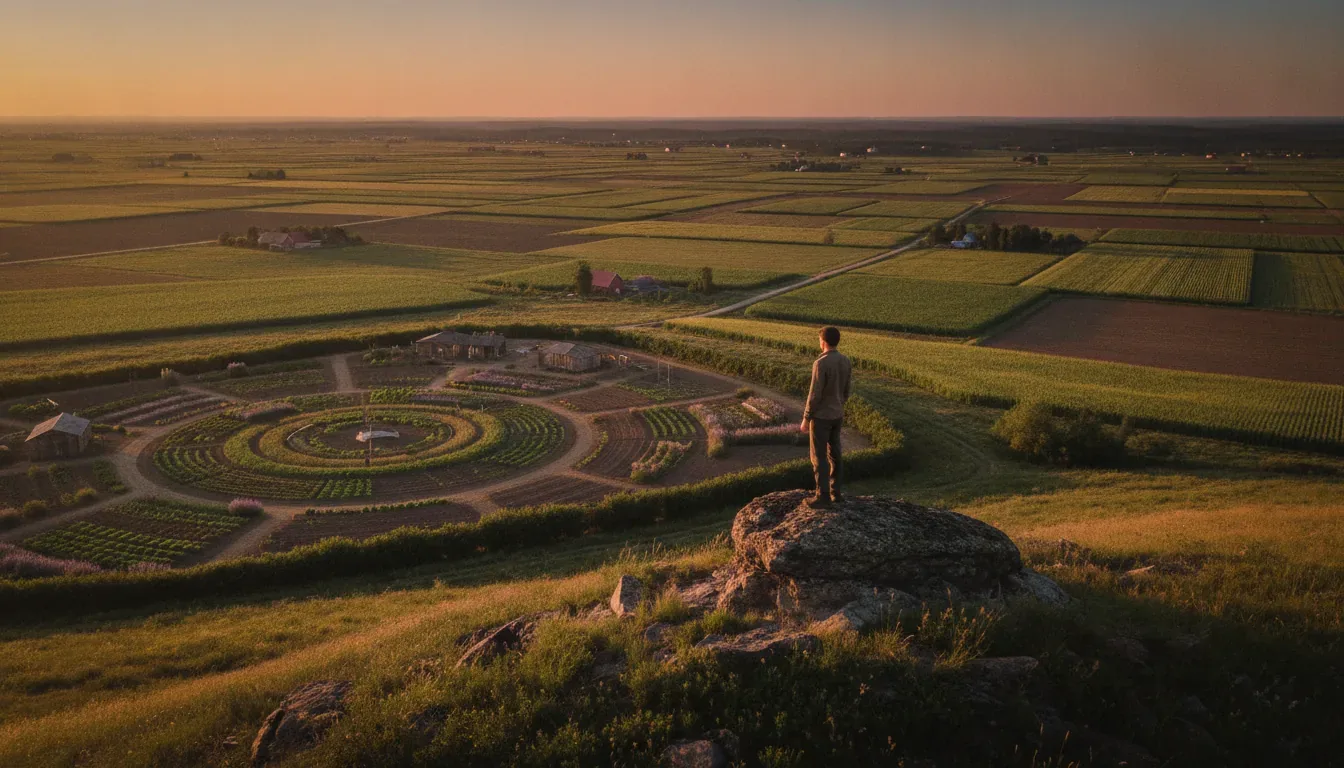
Most ads, reels, and brochures don’t explain the model — they show sunsets, drone shots, and people holding coconuts.
This guide is the opposite.
It’s a clear, step-by-step explanation of how managed farmland near Bangalore actually works, specifically for IT employees who: book a farm visit, contact Hasiru Farms
- Don’t have time to manage a farm
- Want legal + operational safety
- Like clear processes and visibility (ideally via tech)
By the end, you’ll:
- Understand what you own
- Know what the management company actually does
- See how costs and returns work in reality
- Get a list of questions to ask any provider, including Hasiru Farms
Table of Contents
What Is Managed Farmland, in Simple Terms?
The basic idea in one line
Managed farmland is a model where you:
- Own a clearly defined farm plot inside a larger community
- Delegate the development, plantation, and day-to-day farming to a professional team under a management agreement
So you’re not buying “shares” of something vague. In a serious project, you’re buying actual land — and hiring experts to run it.
A simple analogy for IT folks
Think of it like this:
- You own the server (hardware)
- A DevOps team handles uptime, monitoring, security, maintenance
Or:
- You own the codebase
- An infra/ops team handles deployments, scaling, and incident response
You’re still the owner, but you’re not logging into production at 2 am to fix every issue.
That’s exactly what managed farmland tries to do for agriculture:
“You enjoy the benefits of owning farmland, without running a mini farming company yourself.”
Who is this model meant for?
Managed farmland is designed for people who:
- Live in cities (like Bangalore)
- Have little or no farming experience
- Can’t spend time managing local labour and operations
- Still want:
- Real land as an asset
- A nature + weekend escape
- Potential long-term appreciation and some agri income
Sound familiar? That’s why this model is heavily marketed to IT professionals.

What Exactly Do You Own in a Managed Farmland Project?
This is the first thing you should clarify with any provider.
Your individual farm plot
In a typical managed farmland community near Bangalore, you get:
- A specific plot (e.g., ¼ acre, ½ acre, 1 acre)
- A sale deed or equivalent document in your name (or joint names)
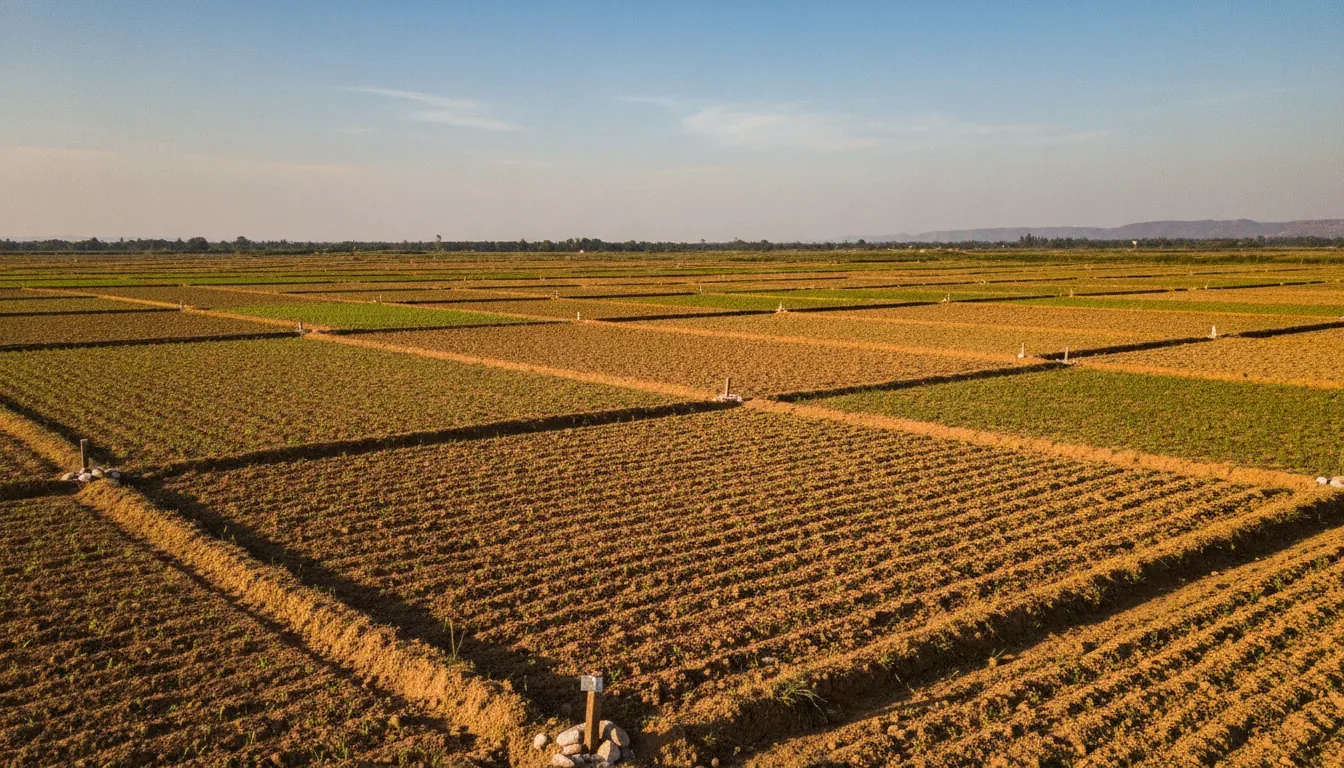
- Clearly defined boundaries and a plot number in the layout
You’re not just “one of many investors”. You own a piece of land on the ground.
✅ Always ask: “What exactly goes in my name legally, and how is my plot identified?”
Common infrastructure you share
Along with your individual plot, you also benefit from community infrastructure, such as:
- Internal roads
- Compound/fencing and basic security
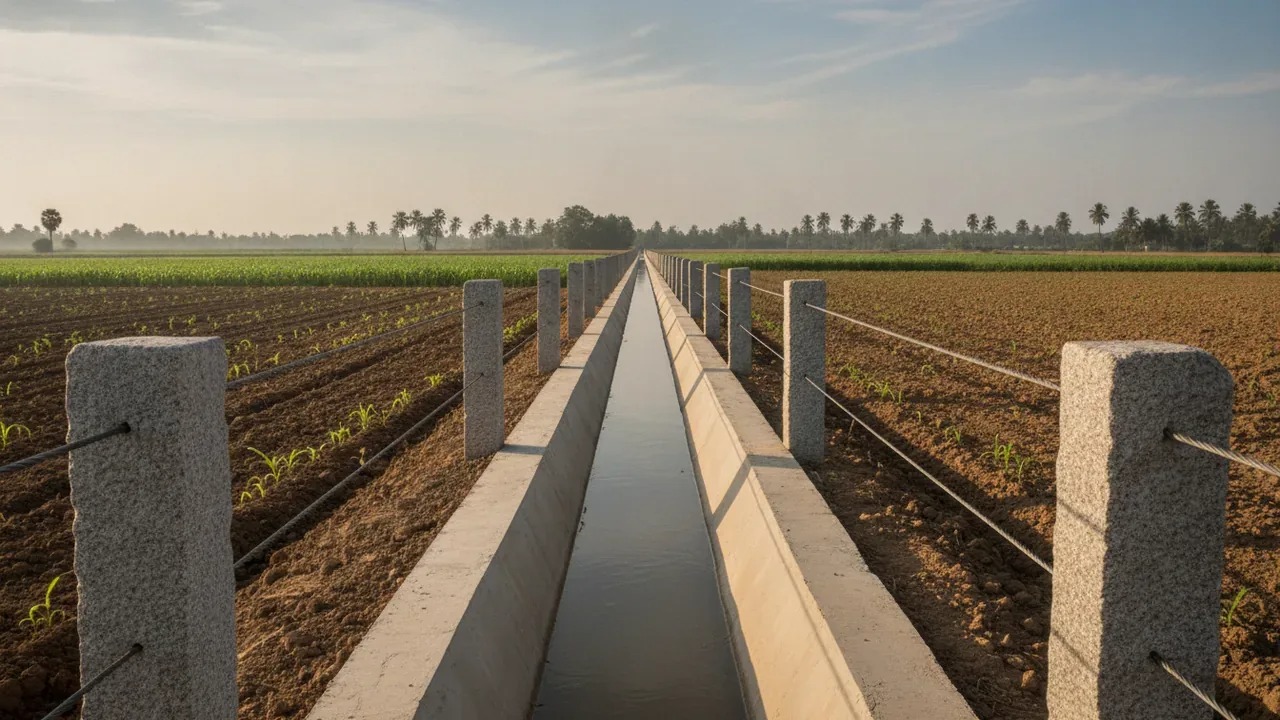
- Water sourcing and irrigation network
- Power lines and transformer access
- Common areas, storage, and utility spaces
These shared elements are what make your plot usable, accessible, and safer.
Alone, a random patch of land in the middle of nowhere can be very hard to utilise.
Plantation and trees – who owns what?
In most serious managed farmland models:
- The trees planted on your plot are considered yours
- But the planning and operations (what to plant, when, how) are managed by the project team
Often, each project has a theme:
- Mango dew orchards
- Mixed fruit farms
- Timber + intercrops
- Coffee & spices, etc.
This keeps the community cohesive while giving each owner a productive farm.

What Does the Management Company Actually Do for You?
This is where the “managed” part really matters.
Before you buy: land, layout, and basic checks
The management company typically:
- Identifies and acquires larger land parcels
- Plans a layout with plots, roads, and common infra
- Conducts basic legal and technical checks (title, classification, water, soil)
- Designs a managed farmland offering with:
- Plot sizes
- Theme (type of crops)
- Pricing
- Management terms
You’re walking into something that’s already curated and structured, not just raw land.
After you buy: development & plantation
Once you purchase, the team usually:
- Demarcates your plot on the ground
- Builds internal roads and boundary markers
- Does soil preparation, manure application, and contouring if needed
- Plants the agreed crop mix according to the project’s plan
This stage turns your land from “empty” into an actual farm.
Ongoing farm operations & maintenance
Day-to-day farm work commonly includes:
- Regular irrigation and water management
- Fertiliser and soil nutrition management
- Pest and disease monitoring and control
- Pruning, mulching, and general upkeep
- Labour scheduling and supervision
You’re not calling a local worker every week — the management company handles this via a structured team.
Crop planning, harvesting & revenue sharing
If the project includes commercial crops (fruits, timber, spices, etc.), the management team typically:
- Plans what crops to grow and when
- Handles harvest logistics
- Arranges basic post-harvest handling (sorting, packing)
- Facilitates marketing/sales (direct, wholesale, or internal use)
Revenue models differ, but common patterns include:
- Sharing net income (after costs) between owner and management
- Or charging a management fee and passing most crop income to the owner
Important:
Always insist on a written explanation of how income and costs are shared.
Updates & communication (where tech makes a difference)
Good managed farmland projects keep you in the loop through:
- Photos and videos from your block/plot
- Periodic farm reports or dashboards
- WhatsApp / email updates
- Scheduled farm visits and community events
This is crucial for IT professionals who may only physically visit a few times a year but want continuous visibility.
How the Money Flows: Costs, Fees, and Potential Returns
Let’s break it down into simple pieces.
Upfront cost – buying into a managed project
Your one-time purchase cost usually includes:
- Land value (base cost of agricultural land in that area)
- Development cost (roads, irrigation, fencing, utilities)
- Project planning & management setup
- Developer margin
That’s why managed farmland plots cost more than raw land from a local broker.
The key question is not “Is there a premium?” (there always is), but:
“Is this premium justified by real infrastructure, planning, and management?”
Ongoing costs – farm management fees
After purchase, you’ll usually pay a recurring:
- Annual or monthly management fee
This may cover:
- Labour
- Inputs (fertilisers, organic manures, pest control)
- Equipment use
- Basic admin and overheads
Clarify:
- What is included in the standard fee?
- What is extra or variable (e.g., major replanting, special treatments, etc.)?
No surprises = higher satisfaction.
Potential returns – how does money come back?
Most owners see returns in two ways:
- Land appreciation (long-term)
- As the area develops (roads, tourism, nearby projects), land values may rise
- This is typically a 7–10+ year story, not a 2-year flip
- Agriculture income (variable)
- From fruits, timber, spices, etc.
- Highly dependent on crop choice, rainfall or weather, management quality, and market prices
It’s wise to view crop income as bonus upside, not a fixed promise.
Example mindset (not projections)
Instead of thinking:
“I’ll get 18–20% returns, guaranteed”
It’s healthier to think:
“I’m buying into a well-chosen farmland corridor,
I’ll enjoy using it for weekends and wellness,
and over the long term, both land value and crops may reward me.”
Benefits of Managed Farmland for Busy IT Professionals
You get land + nature without running a mini company
Without managed farmland, owning a farm means:
- Finding land
- Dealing with brokers and paperwork
- Hiring and managing farm workers
- Learning how to deal with pests, soil, water, etc.
For most IT employees, this is simply not realistic.
Managed farmland lets you:
- Skip the operational headache
- Focus on using the farm, not managing every detail
Professionalism and predictability
A good provider:
- Has a plan for the land
- Follows processes and SOPs
- Documents what they will and won’t do
- Communicates regularly
That structure is often worth more than just “cheap land” with no support.
A real place, not just a line item in your portfolio
Beyond money, managed farmland gives you:
- A regular escape from city stress
- A place where kids and parents love to visit
- A unique venue for holidays, workations, and get-togethers
For many owners, that lifestyle value becomes the main benefit.
What Managed Farmland Is Not: Common Misconceptions
It is not a fixed-return financial product
Farmland is not:
- A bank FD
- A regulated financial product
It’s a mix of:
- Real estate (land)
- Sustainable Agriculture (variable by nature)
- Lifestyle (subjective but powerful)
Any pitch that sounds like a fixed-return scheme should be treated with extra caution.
It is not “zero involvement”
Yes, operations are managed for you.
But the happiest owners are those who:
- Visit when they can
- Build an emotional connection to the place
- Stay engaged with updates
Think of it as low operational involvement, not zero emotional involvement.
It is not a hack to instantly become a “farmer” on paper
Legal classification and who can buy agricultural land in Karnataka is a separate topic governed by law and policy.
Managed farmland does not magically bypass regulations.
Always understand the legal structure clearly with your own advisor.
Key Questions to Ask Any Managed Farmland Provider (Including Us)
Use these as a checklist.
Ownership & legal structure
- What exactly will be registered in my name?
- How is my plot identified in the layout and on the ground?
- What land records and documents will I receive?
- How does this align with Karnataka’s rules for agricultural land?
Management scope and costs
- What might be extra?
- What does your annual management fee include?
- What happens if I want to pause or stop management later?
- How are major replanting or unexpected events handled?
Operations & transparency
- How often do I get updates?
- How will you share photos, progress, and harvest information?
- Can I visit anytime? Are there fixed visiting hours/days?
- Is there a dashboard, app, or systematic way to track what’s happening?
Long-term vision & community
- What is your 10-year vision for this project?
- Do you support resale or internal transfers later?
- Are there plans for:
- Homestays / cottages
- Community gatherings / events
- Eco-tourism or experiences?
Good developers welcome these questions and answer clearly.
If you’re made to feel “difficult” for asking, that’s a warning signal.
How Hasiru Farms Fits into the Managed Farmland Model
If managed farmland as a concept makes sense to you, the next question is: “With whom should I do it?”
Here’s how Hasiru Farms approaches this model for Bangalore and Karnataka IT professionals.
Theme-based, wellness-centric communities
Hasiru doesn’t just carve up land into plots. Our focus is on theme-based farmland communities, for example:
- Coffee and mist-laden landscapes
- Fruit orchards and native trees
- Nature + culture experiences woven into the design
The goal is to create places that feel like a second home in nature, not just an investment you never see.
End-to-end management designed for busy professionals
We know you’re juggling deadlines, meetings, and family. So our managed farmland model is built around:
- End-to-end management of land development, plantation, and ongoing care
- Clear scope of work and service expectations
- Processes that allow you to enjoy the benefits without chasing vendors or workers
You can focus on visiting, relaxing, and creating memories — while we handle the operational backbone.
Hasiru Tech-enabled transparency
As tech professionals, you’re used to dashboards, metrics, and clear visibility. We bring that mindset into farmland too through:
- Regular updates and communication
- Visual proof of progress (photos, videos where applicable)
- Structured touchpoints so you’re never “in the dark” about your farm
You should feel connected to your farm even on weeks you can’t visit.
Carefully chosen locations around Bangalore & Karnataka
Our projects are located in carefully evaluated corridors that balance:
- Reasonable drive times from Bangalore
- Good road connectivity
- Strong natural appeal (greenery, water, landscape)
- Long-term potential for both lifestyle and value
We’d rather say no to a location than compromise on fundamentals that matter over decades.
Community, not just parcels of land
Hasiru communities are built around:
- Shared experiences (harvest days, events, gatherings)
- Like-minded owners who value nature, wellness, and culture
- A sense of belonging — not just ownership
Because a farm is more enjoyable when it feels like you’re part of something larger.
FAQs: Managed Farmland Near Bangalore
1. What exactly is managed farmland near Bangalore?
Managed farmland is a model where you own a specific farm plot in a larger community, while a professional team takes care of development, plantation, and day-to-day farming for you under a management agreement.
2. How is managed farmland different from just buying agricultural land on my own?
When you buy raw land yourself, you must:
- Find and verify the land
- Handle all legal checks
- Build basic infrastructure
- Hire and manage workers
- Plan and execute farming activities
In managed farmland, much of this is pre-planned and professionally run. You pay a premium, but you save enormous time, effort, and risk.
3. Do I really get land in my own name?
In a well-structured project, yes — you should get:
- A demarcated plot with a plot number
- A sale deed or equivalent document clearly in your name
Always confirm this with documents and independent legal advice before investing.
4. What ongoing charges will I have to pay?
You’ll typically pay a recurring management fee (annual or monthly) that covers:
- Labour
- Basic inputs
- Operational oversight
Some services may be extra, depending on the agreement. Always ask for a detailed breakdown.
5. Will I get guaranteed returns from a managed farmland investment?
No serious project should promise guaranteed fixed returns, because:
- Land appreciation is market-driven
- Agriculture income is seasonal and variable
You should see managed farmland as:
- A long-term land + lifestyle asset
- With potential upside from appreciation and crops
Not as a fixed-income product.
6. How often can I actually visit my farm?
Most managed farmland communities encourage owners to visit:
- On weekends
- During events and harvest days
- When you want to spend extended time (with prior info)
Check each project’s visitation policy, but a good one welcomes your presence.
7. Why should I consider Hasiru Farms for managed farmland near Bangalore?
Because if managed farmland fits your goals, Hasiru offers:
- Theme-based, wellness-centric farmland communities
- End-to-end management designed for busy urban professionals
- Tech-enabled transparency so you always know what’s happening
- Thoughtfully chosen locations around Bangalore and Karnataka
- A growing community of like-minded owners who value nature, culture, and long-term thinking