Introduction
The concept of land ownership in modern India is evolving from a purely financial endeavor to one that carries meaning, legacy, and connection. As urban centers like Bangalore expand, a growing segment of investors is looking beyond concrete landscapes to rediscover value in nature. Hasiru Farms Parva represents this shift a managed farmland project near Bangalore that redefines what it means to invest in land. It is not merely a property transaction but a return to the origins of sustainability, community, and conscious living.
“From Soil to Soul” encapsulates Parva’s guiding philosophy. It reflects the journey of turning fertile land into a living ecosystem and transforming ownership into stewardship. Every acre embodies both scientific precision and cultural depth: the soil’s fertility is managed through agroforestry design, while the soul of the project lies in its harmony with people and place.
The Parva philosophy connects agronomy with human aspiration. The land is not just cultivated for yield but curated for wellbeing, biodiversity, and legacy. The idea is simple yet profound—what grows from the earth should also nurture the human spirit. In this guide, the story of Hasiru Farms Parva unfolds across its roots, its agronomic vision, and its unique model of living that merges sustainability with purpose.
Key Takeaways
- Hasiru Farms Parva is designed around the philosophy of “From Soil to Soul,” integrating agronomy, sustainability, and wellness.
- The project redefines farmland investment as a lifestyle rooted in ecological value and long-term legacy.
- Kanakapura’s natural ecosystem and Hasiru Farms’ stewardship principles form the foundation of Parva’s vision.
- The following sections explore Parva’s origins, design vision, and the agronomic model that bridges soil health with human fulfillment.
Table of Contents
The Roots of the Project – Land, Heritage, and Design Vision
Every enduring idea begins with a story, and Hasiru Farms Parva takes its roots from both the soil it stands on and the cultural landscape that surrounds it. The brand’s very name—“Hasiru,” meaning green in Kannada—reflects a philosophy of regeneration and grounded living. Founded on the principle that land should create value beyond money, Hasiru Farms envisioned Parva as a sanctuary where nature and responsible ownership coexist.
The choice of the Kanakapura corridor near Bangalore was deliberate. This region is known for its fertile red loam, high water table, and balanced microclimate. Its accessibility from Bangalore makes it a convenient escape, yet its natural isolation ensures tranquility. These physical attributes form the first layer of Parva’s philosophy: every decision begins with respect for the land’s natural potential.
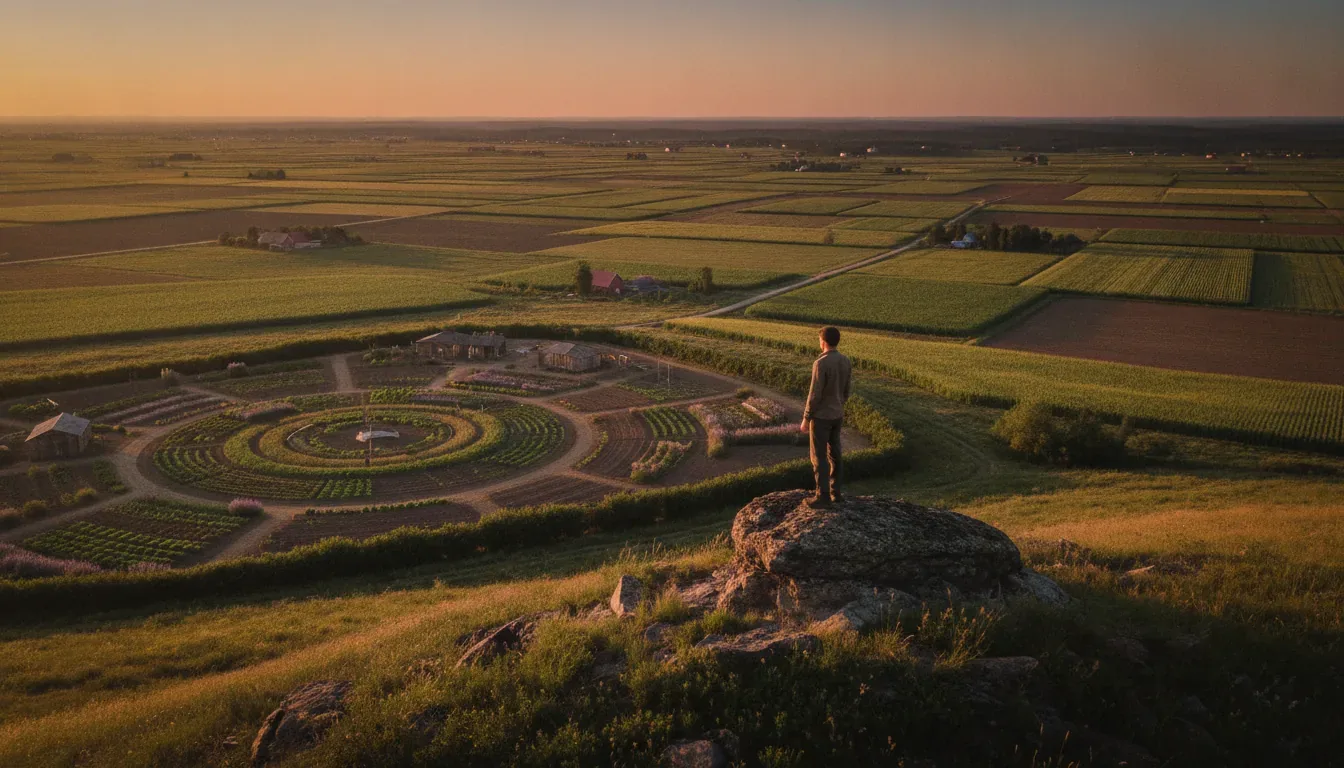
The second layer lies in design. Instead of imposing infrastructure on nature, Parva integrates human needs within ecological logic. The master plan follows the contours of the terrain, with plantations arranged to conserve soil moisture and enhance biodiversity. The community spaces are not built for spectacle but for purpose—organic farms, water bodies, and walking trails create a rhythm that mirrors rural harmony.
The project’s title, Parva, meaning a chapter or festival in Sanskrit, captures its essence—a living narrative of coexistence. It represents an evolving cycle where land regeneration, human participation, and environmental stewardship create an ever-renewing experience.
For modern investors, this approach holds unique appeal. It transforms the concept of real estate into something participatory and meaningful. The land no longer functions as a passive asset but as a living legacy. In the context of Bangalore’s fast-changing periphery, Hasiru Farms Parva offers something timeless: the opportunity to belong to land that breathes, grows, and gives back.

Agronomy That Means Something – Plantation Ecosystem at Parva
The agronomic foundation of Hasiru Farms Parva forms the living engine of its philosophy. Every element—from the species mix to water management—is designed with both ecological and economic logic. The result is a managed farmland model that blends biodiversity with long-term value creation.
The plantations are structured around a multi-layered system: sandalwood serves as the primary crop, interplanted with fruit-bearing species like guava, pomegranatehttps://en.wikipedia.org/wiki/Pomegranate, and mango. This approach balances long maturation cycles with short-term harvests, ensuring continuous soil activity and periodic yields. Native trees and pollinator strips add resilience to the ecosystem, attracting beneficial insects and maintaining natural pest control. Each plot features over fifty trees, creating a dense, productive canopy that mimics a forest garden rather than a conventional farm.
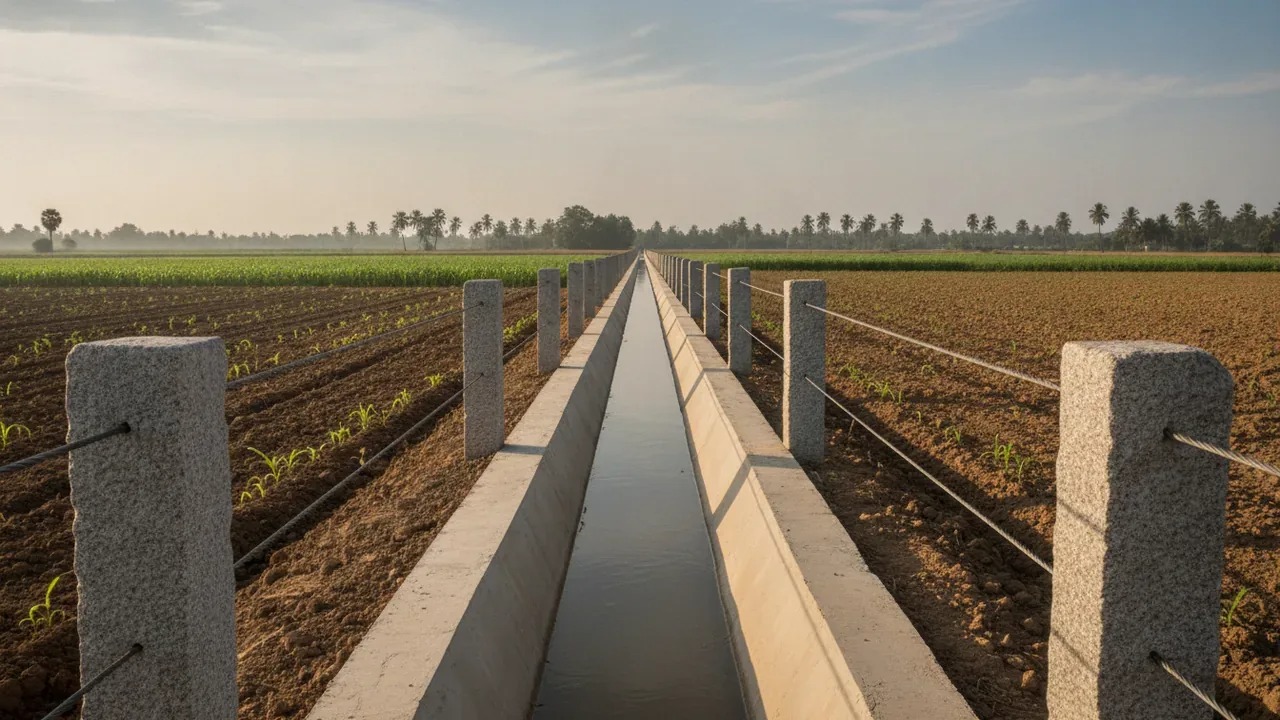
Water and soil stewardship are equally prioritized. Parva’s layout integrates natural drainage lines and a perennial stream, supported by rainwater harvesting ponds and drip irrigation. These measures ensure that every plot functions as a self-sustaining hydrological unit. The soil is treated as a living organism—regular testing, organic composting, and microbial enrichment maintain fertility without chemical dependence.
What makes this agronomy meaningful is its connection to human values. The design reflects an understanding that nurturing land parallels nurturing life. Planting sandalwood, a tree associated with heritage and spiritual symbolism, transforms the act of farming into an act of legacy. Each tree becomes a statement of continuity—a living inheritance that grows in both value and significance over time.
In a city where investment often means digital assets and speculative plots, Parva offers a tangible alternative: a regenerative model that earns through time, care, and sustainability. It turns the farmland into a living system where agronomy and philosophy merge—proof that soil, when respected, can truly speak to the soul.
Lifestyle, Community, and Sustainable Living
At Hasiru Farms Parva, lifestyle is not defined by luxury but by equilibrium—an alignment between comfort, ecology, and conscious design. The project’s community structure is built around the idea that modern living can be deeply rural in essence yet refined in experience. Here, sustainability is not an add-on; it forms the architectural and social DNA of the place.
Each plot at Parva is part of a curated ecosystem where green infrastructure replaces grey infrastructure. Instead of ornamental landscaping, native flora and agroforestry plantations form living boundaries. Farmhouses or eco-cottages are built with natural materials such as mud blocks, lime plaster, and reclaimed wood, ensuring minimal carbon impact. Solar energy, organic waste recycling, and water reuse systems reduce the project’s footprint while creating a circular, self-replenishing model.
Community life revolves around shared agricultural and wellness activities. Residents participate in seasonal harvests, seed exchange programs, and organic markets hosted within the property. These interactions foster belonging, giving residents a direct connection to the land and to each other. The atmosphere is designed to be meditative yet participatory—a collective return to simpler rhythms of life without compromising modern sensibilities.
Sustainable living at Parva extends beyond environmental factors. The social design encourages interdependence and education. Workshops on soil health, sustainable architecture, and biodiversity awareness transform ownership into an ongoing learning journey. The idea is to make each resident a stakeholder in ecological continuity, where every decision contributes to the broader health of the land.
For urban investors seeking a balanced lifestyle, Parva becomes a sanctuary. It offers more than property—it offers perspective. The philosophy of “From Soil to Soul” manifests here as lived experience, showing that prosperity can coexist with preservation and that progress need not come at the planet’s expense.
Investment Logic Interwoven with Purpose
In traditional real estate, return on investment is often measured in square feet and appreciation rates. At Hasiru Farms Parva, value operates on multiple dimensions—financial, ecological, and emotional. The investment proposition is not only in owning managed farmland but in participating in a regenerative asset that compounds both in yield and in meaning.
The financial logic begins with the structure of managed farmland itself. Each investor owns a titled agricultural plot, supported by a professional management team responsible for cultivation, soil care, irrigation, and produce marketing. This model eliminates the operational complexities of traditional farming while allowing investors to benefit from long-term appreciation and periodic yields. The inclusion of sandalwood—a premium timber crop—anchors the economic foundation, while intercropped fruits and short-term produce generate early returns.
However, Parva’s investment philosophy is not limited to yield cycles. The project integrates sustainability and rural empowerment as intrinsic forms of value creation. By maintaining soil health, biodiversity, and water systems, the farmland becomes more productive and resilient over time, ensuring consistent appreciation. Moreover, the inclusion of community-driven initiatives—such as local employment and training programs—creates tangible social impact, an increasingly important criterion for modern investors seeking purpose-aligned portfolios.
The emotional and philosophical dimension of investment at Parva is equally significant. Here, ownership is tied to legacy rather than speculation. Each tree planted, each harvest shared, and each year of soil renewal deepens the asset’s narrative. For investors in Bangalore’s high-growth economy, this model represents a rare fusion: a financially prudent investment that also cultivates personal meaning and ecological continuity.
In essence, Hasiru Farms Parva transforms investment into stewardship—aligning the arithmetic of profit with the ethics of preservation.

Legal, Governance, and Ownership Clarity
Trust and transparency form the structural base of Hasiru Farms Parva. In an industry often clouded by ambiguity, Parva’s governance framework sets a precedent for legally sound and ethically managed farmland investment. Every phase—from acquisition to maintenance—is built upon verified documentation, regulatory compliance, and investor clarity.
The land parcels at Parva are legally approved agricultural holdings under Karnataka’s land regulations. Post the 2020 amendment to the Land Reforms Act, non-farmers are eligible to purchase agricultural land, provided clear ownership records are maintained. Hasiru Farms ensures this by conducting thorough due diligence, including RTC verification, mutation records, and encumbrance clearance before allocation. Each investor receives a registered sale deed, offering direct ownership rather than fractional or lease-based arrangements.
Operational governance is managed through a structured maintenance agreement that outlines crop cycles, irrigation responsibilities, and management fees. The transparency extends to revenue-sharing mechanisms, harvest reporting, and sustainability audits. This system transforms traditional farmland investment—which often relies on informal trust—into a professionally managed and accountable ecosystem.
A key differentiator is Parva’s focus on collective security and continuity. The project operates under a unified management system that preserves ecological and operational integrity across all plots. This prevents fragmented land use and ensures uniform growth of sandalwood and intercrop plantations. The governance model is structured to protect both individual ownership and community coherence.
For discerning investors, such clarity reduces risk and amplifies confidence. It allows them to invest not just in land but in a system that values integrity as much as yield. At Hasiru Farms Parva, the legal framework mirrors the project’s deeper ethos: transparency as the root of trust, and trust as the foundation of growth.
Cultural and Environmental Philosophy – The Deeper Ethos of Hasiru Farms Parva
At the heart of Hasiru Farms Parva lies an idea that transcends ownership—it is a dialogue between culture, land, and time. The project’s guiding principle, From Soil to Soul, reflects a cultural philosophy deeply rooted in India’s agrarian heritage, where land has always been more than a commodity. It is a living entity, revered as both sustainer and teacher.
Parva takes inspiration from traditional Indian ecological wisdom, blending it with modern regenerative design. The use of native species, contour-aligned planting, and water conservation practices mirror ancient agricultural systems like the pancha bhoota (five elements) philosophy, which views harmony between earth, water, fire, air, and space as essential for life. Each element finds expression at Parva: fertile soil nurtured through organic composting, water harvested through ponds and trenches, sunlight optimized through plantation layout, clean air fostered by dense vegetation, and open spaces left for natural balance.
Beyond ecology, the project draws from the cultural value of sahaja—the natural state of being. In this spirit, Parva’s design does not force nature into shape but flows with it. Walking paths follow the lay of the land, water bodies are preserved rather than relocated, and architecture grows around trees instead of replacing them. These small design decisions echo a larger philosophy: to live not apart from nature, but within it.
Environmental sustainability here is not limited to resource management; it extends into the emotional and social dimensions of stewardship. Each investor becomes a participant in the regeneration of rural ecosystems and biodiversity. The sandalwood and fruit-bearing trees that line the landscape are both ecological assets and cultural symbols—representing purity, patience, and prosperity.
In a rapidly urbanizing Bangalore, Hasiru Farms Parva serves as a quiet reminder of balance. It connects modern aspirations with timeless wisdom, creating a bridge between technology-driven progress and the soulful rhythm of the soil.
The Future of Sustainable Investments in Bangalore’s Farmland Ecosystem
Bangalore’s outskirts are entering a new era of conscious investment, where ecological value is as important as financial yield. Managed farmlands like Hasiru Farms Parva are leading this transformation by redefining what responsible ownership looks like in the 21st century.
The city’s growth trajectory has pushed traditional real estate towards saturation, while interest in sustainable assets is rising sharply. Climate volatility, rising land scarcity, and investor demand for ethical portfolios are accelerating this shift. In this context, managed farmland investments present a rare opportunity: they combine tangible, appreciating assets with the security of environmental stewardship.
Hasiru Farms Parva stands as a case study in how sustainability and profitability can align. Its long-term plantation model ensures multi-decade yield cycles, while the integration of agroforestry and water conservation strengthens the ecological base. The economic design emphasizes patience and regenerative growth rather than speculation—an approach that aligns well with India’s emerging “green wealth” narrative.
The market potential around Kanakapura and other southern Bangalore corridors further supports this evolution. Improved connectivity, tourism interest, and rising demand for eco-living projects create multi-dimensional growth prospects. More importantly, these projects contribute to reversing rural degradation, reviving soil fertility, and creating local livelihoods—making them critical nodes in sustainable regional development.
The future of farmland investment will likely depend on governance clarity, technology integration, and biodiversity-linked valuation. Projects like Parva are early models of this paradigm, blending traditional ecological insight with precision farming, IoT-based monitoring, and transparent management. As investors increasingly seek assets that are both resilient and responsible, Hasiru Farms Parva demonstrates that sustainable agriculture is not a niche concept but a viable financial ecosystem.
Frequently Asked Questions about Hasiru Farms Parva
Q1. What is the philosophy behind Hasiru Farms Parva?
Hasiru Farms Parva follows the “From Soil to Soul” philosophy, which connects agronomy, ecology, and culture. It views land not as a commodity but as a living system that supports human wellbeing through regenerative agriculture and sustainable living practices.
Q2. How does Hasiru Farms Parva integrate sustainability into its farmland model?
Sustainability at Parva is achieved through agroforestry, rainwater harvesting, organic composting, and native tree plantations. The project uses a multi-layered crop system that preserves soil fertility and biodiversity while ensuring economic returns through sandalwood and fruit crops.
Q3. Why is Hasiru Farms Parva considered unique among managed farmlands near Bangalore?
Unlike conventional projects, Parva combines ecological design with cultural meaning. Its approach is rooted in balance—architecture follows the contours of the land, plantations mirror natural forests, and ownership includes long-term stewardship rather than speculative investment.
Q4. What does “From Soil to Soul” mean in practice?
The phrase represents a journey from tangible land management to emotional and cultural connection. It signifies how nurturing the soil leads to personal fulfillment and collective wellbeing, aligning economic growth with ecological harmony.
Q5. How does Hasiru Farms ensure transparency and legal security for investors?
Each plot at Parva is fully titled and registered under Karnataka’s land laws. Investors receive legal sale deeds, and the project operates under a unified governance framework with documented maintenance agreements and sustainability audits for long-term accountability.
Q6. Is Hasiru Farms Parva only an investment, or can it also be a lifestyle choice?
Parva functions both as an investment and as a lifestyle destination. Its design supports eco-living, community farming, and wellness-based engagement with nature, creating a living environment rather than a passive real estate asset.
Conclusion – From Soil to Soul: Living the Philosophy
Hasiru Farms Parva is more than a project; it is a movement that redefines the relationship between humans and the land they inhabit. Its philosophy—From Soil to Soul—captures a cycle that begins with care for the earth and culminates in a sense of belonging that transcends ownership.
The project embodies three intertwined truths: the soil is a living system that rewards respect, investment is most powerful when it carries purpose, and sustainable living is not an ideal but a practical reality when design and ethics align. Each element of Parva—from its agronomic precision to its cultural resonance—reflects this holistic view.
By reintroducing ecological and emotional intelligence into real estate, Hasiru Farms Parva bridges the gap between material prosperity and mindful living. It reminds investors that growth can be regenerative, and that wealth measured in soil health, biodiversity, and community is more enduring than any market trend.
For Bangalore’s new generation of investors, Parva stands as an emblem of what the future can look like when stewardship replaces speculation. It offers the chance to not only own a piece of nature but to participate in its renewal—to turn capital into care, and care into legacy.
Hasiru Farms Parva’s philosophy, deeply rooted in the soil yet elevated in spirit, marks a new chapter in sustainable living. It is an invitation to invest not just in land, but in life itself.