If you are weighing managed farmland near Bangalore, two names come up again and again: Hasiru Farms and Utopiaa, sometimes written Utopia. Both sell land as a lifestyle asset rather than a plot to work yourself. This is an honest, side-by-side read of how the two actually differ, and who each one suits.
The short answer
Both Hasiru and Utopiaa offer professionally managed farmland near Bangalore, aimed at buyers who want land as a lifestyle asset, not a plot to farm alone. The difference is shape. Utopiaa runs a broad, multi-property club spanning farmland, holiday and resort formats, while Hasiru builds one distinct, lived theme deep into each project and stays on to manage it after the sale.
TL;DR
Both are managed farmland near Bangalore. Utopiaa is a broad, multi-property club; Hasiru is depth over breadth, one distinct lived theme built into each project, with in-house management and individual registered title after the sale. Choose breadth if you want variety across a club of properties; choose Hasiru if you want one themed place you own outright and that stays managed for you.
Table of Contents
What do Hasiru and Utopiaa have in common
Hasiru and Utopiaa share the same core promise: professionally managed farmland near Bangalore, bought as a lifestyle asset rather than a plot you have to farm yourself. Both remove the daily burden of running the land, and both are built for the same lifestyle-minded buyer.
Both operate in the managed farmland category around Bangalore, and both are aimed at people who want the ownership and the weekend-place appeal of land without the labour of agriculture. Both handle the on-ground work so the owner can treat the land as a place to belong to. Naming the common ground first matters, because the real decision is not which brand is legitimate. It is which shape of ownership fits you. For the background on one side of that choice, here is the team and story behind Hasiru.
How do the two approaches actually differ
The two brands differ in shape: Utopiaa offers breadth, a multi-property club, while Hasiru offers depth, one distinct lived theme built into each project. Utopiaa spreads across many properties and formats; Hasiru concentrates on making each single project a coherent world.
Utopiaa presents itself as a broad lifestyle portfolio. Its own material describes pillars of agriculture, real estate and hospitality, with a membership model where one card gives access across multiple Utopiaa properties, spanning farmland, holiday and resort formats. The appeal there is variety: a club of places and formats under a single membership.
Hasiru takes the opposite shape. Rather than a portfolio of many properties, each Hasiru project is built around a single distinct theme, and that theme drives the whole place. The trade-off is plain: breadth of a club on one side, depth of a single realised theme on the other. Neither is wrong, and they suit different buyers. That word depth needs unpacking, because it is the heart of what Hasiru sells.
What does theme depth per project really mean at Hasiru
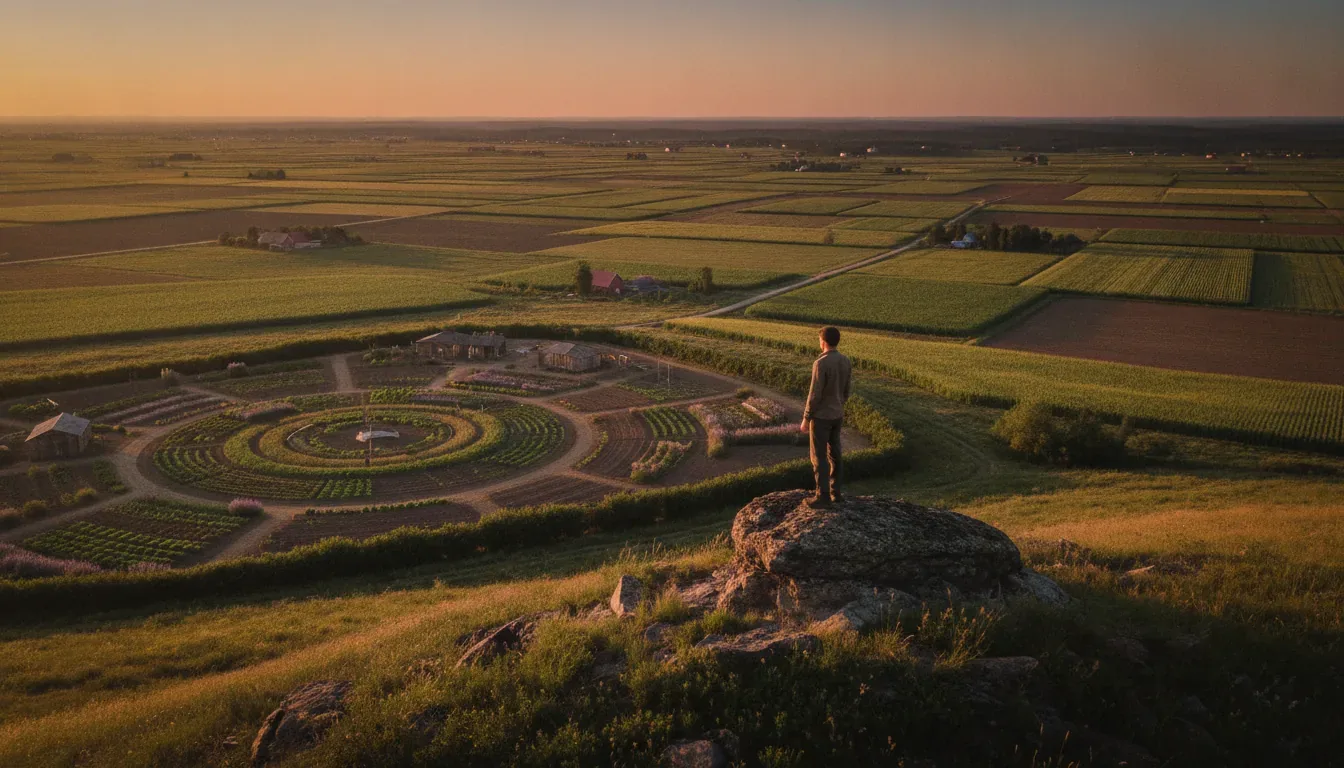
Theme depth means every Hasiru project is built around one distinct lived theme, and that theme shapes the entire place: the architecture, the planting, the community spaces and the on-ground experience. It is a place with an identity, not generic plots with a clubhouse bolted on.
Competitors typically sell farmland with amenities: plots, a clubhouse, some shared facilities. Hasiru sells a place with an identity. The theme is chosen first, and the design, the trees and crops, the shared spaces and the day-to-day experience are all built to match it. The point of a theme is that it lets a buyer choose land that aligns with their own lifestyle and beliefs, rather than picking between near-identical plots. You can see Hasiru’s themed projects to get a feel for how this works in practice. Because the theme runs through the whole project rather than sitting on top of it, the result reads as one coherent world instead of a subdivision with a name. A theme is only worth buying if someone keeps it alive after you have paid, which raises the question every buyer asks next.
Who manages the land after you buy, and what if the company changes
Hasiru manages the land in-house after the sale, under a formal management and maintenance agreement with each owner, through its Hasiru Care model. And because you hold individual registered title, the land remains yours regardless of what happens to the company.
This is the question that decides most managed-farmland purchases, and it has two halves. Hasiru has been operating since 2021, has delivered 100+ acres and has 250+ families as owners, so this is an established operator rather than a new entrant.
The first half is upkeep: who actually maintains the land once you have paid. Hasiru’s answer is an in-house managed model. Hasiru Care runs on-ground operations at its projects, for example it manages Malgoodi, and there is a formal, written management and maintenance agreement between Hasiru and the owner covering maintenance and management of the farmland. For the detail, here is how the Hasiru Care management model works [/hasiru-care-management-model].
The second half is continuity: what happens if the company changes hands or shuts down. Here the safeguard is ownership, not a promise. Every buyer holds individual registered title to their specific parcel, so the land stays with the owner whatever happens to Hasiru as a business. You can read how Hasiru proves ownership and management. That safeguard rests entirely on what the paperwork actually gives you, so it is worth being precise about what you own.
What do you actually own
At Hasiru, you own the land outright: every buyer receives individual ownership through a registered Sale Deed in their own name, conveying exclusive title to a specific parcel. It is registered title in your name, not a share, a lease or a membership.
The Sale Deed is the document that matters. It is registered, it is in your name, and it conveys exclusive title to your specific parcel of land. That is what makes the continuity point real: because the title is individual and registered, the land is yours regardless of the company. There is no restriction on non-agriculturist buyers owning on Hasiru projects. For the full picture, here is exactly what you own when you buy Hasiru farmland. With the model, the management and the ownership set out, the honest question is which of the two brands fits you.
Which one suits which buyer
It depends on what you want to own. A buyer who wants variety across a club of properties and formats leans towards Utopiaa; a buyer who wants one deeply realised themed place, owned outright and managed for them, leans towards Hasiru. There is no single winner, only the better fit for you.
If your appeal is range, the idea of a membership that opens the door to several properties and holiday or resort formats, the club shape is built for you. If your appeal is belonging, one coherent themed place that is genuinely yours on paper and stays managed without you having to run it, the depth shape is built for you. Hasiru spans entry farmland through premium farmvilla formats, so within the depth approach you can still self-select the format that fits. Hasiru does not lead with projected returns; its case is ownership of a real, managed, themed place, not a speculative yield. The right answer is the one that matches how you actually want to use and hold the land.
Hasiru and Utopiaa, side by side
The table below compares the two on model and category traits. The Hasiru column is drawn from Hasiru’s own documented facts. The Utopiaa column reflects publicly stated, brand-level descriptors only.
| Trait | Hasiru Farms | Utopiaa |
|---|---|---|
| Core model | Theme-based managed farmland: one distinct lived theme built deep into each project, not generic plots with a clubhouse | Managed farmland within a broader lifestyle portfolio spanning agriculture, real estate and hospitality |
| Portfolio shape | Focused themed projects, each a single coherent place with its own identity | Multi-property club: one membership giving access across several Utopiaa properties and formats |
| Post-sale management | In-house model (Hasiru Care) under a formal management and maintenance agreement with each owner | Managed within the membership portfolio |
| What you own | Individual registered title through a Sale Deed in your own name; the land stays yours regardless of what happens to the company | Confirm the title structure directly with Utopiaa |
| Format range | Entry farmland through premium farmvilla formats, so you self-select | Multiple formats across the portfolio, including farmland, holiday and resort |
| Best suited for | A buyer who wants one deeply realised themed place, owned outright and managed for them | A buyer who wants variety across a club of properties and formats |
Frequently asked questions
What is managed farmland?
Managed farmland is agricultural land that a company develops and maintains on the owner’s behalf, so the owner holds the land as a lifestyle asset without doing the day-to-day farming. The owner buys and owns the land; the company handles the on-ground work.
Which managed farmland is best near Bangalore?
There is no single best; the right choice depends on what you want to own. If you want variety across a club of properties and formats, a multi-property brand suits you. If you want one deeply realised themed place that you own outright and that stays managed for you, Hasiru suits you.
Can I sell the Hasiru land later?
Yes. Owners may sell or transfer their land. Hasiru follows a Right of First Refusal policy, which means Hasiru has the first opportunity to match an offer before you sell to an outside buyer.
Do I earn an income or returns from Hasiru farmland?
Hasiru does not lead with projected returns. The value is ownership of a managed, themed place you hold in your own name. If produce-sharing exists on a project, it is a feature of the managed model, not a promised financial return.
Is there a maintenance cost, and what does it cover?
Yes. There is a formal, written management and maintenance agreement between Hasiru and the owner that sets out the maintenance and management of the farmland. The specific fees are confirmed with Hasiru directly rather than published here, and the written agreement is what protects you against surprise costs.