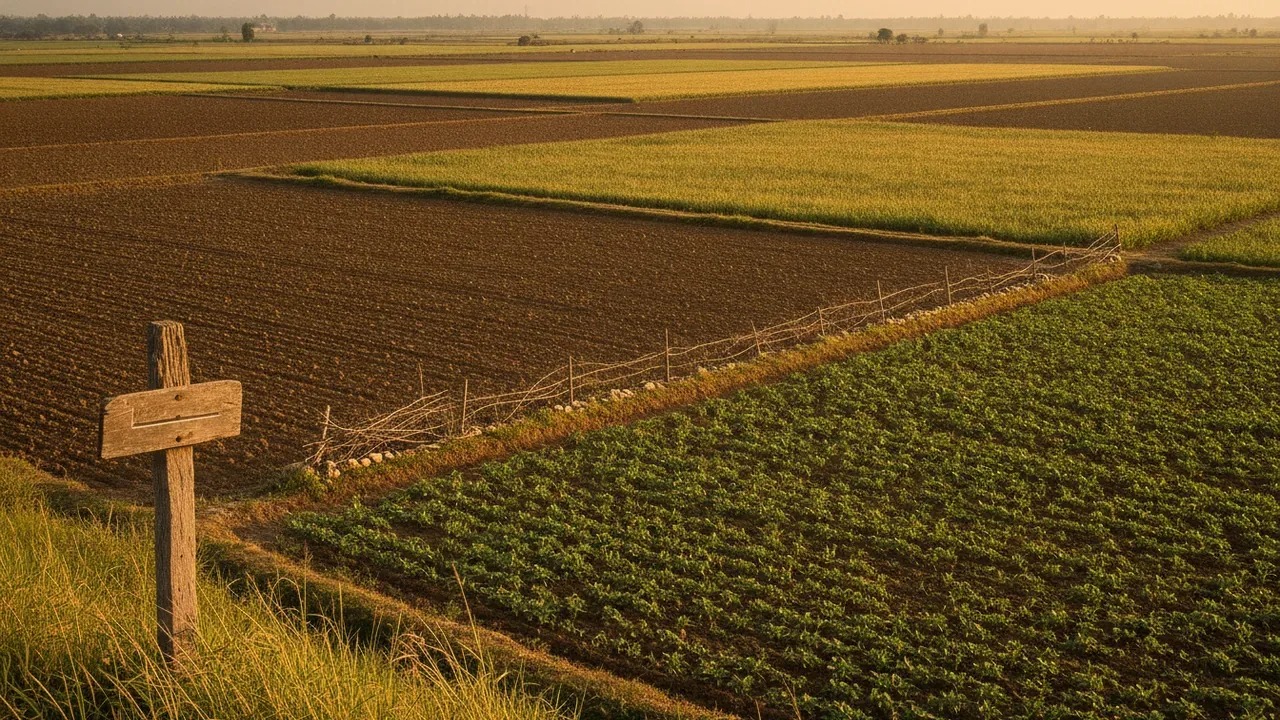
Karnataka changed its farmland laws in 2020, and the change was significant. Many NRIs read the headlines and assumed the door had finally opened for them to buy agricultural land in Karnataka. It had not, and the reason sits in a different law altogether.
THE SHORT ANSWER
No. An NRI cannot buy agricultural land in Karnataka. FEMA, a central law, bars NRIs and OCIs from purchasing agricultural land anywhere in India, and Karnataka’s 2020 relaxation applies to resident Indians only. Inheritance from a resident Indian is the one clean route to hold it.
IN SHORT
The 2020 Karnataka reform removed the old income and agriculturist tests for resident buyers. It did not touch the FEMA bar on non-residents. NRIs cannot buy Karnataka farmland; they can inherit it, hold what they bought while resident, or buy genuinely converted non-agricultural land.
Table of Contents
Can an NRI buy agricultural land in Karnataka
No. An NRI cannot buy agricultural land in Karnataka, whatever the state’s 2020 reforms changed for resident buyers. The bar comes from FEMA, a central law that sits above state land rules, and it applies to every state in India.
Under the FEMA (Non-Debt Instruments) Rules 2019, Rule 24, an NRI or OCI may acquire immovable property in India, but agricultural land, plantation property and a farmhouse are specifically excluded. The exclusion follows the person, not the state. A resident Indian in Karnataka can now buy farmland freely, while an NRI cannot, because the two are governed by different rules. Foreign nationals of non-Indian origin sit under the same bar.
Didn’t Karnataka change its farmland laws in 2020 – What actually changed
Karnataka repealed Sections 79A, 79B and 79C of the Karnataka Land Reforms Act 1961 in 2020, removing the old restrictions on who could buy agricultural land. Any Indian citizen can now buy, regardless of income or agriculturist status. The change was written for residents, not for NRIs.
The repeal came through the Karnataka Land Reforms (Amendment) Ordinance 2020, Ordinance No. 13 of 2020, dated 13 July 2020, later assented as the Amendment Act on 28 September 2020. Before this, Sections 79A and 79B blocked anyone whose non-agricultural income crossed a set ceiling and restricted purchases to agriculturists. Section 79C dealt with the penalties for breaching those rules. Removing all three opened farmland purchase to any Indian citizen. Other provisions still stand as context: Section 63 caps the extent of land a family may hold, and Section 80 restricts transfers to non-agriculturists in certain cases. None of this touches residency, which is where the NRI question is actually decided.
Why does FEMA override Karnataka’s state law here
FEMA governs who, by residency, may acquire immovable property in India, while Karnataka’s land law governs local eligibility rules such as the agriculturist test. Residency is a central subject, so FEMA’s bar on non-residents holds regardless of any state relaxation.
The Karnataka amendment answered a state-level question: which resident buyers clear the agriculturist and income gate. It never addressed the separate, central question of whether a non-resident may buy at all. That question is settled by FEMA 1999, the FEMA (Non-Debt Instruments) Rules 2019, and the RBI Master Direction on Acquisition and Transfer of Immovable Property. Rule 24 lets an NRI or OCI buy most immovable property but carves out agricultural land, plantations and farmhouses. A state cannot legislate its residents out of a central law, so the 2020 reform and the FEMA bar operate on two different levels and do not cancel each other.
What about the ₹25 lakh income limit I’ve read about
The ₹25 lakh figure was the pre-2020 rule for resident non-agriculturists under Sections 79A and 79B, not a route for NRIs. The 2020 amendment repealed it. Pages that say a ₹25 lakh income limit lets an NRI buy in Karnataka are wrong on two counts.
Before 2020, a resident whose non-agricultural income sat below the ceiling could buy farmland, and one above it needed Deputy Commissioner permission. That ceiling applied to resident Indians deciding whether they qualified as buyers. It was never a test an NRI could pass to become eligible, because the NRI bar comes from FEMA and not from the income rule. After the repeal, the ceiling no longer exists even for residents. So a page that presents the ₹25 lakh limit as an NRI purchase route is citing a rule that both never applied to NRIs and no longer applies to anyone.
How can an NRI legally own agricultural land in Karnataka
Inheritance is the one clean route. An NRI or OCI may inherit agricultural land from a person resident in India, with no RBI approval required. They may also keep land they bought while resident in India, or return to Indian residency and buy as any citizen would.
Inheritance from a resident Indian is the settled and most common way a non-resident lawfully holds farmland, and it needs no special permission. Two further routes exist. An NRI who bought agricultural land while still a resident may continue to hold it lawfully after moving abroad. An NRI who returns and re-establishes Indian residency, broadly by staying more than 182 days with the intent to reside, buys on the same footing as any Indian citizen.
The gift route is genuinely contested. Some sources allow an NRI to receive agricultural land as a gift from a specified resident relative, while others hold that agricultural land is carved out of that allowance. Because the legal position is split, treat gift as a matter for specific legal advice, not as a settled route. RBI does hold a residual discretion to permit an acquisition in rare cases, but it is seldom exercised and should not be counted on.
For the national picture across every state, the full FEMA position on NRIs and farmland sets it out in detail.
What happens if an NRI buys agricultural land in Karnataka anyway
The purchase is void from the start, because a sale deed transferring agricultural land to an NRI has no legal standing under FEMA. Penalties can reach three times the transaction value. Buying in a resident relative’s name is benami, a separate offence with its own confiscation risk.
A void transaction cannot be cured by converting the land afterwards, since the deed had no effect the moment it was signed. Registering the property in a resident relative’s name to get around the bar falls under the Prohibition of Benami Property Transactions Act 1988, which carries confiscation and prosecution. The financial exposure is real and current: in a case upheld by the Delhi High Court in September 2024, an OCI cardholder who bought agricultural land for ₹13.68 lakh was penalised ₹41.04 lakh, three times the purchase value.
Can an NRI buy converted (NA) land in Karnataka instead
Yes. Land genuinely reclassified as non-agricultural before the sale sits outside the FEMA farmland bar, and an NRI may buy it under the normal property rules. The key word is genuinely: the conversion must be complete and recorded before purchase, not promised for later.
Once land holds a valid non-agricultural conversion order and the records reflect it, it is no longer agricultural land for the purposes of the FEMA exclusion, so an NRI can buy it like any other plot. The risk lies in timing. A common and unsafe pitch is to sell agricultural land to an NRI on the promise that conversion will follow. That does not work, because the sale of still-agricultural land to an NRI is void when it is signed. Verify that the conversion order exists and is entered in the land records before any purchase.
At a glance: what an NRI can and cannot do
| Route | Allowed for an NRI? | Conditions |
|---|---|---|
| Buy agricultural land | No | Barred by FEMA in every state |
| Inherit from a resident Indian | Yes | No RBI approval needed |
| Receive as a gift | Contested | Sources split; seek specific legal advice |
| Hold land owned before becoming an NRI | Yes | Lawfully acquired while resident |
| Buy genuinely converted (NA) land | Yes | Conversion complete and recorded before purchase |
| RBI special permission to buy | Rare | Exists in theory under FEMA; seldom granted |
Karnataka before 2020, after 2020, and the NRI position
| Party and period | Position on buying farmland |
|---|---|
| Resident, before 2020 | Allowed only if non-agricultural income was under the ₹25 lakh ceiling (Sections 79A/79B) |
| Resident, from 2020 | Allowed freely; income and agriculturist tests removed |
| NRI, before and after 2020 | Not allowed; the FEMA bar is unchanged by the state amendment |
How can an NRI take part in Karnataka managed farmland with Hasiru?
An NRI cannot buy a Hasiru agricultural parcel directly, for the same FEMA reason set out above. A compliant way for NRIs to hold managed farmland is addressed on the dedicated page for NRI participation.
If you are exploring how to take part from overseas, read a compliant way for NRIs to hold managed farmland before making any commitment.
Frequently asked questions
Who can purchase agricultural land in Karnataka?
Any Indian citizen resident in India can now buy agricultural land in Karnataka, after the 2020 repeal of the income and agriculturist tests. NRIs and OCIs cannot buy it; their clean route is inheritance from a resident Indian.
Is agricultural income exempt for an NRI?
Agricultural income earned in India is generally exempt from income tax for residents and non-residents alike, though it can raise the rate applied to other taxable income. This is general information, not personalised tax advice.
What is the tax rate for NRIs buying property in India?
Buying property does not by itself trigger income tax. NRIs pay stamp duty and registration charges, and TDS applies when buying from a resident seller, with rates varying by case. This is general information, not personalised tax advice.
What will happen if an NRI buys agricultural land in India?
The purchase is void under FEMA and can attract a penalty of up to three times its value. Authorities may also require the property to be sold.
WHERE TO GO NEXT
The honest answer protects you from a void purchase and a heavy penalty. If you want to buy agricultural land in Karnataka the right way, start with inheritance planning or a genuinely converted plot, and see how projects are put together at Hasiru managed farmland near Bangalore.