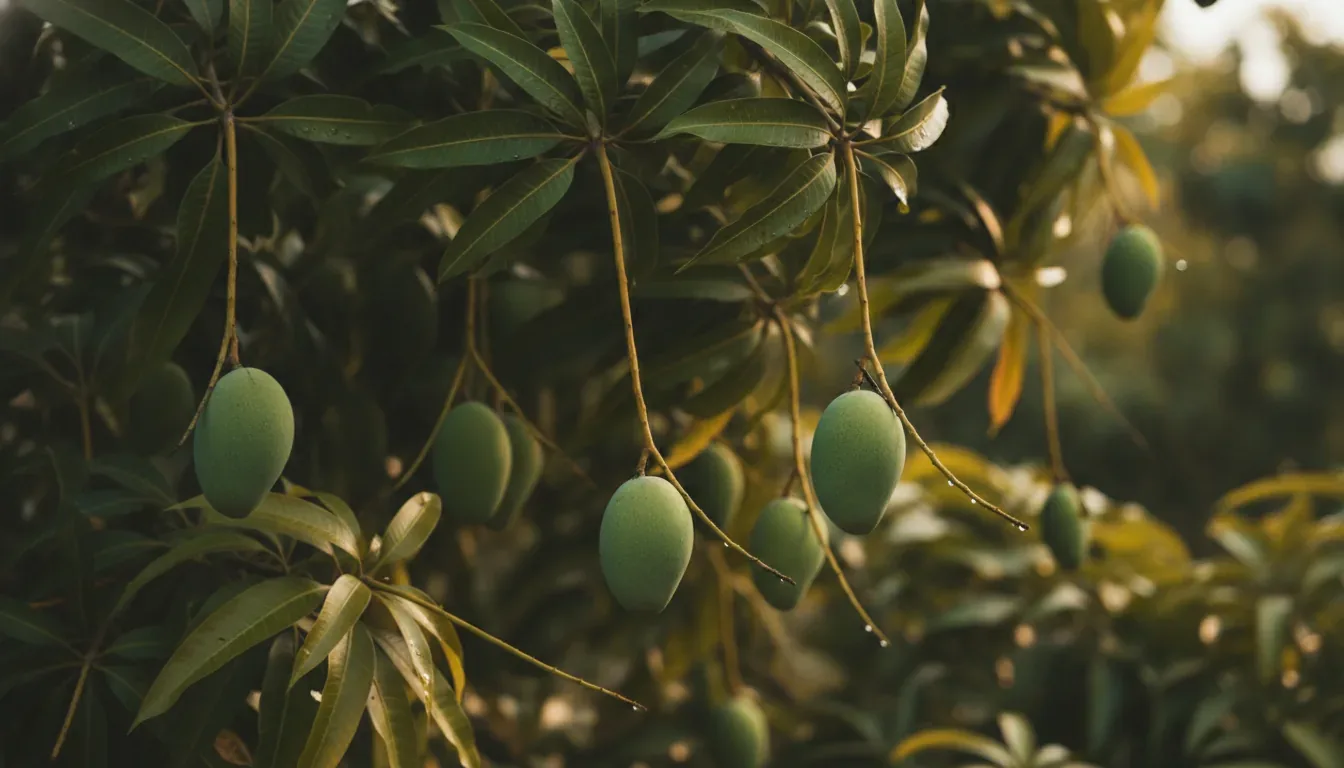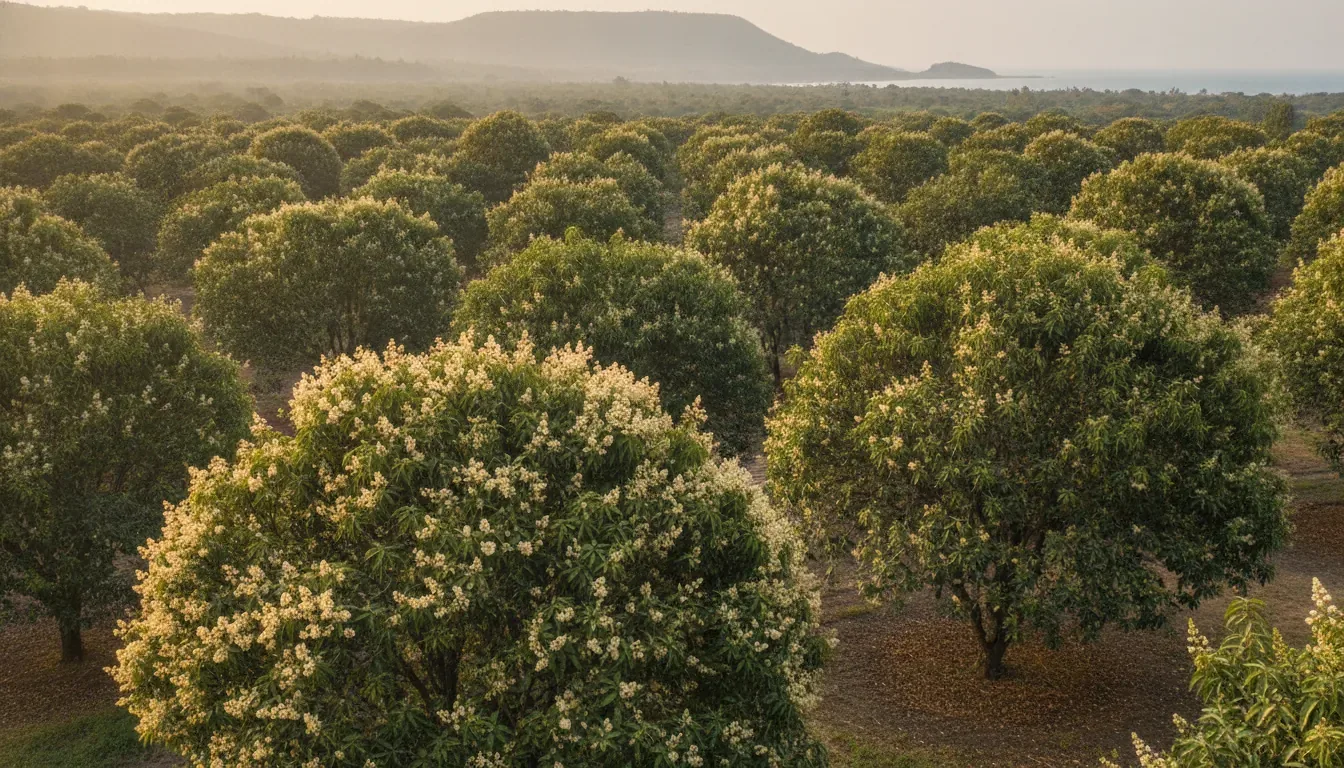
Alphonso is widely called the king of mangoes, and the assumption that follows is simple: if it is the best mango, it must be the best mango to grow. The reality is more specific. Alphonso mango farming in India rewards the right coastal terroir and punishes the wrong one, so it pays to understand what this variety actually demands before you plant a single grafted sapling.
Alphonso grows from grafted saplings in a warm, humid coastal climate on well-drained laterite soil. It is planted during the monsoon, spaced traditionally at 8 to 10 metres or at high density, and reaches commercial fruiting in roughly four to five years, with harvest running from late March into June. Its flavour is tied closely to the Konkan terroir, which is why it cannot be grown well just anywhere.
TL;DR Alphonso is a terroir-locked variety. Its prized flavour comes from the Konkan coast’s laterite soil, sea breeze and humidity, it carries a 2018 Geographical Indication tag, and it brings specific challenges most guides skip: anthracnose, biennial bearing and spongy tissue disorder. Grown in the right place it is high value, but it is a long-horizon, demanding crop with a short harvest window.
Table of Contents
What makes Alphonso different from any other mango
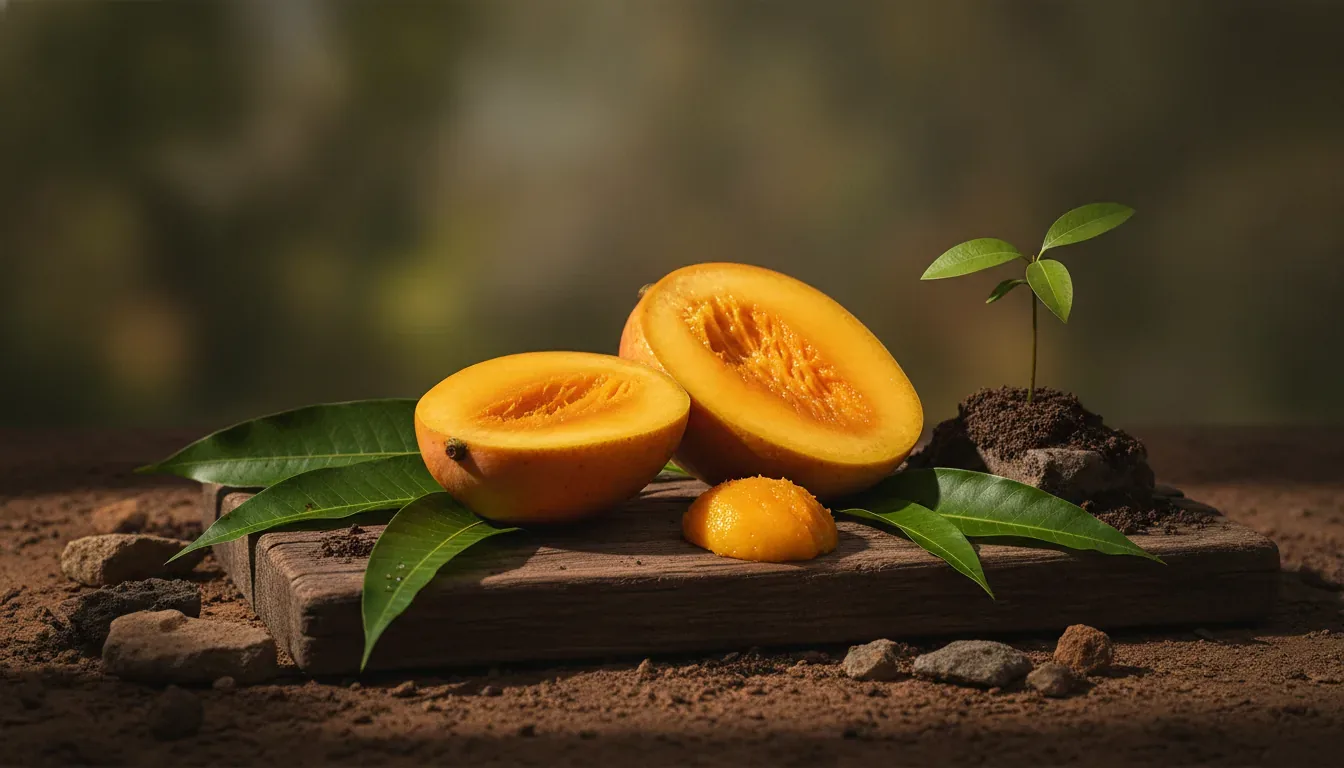
Alphonso, known in Marathi as Hapus, is prized for its non-fibrous, creamy golden pulp and its aroma, and it carries a Geographical Indication tag granted in 2018 to the Konkan region of Maharashtra, which sets it apart from every other Indian mango.
The name traces to Afonso de Albuquerque, the Portuguese general, and the variety’s grafting technique was introduced by Jesuits in Portuguese Goa. A ripe Alphonso weighs roughly 150 to 300 grams, with thin golden-yellow skin and pulp that is smooth rather than stringy.
The GI tag matters commercially. It restricts the Hapus designation to fruit from defined talukas, so only mangoes from those recognised areas can carry the premium branding. Alphonso also has a long export history, reaching markets in Japan, Korea and the EU, though it has faced trade interruptions, including a US import ban from 1989 to 2007 and an EU ban across 2014 and 2015.
Where does Alphonso actually grow well in India
Alphonso grows best along India’s Konkan coast in Maharashtra, across Ratnagiri, Devgad, Sindhudurg and Raigad. It is also grown in parts of Karnataka and South Gujarat, around Valsad and Navsari. It is not suited to North India’s dry climate.
The quality of Alphonso is tied to a specific terroir. The Konkan belt combines laterite soil, sea breeze and coastal humidity, and this combination is what gives the fruit its distinctive flavour. Move the tree to a hot, dry inland climate and the result changes: Alphonso is highly prone to anthracnose and is considered unsuitable for North India’s dry conditions.
The GI protection reflects this reality, spanning the Maharashtra regions of Devgad, Ratnagiri, Raigad and Sindhudurg, with a registered GI valid for ten years and renewable. For a grower, the honest reading is that Alphonso is not a plant-anywhere crop. Where you plant it decides whether you get Alphonso quality or simply a mango.
If you are weighing Alphonso against the wider context, see how mango farming works across India.
What climate and soil does Alphonso need
Alphonso needs a warm, humid climate with temperatures between 24 and 30 degrees Celsius, annual rainfall of about 1000 to 1200 millimetres, and well-drained laterite or loamy soil with a pH of 5.5 to 7.5. Good drainage matters as much as fertility.
The variety is sensitive to waterlogging, so free-draining soil is essential, which is one reason the laterite soils of the Konkan suit it. A dry spell before flowering helps the tree set fruit, while excessive humidity during flowering and fruiting raises disease pressure, particularly anthracnose.
Drip irrigation is commonly used to give steady moisture without waterlogging, and trees are fed with a balance of NPK and organic matter. In the early years, growers often deblossom young trees, removing early flowers so the tree builds frame and strength before it is allowed to carry a crop.
How do you plant Alphonso: saplings, grafting and spacing
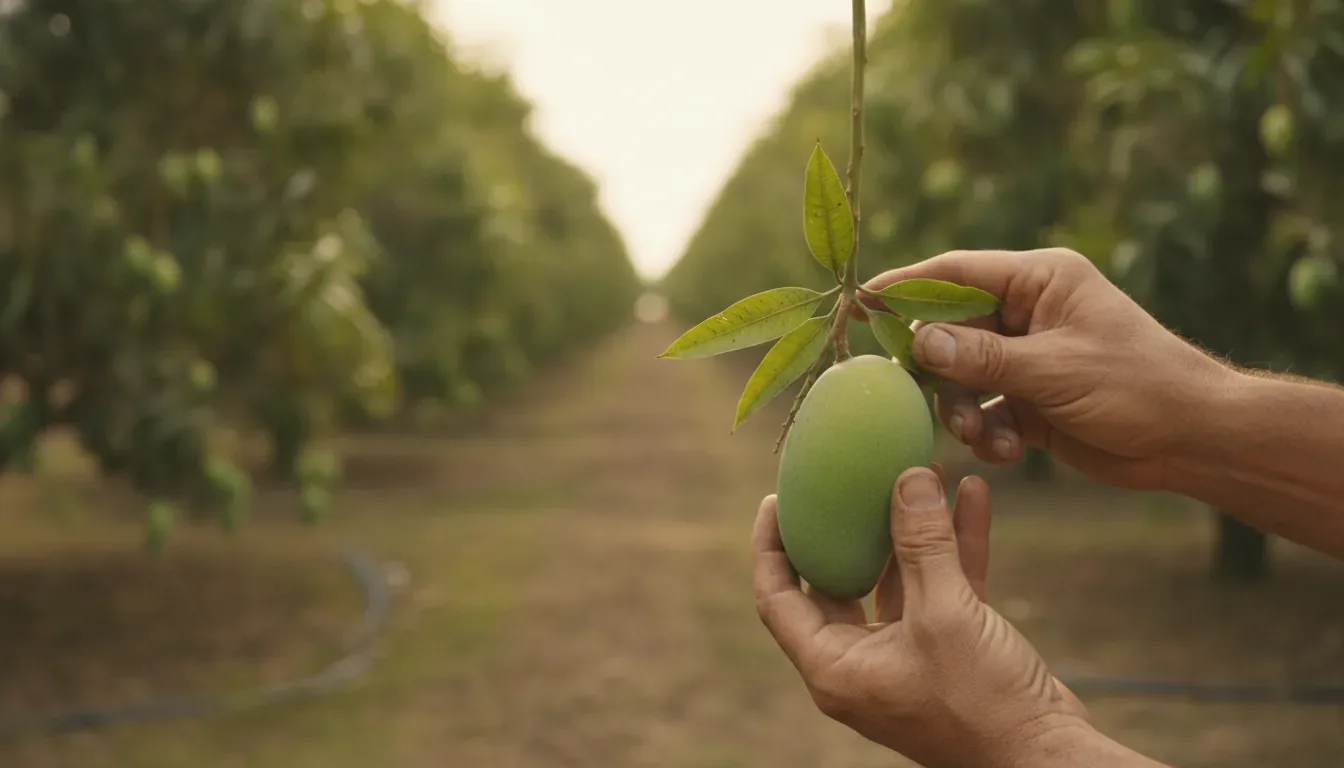
Alphonso is planted from grafted saplings, not seed, because grafting preserves the variety’s traits. Ratnagiri and Devgad strains are common. Planting is timed to the monsoon in June and July, at traditional spacing of 8 to 10 metres or closer high-density spacing.
Grafting is central to Alphonso. Seed-grown trees do not come true to type, so growers plant grafted saplings raised from proven Ratnagiri or Devgad mother stock.
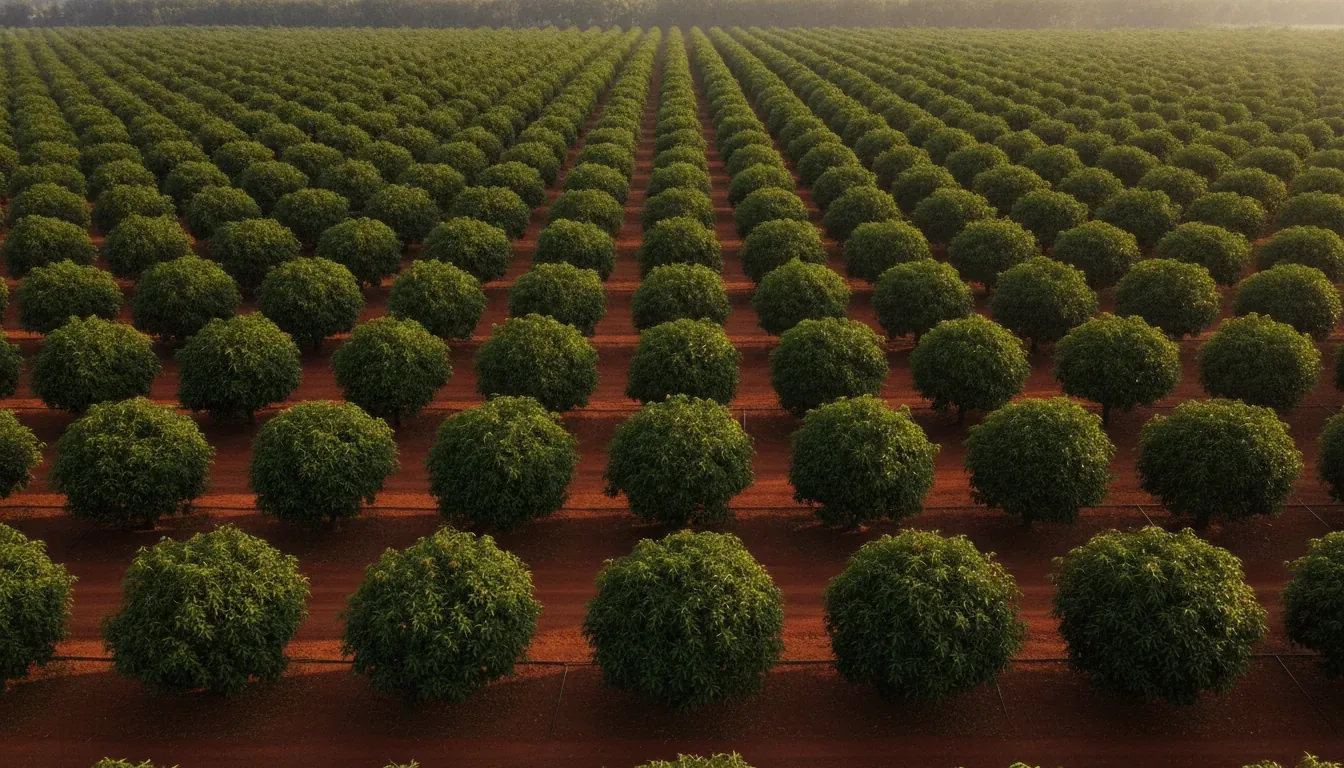
Spacing sets the density. Traditional orchards use 8 to 10 metres between trees, giving roughly 50 to 60 trees per acre, which suits large canopies and long-lived trees. High-density planting uses 4 to 5 metres, fitting around 160 to 250 trees per acre, trading canopy size for earlier and higher early yields per acre. High-density orchards need tighter pruning and canopy management to stay productive.
How long until an Alphonso tree fruits, and what yield can you expect
A grafted Alphonso tree typically reaches commercial fruiting in about four to five years. Flowering to harvest takes roughly 90 to 140 days. A mature orchard yields around 2.5 to 4 tonnes per acre, though high-density figures cited in the industry run higher.
These numbers are general industry context for Alphonso cultivation, not a projection for any specific buyer or plot. Yield depends heavily on age, spacing, climate and management.
The single most important yield reality for Alphonso is biennial bearing, also called alternate bearing: a heavy on year crop is often followed by an off year with very little fruit. This happens because a heavy crop leaves the tree exhausted nutritionally and unable to put forth new flush the following season. Growers manage it rather than eliminate it, using deblossoming, a soil application of Paclobutrazol at about 4 grams per tree in September, and branch ringing in August or early September.
Farm-gate prices for Alphonso commonly sit around 80 to 150 rupees per kilogram, again as market context rather than a promised figure. Anyone planning around Alphonso income should model the on year and off year swing, not a flat annual number.
When is Alphonso harvested
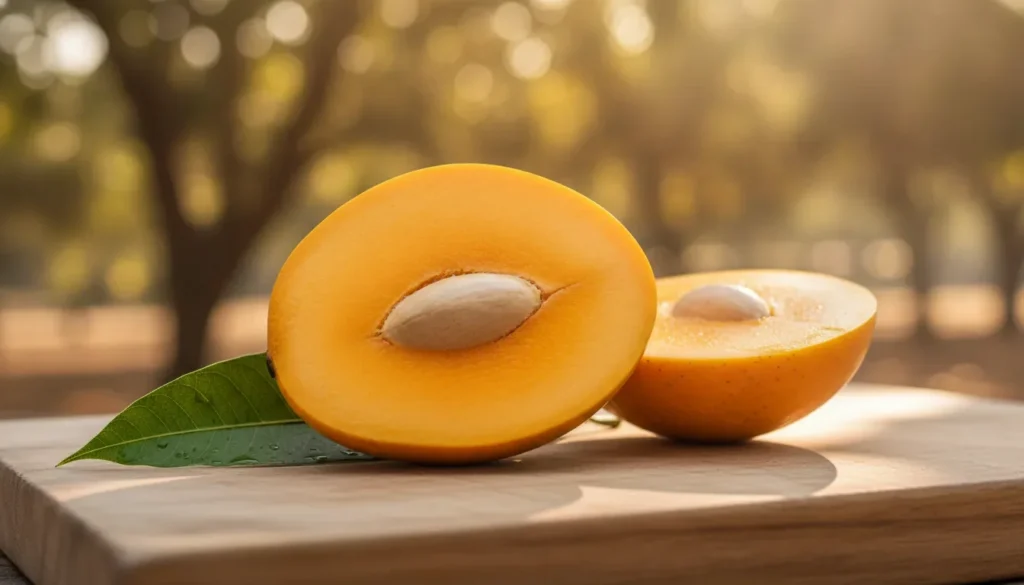
Alphonso is harvested from late March into May and June, with the core Ratnagiri and Devgad harvest concentrated in a short window of roughly three to four weeks. The broader season runs from the end of March through the end of June.
The compressed window is a defining commercial feature of Alphonso. Because the prime harvest lands in just a few weeks, labour, grading, packing and transport all peak at once, which concentrates both cost and risk into a narrow band.
A bad spell of weather, an anthracnose outbreak or a picking-labour shortage during those weeks has an outsized effect, because there is little time to recover. Fruit is usually harvested at physiological maturity and ripened off the tree. Demand is seasonal too, with prices highest early and softening as volume peaks.
What pests, diseases and disorders should an Alphonso grower expect
Alphonso faces the common mango pests and diseases plus two problems specific to how it behaves: spongy tissue disorder and biennial bearing. The routine threats include anthracnose, mango hoppers, fruit fly, mealybug, powdery mildew and dieback.
Anthracnose is the headline disease, especially in the humid coastal conditions Alphonso needs, and it attacks flowers, fruit and foliage. Mango hoppers, fruit fly, mealybug, powdery mildew and dieback are the other regular concerns, managed through orchard hygiene, timed sprays and monitoring.
The two problems that set Alphonso apart are less visible. Spongy tissue disorder is a physiological defect in which a patch of pulp fails to ripen, staying soft and off-colour while the rest of the fruit ripens normally. It is invisible from the outside, which makes it commercially damaging.
Spongy tissue is caused by the inactivity of ripening enzymes due to high temperature, convective heat and post-harvest exposure to sunlight. Growers reduce it through mulching to moderate soil temperature, and by exposing harvested fruit to low temperatures of 10 to 15 degrees Celsius for 10 to 18 hours after picking.
Biennial bearing, covered above under yield, is the second Alphonso-specific reality: the on year and off year swing that no single yield figure captures. Together, spongy tissue and biennial bearing are the two things a serious Alphonso grower must plan for, and they are exactly what most buyer-facing pages leave out.
Is growing Alphonso worth it, and what is the alternative to doing it yourself
Alphonso is high value where the terroir fits, but it is a demanding, long-horizon crop: terroir-dependent, disorder-prone, biennial in its bearing, and squeezed into a short harvest. For people who want to own mango farmland without running the agronomy, managed farmland is an alternative.
The honest summary is that Alphonso rewards the right land and the right management, and penalises the wrong ones. It suits a grower who has coastal or near-coastal conditions, patience for a four to five year horizon, and the appetite to manage anthracnose, spongy tissue and the on year off year swing. It is not a passive crop.
That gap between wanting to own mango farmland and being able to run an orchard is where managed farmland comes in. Hasiru Farms builds theme-based managed farmland: each project is built around a distinct lived theme rather than a generic plot, and the farmland is managed for life after the sale. Every buyer receives individual registered title through a Sale Deed in their own name, and Hasiru manages the farmland on the owner’s behalf under a Maintenance Agreement after the sale.
Post-sale management is the point, because the common failure in this category is the company that disappears once the sale is done. Hasiru has operated since 2021, with 100+ acres delivered and 250+ families. For someone drawn to Alphonso but not to the agronomy, Hasiru’s managed mango farmland at Mango Dew is a way to own mango farmland without running the orchard yourself.
Alphonso at a glance
General cultivation context for the Alphonso variety, drawn from industry sources. These figures are not a Hasiru projection or a promise to any buyer.
| Factor | Typical range |
|---|---|
| Temperature | 24 to 30 degrees Celsius |
| Rainfall | 1000 to 1200 mm per year |
| Soil pH | 5.5 to 7.5 |
| Soil type | Well-drained laterite or loam |
| Spacing (traditional) | 8 to 10 m, about 50 to 60 trees per acre |
| Spacing (high-density) | 4 to 5 m, about 160 to 250 trees per acre |
| Time to commercial fruiting | About 4 to 5 years |
| Flowering to harvest | About 90 to 140 days |
| Mature yield | About 2.5 to 4 tonnes per acre, higher cited under high-density |
| Harvest window | Late March to May or June, core 3 to 4 weeks |
| Farm-gate price (market context) | About 80 to 150 rupees per kg |
Frequently asked questions
How long does an Alphonso mango tree take to grow?
A grafted Alphonso tree usually reaches commercial fruiting in about four to five years. Some fruit may appear earlier, but a reliable, sizeable crop typically takes that long, and yields then swing with the tree’s biennial bearing pattern.
How many Alphonso trees can be planted in one acre?
Traditional spacing of 8 to 10 metres fits roughly 50 to 60 Alphonso trees per acre. High-density planting at 4 to 5 metres fits around 160 to 250 trees per acre, with tighter pruning and canopy management needed to keep the closer orchard productive.
Why is Alphonso so expensive?
Alphonso commands a premium because of its GI-protected Konkan terroir, its short three to four week prime harvest, and its biennial bearing, which limits supply in off years. Genuine GI-grade Hapus comes only from defined talukas, which restricts how much true Alphonso reaches the market.
Can Alphonso be grown outside Maharashtra?
Yes. Alphonso is grown in parts of Karnataka and South Gujarat, around Valsad and Navsari, as well as in its home along coastal Maharashtra. It does not perform well in North India’s dry climate, and true GI-grade flavour is tied to the Konkan terroir.
Do I receive the produce if Hasiru manages the land?
Ownership at Hasiru is individual registered title in your name, and the farmland is managed on your behalf under a Maintenance Agreement after the sale. What that agreement covers on the produce is defined per project, so the specifics for a mango-themed project are best confirmed directly with Hasiru.