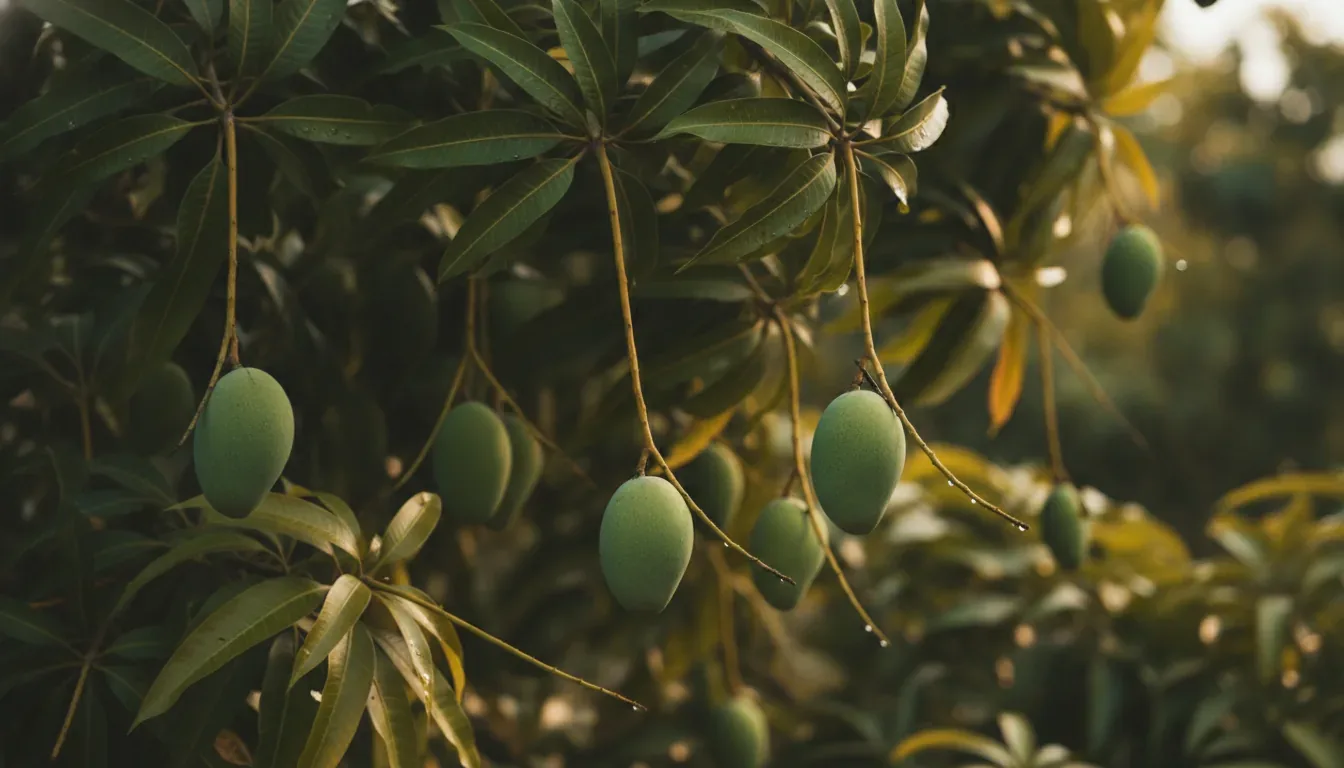
How much profit does an acre of mango farming actually make in India? The honest answer is a range, not the single hero number the short videos promise. This page lays out the real per-acre economics across the whole timeline, including the early years when the orchard earns nothing at all.
In short: a mature, well-managed mango acre in India typically nets roughly ₹1.5 lakh to ₹6 lakh per year. That figure arrives only after 4 to 6 years to the first real harvest and break-even around year 6 to 7, and it swings hard on variety, planting density and market access.
TL;DR: A mature mango acre nets about ₹1.5 to 6 lakh a year, but only after a 4 to 6 year wait and break-even near year 7. Ultra-high-density planting earns more, sooner, but shortens the orchard’s productive life. The headline profit assumes a market link that most owners do not have.
On this page
- How much profit does one acre of mango make per year?
- How many years before a mango orchard starts making money?
- How many mango trees can you plant per acre, and how does density change the profit?
- What does it cost to set up and maintain one acre of mango?
- Which mango variety is the most profitable per acre?
- Why do real profits fall short of the headline numbers?
- What did a real, well-run UHDP mango acre actually earn?
- Should you farm mango yourself or own managed mango farmland?
- FAQ
How much profit does one acre of mango make per year?
A mature mango acre in India nets roughly ₹1.5 lakh to ₹6 lakh per year, and the position within that band is set mainly by variety and planting system. Kesar and Alphonso sit at the top, while table varieties like Dasheri and Banganapalli sit lower, because the farm-gate price per kilogram differs sharply between them.
| Variety | Net profit per acre per year (mature orchard) |
| Kesar | ₹1.8 to 8.5 lakh |
| Amrapali | ₹1.7 to 5.5 lakh |
| Alphonso | ₹1.5 to 5 lakh |
| Dasheri | ₹0.75 to 3.7 lakh |
| Banganapalli | ₹0.6 to 2.8 lakh |
Read these as mature-orchard figures. They describe a good year once the trees are fully productive, not year one and not an average across the orchard’s life. The next section shows why that distinction matters so much.
How many years before a mango orchard starts making money?
A mango orchard earns nothing for its first three to four years, gives a small first commercial harvest between year 4 and year 6, and typically recovers its full setup and maintenance cost around year 6 to 7. Peak yield arrives later, around year 8 to 10. This is the real curve, and it is the part most headline numbers quietly leave out.
| Year | Stage | Per-acre cash position |
| 1 | Planting and setup | Outflow: setup cost plus first-year upkeep |
| 2 to 3 | Establishment | Outflow: annual maintenance, no fruit income |
| 4 to 6 | First commercial harvests | Partial income begins, still below full cost recovery |
| 6 to 7 | Break-even | Cumulative income catches up with cumulative cost |
| 8 to 10 | Peak yield | Mature net profit, roughly ₹1.5 to 6 lakh a year |
| 10 onward | Productive lifespan | Sustained income; how long depends on the planting system |
A traditional orchard then stays productive for 30 to 50 years or more, which is what makes the long wait worthwhile. This is also why the ₹15 lakh per acre claim in short videos is misleading. It describes one exceptional year on a densely planted mature plot, not the years of investment before it, and not the average across the orchard’s life.
How many mango trees can you plant per acre, and how does density change the profit?
You can plant roughly 50 mango trees per acre in a traditional orchard, around 160 in a high-density system, and 670 to 1,100 in ultra-high-density planting. More trees per acre mean higher early yield and faster returns, but the densest orchards stay productive for far fewer years.
| System | Trees per acre | Yield | Productive lifespan |
| Traditional | about 50 | 2.5 to 4 t/acre | 40 to 60 years |
| High-density (HDP) | about 160 | Higher than traditional | 15 to 25 years |
| Ultra-high-density (UHDP) | 670 to 1,100 | 12 to 18 t/acre (Amrapali) | 10 to 15 years |
The trade-off is the point most guides skip: UHDP pays more and pays sooner, but you replant far more often. A traditional orchard earns less each year and works for two to three times as long. Buyers sometimes ask in other units, so note that one acre is 40 guntha and about 0.4 hectare, while a bigha varies by state; convert the per-acre tree counts accordingly. The mechanics of high-density and ultra-high-density planting are covered in our guide to high-density mango farming (/blogs/high-density-mango-farming).
What does it cost to set up and maintain one acre of mango?
Setting up one acre of mango costs roughly ₹45,000 to ₹1.4 lakh in year one for a traditional or high-density orchard, and can run to ₹2 lakh or more for a full ultra-high-density system. Annual maintenance then costs about ₹20,000 to ₹71,000 an acre, every year, including the years before the trees pay anything back.
| Cost item | Range per acre |
| Year-one setup (traditional or HDP) | ₹45,000 to ₹1.37 lakh |
| Year-one setup (UHDP, full system) | up to ₹1.95 to 3.16 lakh |
| Annual maintenance | ₹20,000 to ₹71,000 |
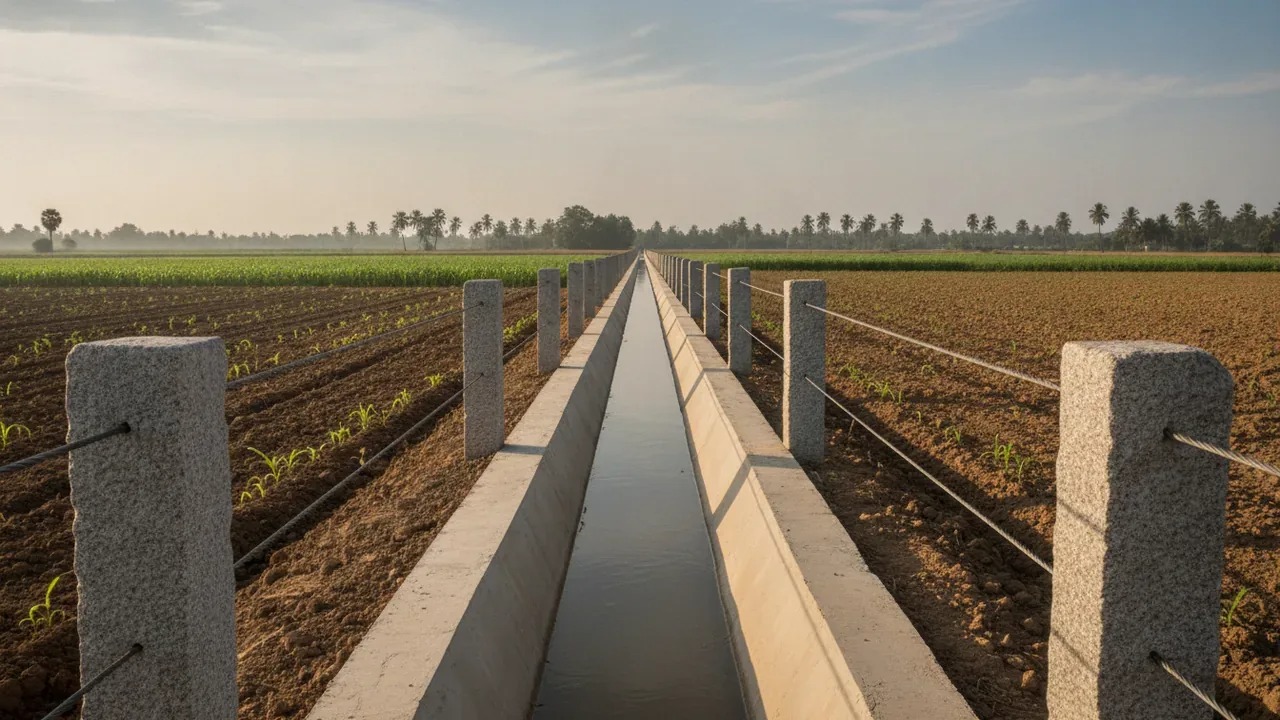
Setup covers land preparation, grafted saplings, drip irrigation, fencing and initial labour. Maintenance covers irrigation, fertiliser, pest management, pruning and harvest labour. The costs that surprise owners are the recurring ones: drip upkeep, pest control in a bad year, and harvest labour continue every season, including the long stretch before the first real income.
Which mango variety is the most profitable per acre?
Kesar and Alphonso are the most profitable mango varieties per acre in India, because they command the highest farm-gate prices. Farm-gate rates run about ₹80 to ₹150 a kilogram for Alphonso and ₹60 to ₹120 for Kesar, against ₹25 to ₹45 for Dasheri and ₹15 to ₹30 for Banganapalli.
| Variety | Farm-gate price per kg |
| Alphonso | ₹80 to 150 |
| Kesar | ₹60 to 120 |
| Dasheri | ₹25 to 45 |
| Banganapalli | ₹15 to 30 |
There is a catch that matters more than the variety. Alphonso retails at ₹150 to ₹300 a kilogram, so the price a grower actually receives is often half the shelf price or less. That gap decides real profit, and the next section looks at it directly. On the question of the famous ₹1 lakh per kilogram mango, that is Japan’s Miyazaki, a premium novelty variety, not a per-acre commercial plan; treat it as a price curiosity rather than a planting strategy. For the growing side of specific varieties, see our Alphonso mango farming guide (/blogs/alphonso-mango-farming-guide) and Kesar mango farming guide (/blogs/kesar-mango-farming-guide).
Why do real profits fall short of the headline numbers?
Real mango profits fall short of headline numbers mainly because most owners cannot sell at retail prices. Farm-gate rates are a fraction of shelf prices, and profit erodes further through price volatility, crop-failure years, and the cost and effort of reaching a good market.
A grower without a strong buyer link sells at the low end of the farm-gate range, sometimes to a trader at the orchard gate who sets the price. Mango is also a biennial-bearing crop for many varieties, so a heavy year is often followed by a light one, and a bad-weather season can wipe out much of a harvest. One partial offset during the waiting years is intercropping: growing short-cycle crops between young mango trees can add roughly ₹20,000 to ₹40,000 an acre a year, which softens the early cash drain without changing the underlying timeline.
What did a real, well-run UHDP mango acre actually earn?
One documented case is Parmanand Gavane of Belanki village, Maharashtra, who planted about 900 Kesar plants per acre under ultra-high-density planting. He spent roughly ₹1,00,000 an acre and earned about ₹6,00,000 an acre in profit, with yield rising to 7.5 tonnes an acre by 2020.
This is what one well-managed UHDP acre did in favourable conditions. It is a real, reported result, not a guarantee, and it depended on dense planting, disciplined management and a working market link. Read it as the upper end of what is possible on a well-run acre, not the average figure to budget around.
Should you farm mango yourself or own managed mango farmland?
There are two honest ways to own the upside of a mango acre: farm it yourself, or own professionally managed mango farmland. Farming it yourself keeps all the profit but hands you the labour, the pest and market risk, and the full multi-year wait. Managed ownership passes the day-to-day work to a professional team while you hold registered title in your own name.
| Farm it yourself | Managed mango farmland | |
| Ownership | You buy and register the land | Registered Sale Deed in your own name |
| Day-to-day work | Yours: planting, pest, harvest, sale | Handled under a maintenance agreement |
| Returns | All yours, if you achieve them | Framed factually, never as a promised yield |
| Risk | You carry crop, price and market risk | Professionally managed, still no guaranteed return |
| The wait | You manage the full 6 to 7 year curve | The same orchard timeline, managed for you |
This is where a project like Mango Dew fits. Mango Dew is Hasiru Farms’ mango-themed managed farmland in the Ramanagara corridor. Every buyer receives individual ownership through a registered Sale Deed executed in their own name, conveying exclusive title to their specific parcel, and the land keeps its agricultural character. A maintenance agreement is executed between the buyer and Hasiru, and ongoing upkeep runs through Hasiru Care, the in-house management team. Because the title is registered in your name, the land remains yours regardless of what happens to the company, and you are free to sell or transfer it, with Hasiru operating a right of first refusal.
On returns, Hasiru is deliberately plain. We do not lead with speculative returns. The theme is the investment, and ownership means belonging to a real, managed place, not a speculative yield play. If produce-sharing forms part of the managed model, it is described factually as a feature of the agreement, never as a projected financial return. This is a standing principle, and you can read the full reasoning on why we don’t promise returns (/why-we-dont-promise-returns). Hasiru Farms has operated since 2021, with 100+ acres delivered and 250+ families as owners. If you want the upside of a mango acre without running an orchard for the next seven years, Mango Dew, our managed mango-themed farmland (/projects/mango-dew), is one honest way to own it.
FAQ
How much does a 5-year-old mango plant cost?
Nurseries sell young grafted mango saplings cheaply, but an established four to five year old plant costs substantially more, because it carries years of care and is close to first fruit. Prices vary widely by nursery, variety and plant age, so treat any single quote as specific to that nursery.
Who maintains a managed mango farm, and what does it cost?
On Hasiru’s model, upkeep runs through Hasiru Care, the in-house team, under a maintenance agreement between the owner and Hasiru. The exact fee is set case by case, so ask for the specific figure for the plot and project you are considering rather than relying on a general number.
What if I rarely visit my managed farmland?
The managed model is built for owners who cannot be on site. The professional team handles planting, irrigation, pest management, pruning and harvest under the maintenance agreement, so the orchard is looked after whether or not you visit.
Do I receive the mango produce?
If produce-sharing forms part of the managed agreement, it is handled as a factual feature of that agreement and never framed as a financial return. The specifics are set out in your own agreement, so confirm the exact arrangement for the project before you buy.
Can I sell or exit my managed farmland later?
Yes. Because you hold individual registered title, you are free to sell or transfer the land. Hasiru operates a right of first refusal, which means it has the first option to buy it back before you sell to an outside party.
What happens to my land if the company shuts down?
The land remains yours. Ownership is conveyed by a registered Sale Deed in your own name, so your title to the specific parcel does not depend on the company continuing to exist.
How long has Hasiru Farms operated?
Hasiru Farms has operated since 2021. To date it has delivered 100+ acres and has 250+ families as owners.