The Miyazaki mango became famous through viral reels calling it the world’s most expensive fruit, sold in lakhs per kilogram. That fame hides a plainer question that a serious grower actually wants answered.
This is the straight, farmer-grade answer: what Miyazaki really is, whether it grows in India, how you would grow it, and what it honestly sells for.
Instant answer
Yes. Miyazaki mango grows well in India’s hot, frost-free regions, from grafted saplings that begin fruiting in about one to three years. It needs full sun, well-draining soil and steady protection, which is why it suits a professionally managed orchard far better than a backyard pot.
TL;DR Miyazaki is the Irwin cultivar, grown in India from grafted plants in warm, frost-free areas. It is finicky, theft-prone and slow to establish. Real Indian prices run from about Rs 999 to Rs 15,000 per kg, not lakhs, and they are falling, so it rewards serious, managed cultivation rather than a hobby plant.
In this page
What is the Miyazaki mango, really
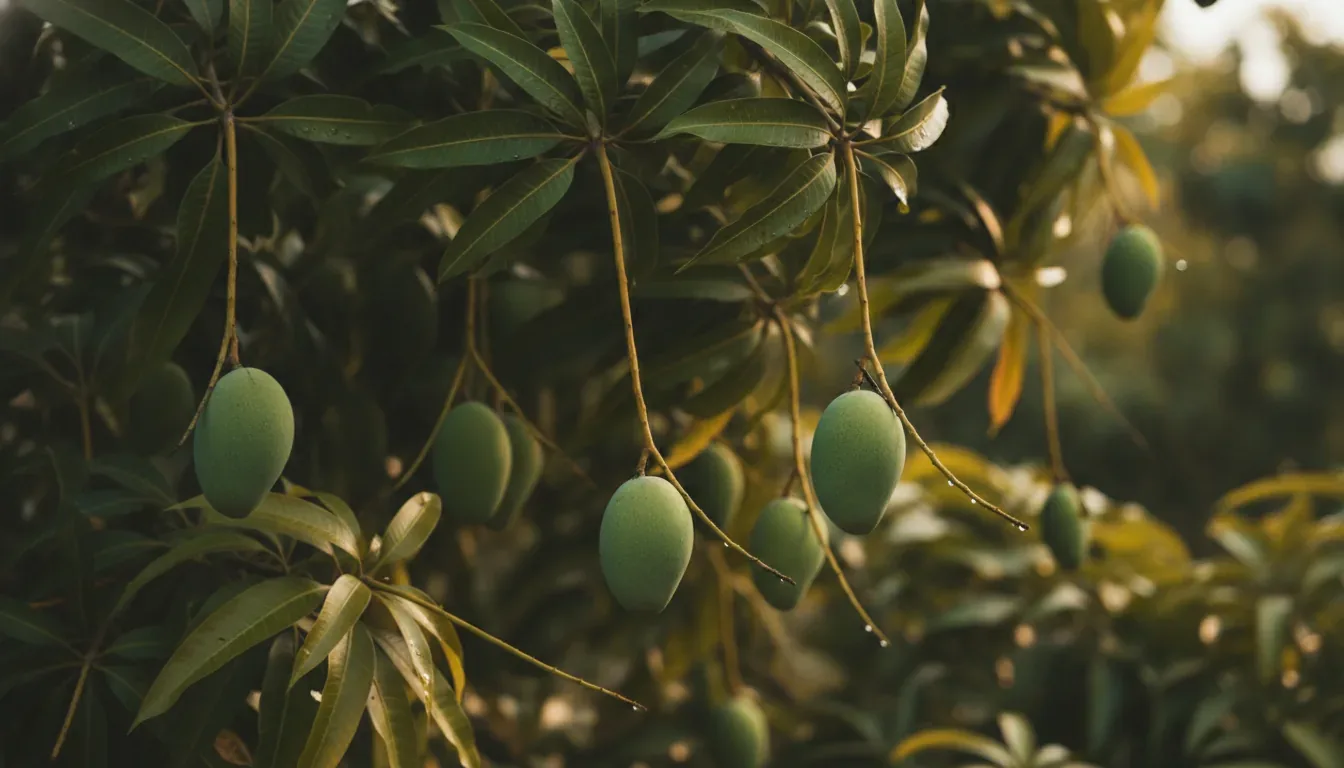
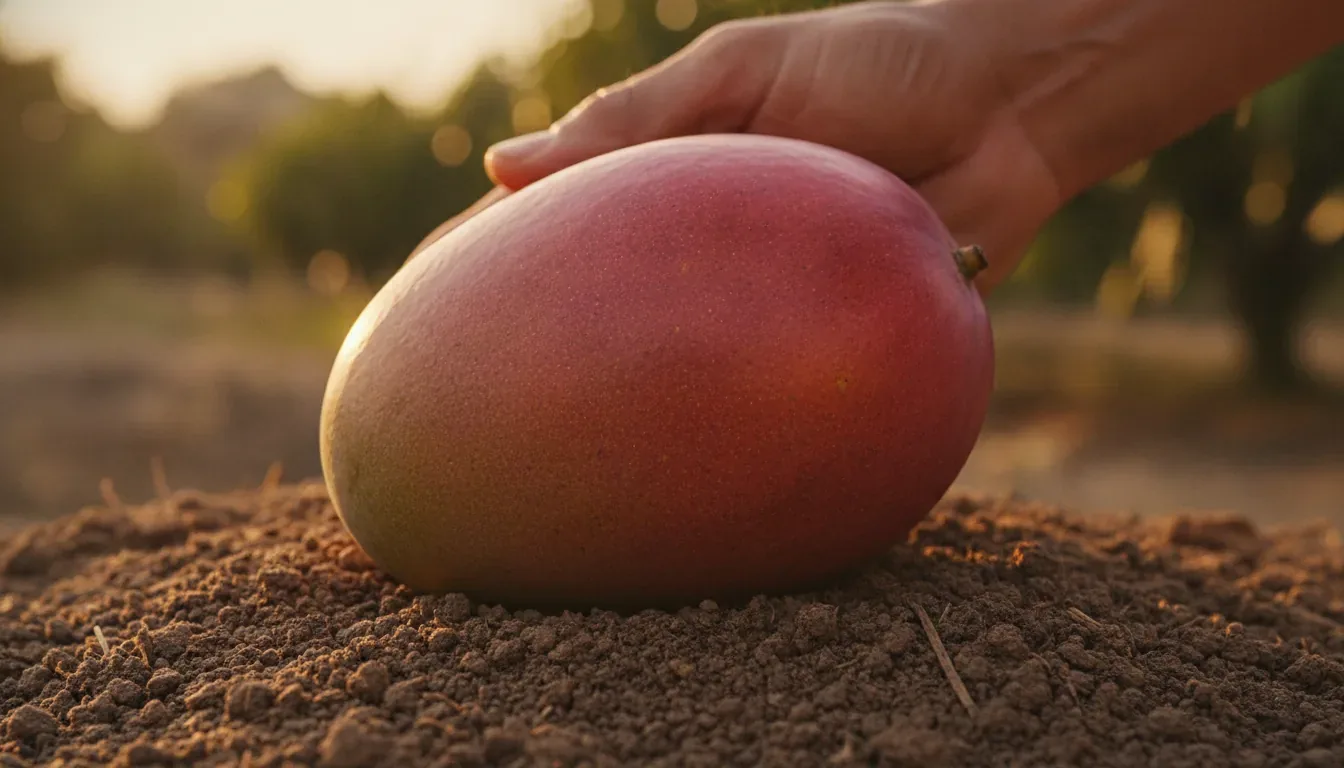
Miyazaki mango is the Irwin cultivar, a red-skinned mango originally bred in Florida and grown in climate-controlled greenhouses in Japan’s Miyazaki Prefecture. Irwin makes up over 90% of Miyazaki production. Taiyo no Tamago, or Egg of the Sun, is a premium grade, not a separate variety.
The distinction matters, because Indian pages often treat Taiyo no Tamago as if it were the fruit itself. It is a grading standard, and fewer than 15% of the region’s fruit qualifies. To earn the grade, a mango must weigh at least 350 g, reach a sugar level of 15 degrees Brix or more, and carry red colour over two-thirds of its surface.
In Miyazaki Prefecture, the fruit is left to ripen on the tree and caught in mesh netting as it drops, so it is never bruised by an early pick. The first Miyazaki harvest was in 1988, grown from Irwin seeds brought from Okinawa by Shoichi Tate in the 1980s. Everything premium about the fruit comes from that grade discipline and the greenhouse conditions, not from a rare species.
Can Miyazaki mango be grown in India, and where
Yes. Miyazaki mango is already grown across Madhya Pradesh, Maharashtra, West Bengal, Odisha, Karnataka, Bihar, Gujarat and Andhra Pradesh. It suits hot, humid tropical and subtropical belts, and it cannot tolerate frost, so hilly and cold-winter areas are unsuitable.
People do grow a single plant at home in a large grow-bag or a terrace pot, and a few Indian gardeners have fruited it that way. That works as a novelty. It does not make a serious crop. A hobby plant gives you one tree with an uncertain yield, no pollination support and no protection against theft or pests.
The states where it fruits reliably share one thing: warmth without frost. If your winters dip cold, the tree struggles regardless of how much care you give it, which is the first feasibility filter before any other planning.
What climate and soil does Miyazaki mango need?
Miyazaki mango needs warm days of 25 to 35 degrees C, nights near 20 degrees C, and 1000 to 1500 mm of annual rainfall. It wants 8 to 10 hours of full sun and well-draining soil at a pH of 5.5 to 7.5. Frost kills it.
Drainage is the quiet make-or-break. Mango roots rot in waterlogged ground, so heavy clay that holds water is a problem unless it is opened up and raised. Sandy loam that drains freely, holds some organic matter and sits in that pH band is close to ideal.
Sunlight and warmth drive both flowering and sugar development, so a shaded or wind-battered plot will underperform even in the right climate zone. For general soil preparation and site basics that apply to any variety, see the complete guide to mango farming in India.
Should you grow Miyazaki from seed or a grafted plant
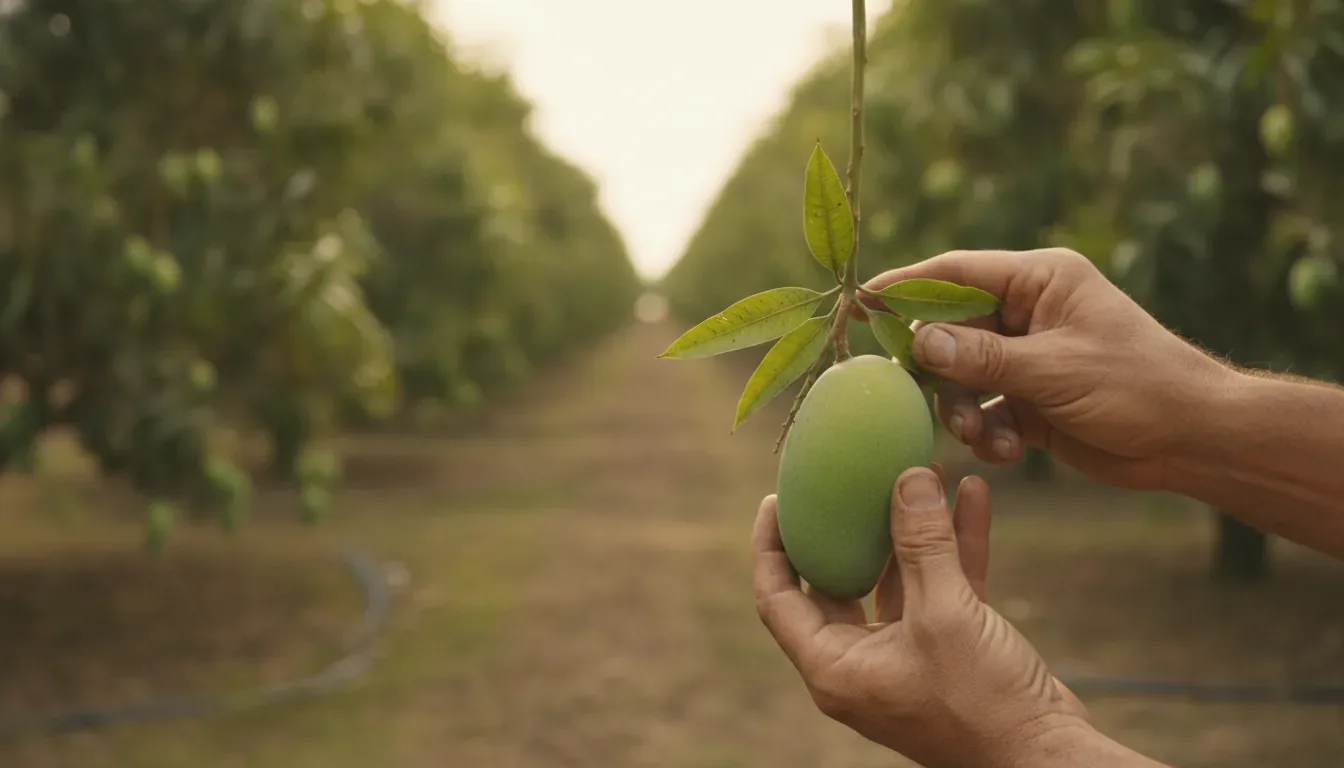
Grow Miyazaki from a grafted plant, not seed. Grafted saplings fruit in about one to three years and stay true to the parent. A seed-grown tree can take up to eight years and may not match the parent at all. Cleft grafting is the usual method, with air layering as an alternative.
The reason is genetics. Mango does not come true from seed, so a seedling is a genetic gamble that could give you a tree quite unlike the Irwin cultivar you wanted. A graft carries the exact parent tissue, which is why every serious Miyazaki grower buys grafted stock.
This is also where the authenticity problem begins. A grafted plant is only as genuine as its source tree, and mislabelled or fake saplings are common in the market, which the challenges section covers in detail.
How do you plant and care for a Miyazaki orchard
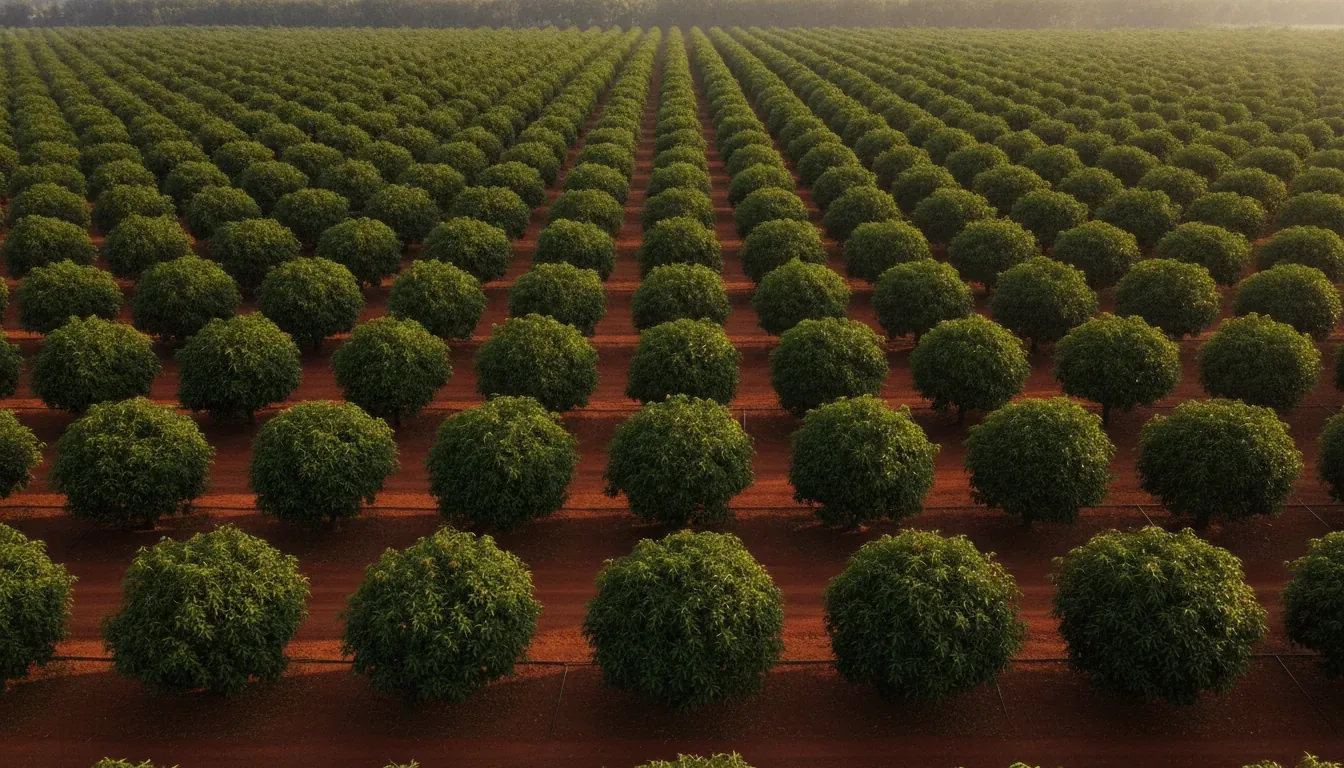
Plant Miyazaki at a conventional spacing of 10 to 15 metres, roughly 29 to 43 trees per acre, in full sun on well-draining land. The flowers are hermaphroditic but rely on bees for pollination. Watch for fruit flies, mites, scale, mealybugs and anthracnose.
Spacing is a real choice, not a fixed rule. Growers who want more trees per acre sometimes use high-density planting, a technique covered under mango cultivation from soil to harvest. Denser planting lifts tree count but demands tighter pruning and canopy management, so it is a trade-off to plan deliberately.
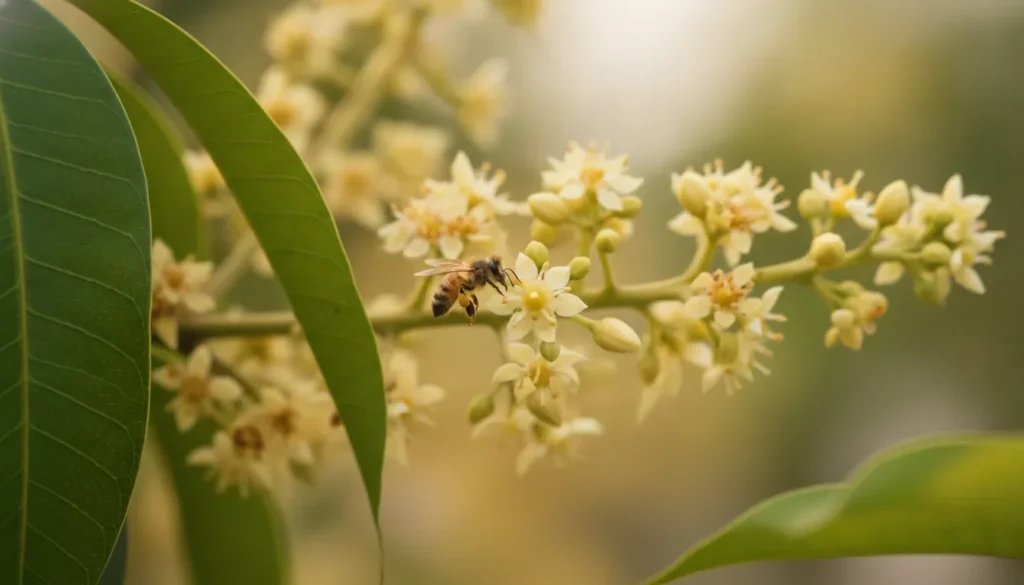
Pollination is worth protecting. Because bees do the work, a plot with healthy bee activity sets more fruit than one sprayed carelessly at flowering. On pests, fruit flies and anthracnose are the two that most often spoil a premium crop, so monitoring and clean orchard hygiene matter more here than on a hardy local variety, where a blemished fruit still sells.
How long until it fruits, and how much does it yield
A grafted Miyazaki plant usually starts fruiting in about one to three years and bears once a year, over a harvest window of roughly two months. Yield rises as the tree matures. Actual quantities vary widely with climate, tree age and orchard care.
There is no single honest yield number to quote for Miyazaki in India, because the variety is young here and results depend heavily on conditions. Anyone offering a precise per-tree or per-acre figure as a promise is selling certainty that does not exist. What matters commercially is not raw yield but grade: a smaller crop of clean, well-sized fruit is worth far more than a heavy crop of blemished fruit.
That leads straight to the question everyone actually opened this page for, which is what the fruit is really worth.
What does a Miyazaki mango actually sell for in India
In India, Miyazaki mango sells for far less than the viral lakhs-per-kg figure. Sankalp Singh Parihar of Jabalpur, whose orchard started the Indian craze, now sells at about Rs 15,000 per kg, down from Rs 50,000 in 2022 and Rs 30,000 in 2023. Food melas have sold it for as little as Rs 999 per kg.
The famous Rs 2.5 to 3 lakh figure is a conversion artefact. It comes from Japanese auction prices of around USD 4,000 to 5,000 per pair, converted to rupees and stripped of context. Those are ceremonial top-lot auction results, not the price a farmer receives. At a Bengaluru mela, fruit was priced at about Rs 2,000 each, and the realised range keeps drifting down as more trees fruit.
| When or where | Realised Miyazaki price |
|---|---|
| Parihar orchard, Jabalpur, 2022 | about Rs 50,000 per kg |
| Parihar orchard, 2023 | about Rs 30,000 per kg |
| Parihar orchard, current | about Rs 15,000 per kg |
| Visakhapatnam food mela, May 2026 | about Rs 999 per kg |
| Bengaluru mela | about Rs 2,000 per fruit |
| Viral auction figure | Rs 2.5 to 3 lakh per kg, from Japanese auction prices converted to rupees |
| Alphonso, for comparison | about Rs 200 to 500 per kg |
For comparison, India’s own premium Alphonso sells for roughly Rs 200 to 500 per kg. Miyazaki still commands a large premium over that, but the honest picture is a volatile, falling price aimed at luxury gifting, not a fixed jackpot. This page reports market facts and does not project what any grower would earn, because those figures move and no reliable per-acre return exists to quote.
What are the real challenges of farming Miyazaki
The real challenges are authenticity, survival, theft and a thin market. Fake or mislabelled saplings are common, so buyers search how to spot a genuine plant. Early survival is poor. High-value fruit invites theft. And demand sits in luxury gifting, not the wholesale mandi.
Survival is sobering at the start. When Parihar began, he paid about Rs 2,500 per sapling and only three of ten survived. A genuine graft from a mature, proven source now costs him about Rs 11,000, which tells you how much a trustworthy plant is actually worth once you factor in the fakes. This is why searches for original and how-to-identify Miyazaki plants run high: buyers are afraid of paying for a plant that is neither genuine nor going to live.
Theft is a genuine operational cost. One Odisha grower stays up through the night guarding his trees, because a handful of fruit at these prices is a target. On the market side, officials are blunt about the hype. A Jabalpur horticulture officer has described the premium as a matter of perception rather than anything unusual about the fruit itself, and a mango growers’ association voice has noted the market is small, with many people planting out of curiosity rather than commercial intent.
One practical aside: a domestic variety, Sendura or Senthooram, is reported to look about 95% similar to Miyazaki at a fraction of the price, if you want the appearance without the premium and the anxiety.
Is Miyazaki mango worth farming commercially in India
Miyazaki mango is worth farming commercially only for the right grower, in the right climate, with serious management. It is a fragile, premium, theft-prone crop that punishes casual hobby growing. For most buyers, owning a share of a professionally managed mango orchard makes more sense than nursing a single plant.
Look at what the crop demands: genuine grafted stock, frost-free warmth, careful pollination, disciplined pest control, round-the-clock protection and access to a luxury-gifting market rather than the local mandi. Each of those is a full-time responsibility. Miss one and a premium crop turns into an ordinary one, or no crop at all.
This is where a managed model earns its place. Hasiru Farms builds theme-based managed farmland, where each project is built around a distinct lived theme rather than generic plots, and the land is managed for life after the sale. Mango Dew, Hasiru’s mango-themed managed farmland, sits on the Ramanagara corridor. Owning a share of a professionally managed mango orchard means the grafting, pest control, irrigation and guarding are handled by in-house specialists, including the agronomy team led by Kiran, under a formal Hasiru Care management agreement.
Hasiru has operated since 2021, with 100+ acres delivered and 250+ families, and buyers receive individual registered title in their own name. The point is ownership of a real, managed place, not a speculative yield play. Hasiru does not lead with projected returns, and that discipline fits a variety whose price is still finding its level.
Frequently asked questions
How much can I earn from 1 acre of mango trees?
There is no reliable per-acre earning figure to quote for Miyazaki, and this page does not project one. Prices are volatile and falling from the early peak, with realised Indian figures ranging from about Rs 999 to Rs 15,000 per kg. Actual returns depend on climate, grade, tree age, losses and market access.
What is the current price of a Miyazaki mango plant in India?
Grafted Miyazaki saplings are commonly advertised at about Rs 800 to Rs 1,500. A genuine graft from a mature, proven source can cost much more; one Jabalpur grower now pays around Rs 11,000. Verify authenticity before buying, since fakes are common.
Which mango is 1 lakh per kg?
Miyazaki mango is the variety popularly called the one-lakh-per-kg mango. That figure traces to Japanese auction prices, not everyday Indian sales. Realised Indian prices are far lower, from roughly Rs 999 to Rs 15,000 per kg.
Which mango is very costly in India?
Miyazaki is India’s most talked-about premium mango by price. Away from the hype, Alphonso and Kesar are the everyday premium varieties, with Alphonso selling for about Rs 200 to 500 per kg.
Which country is no. 1 in mango?
India is widely reported as the world’s largest mango producer by volume. This point has no source in the research brief, so confirm and cite a figure before this answer is published.
What is the price of a 20-year-old mango tree?
There is no fixed market price for a 20-year-old mango tree; value depends on the variety, the tree’s health and its proven yield. For Miyazaki specifically, cost sits in the planting stock rather than the mature tree, with a genuine graft from a proven source reported at around Rs 11,000.