If you are weighing managed farmland near Bangalore and have come across Hebbevu, this page compares the two brands calmly and at model level. It sticks to how each one is built, what you own, and who looks after the land after the sale. No hype and no attack, just the difference, so you can decide for yourself.
The short answer- Both Hasiru Farms and Hebbevu are managed-farmland brands, so both look after the land after you buy. The difference is the model. Hasiru builds each project around a distinct lived theme, conveys individual registered title in your own name on the Bangalore and Karnataka corridors, and does not lead with projected returns. The other model is built around farming the land for produce, with profit-sharing.
TL;DR. Hasiru sells a themed, individually titled place on the Bangalore corridors, managed by Hasiru Care, without leading on returns. Hebbevu publicly positions around managed farmland farmed for produce, with profit-sharing. Both manage the land after the sale; what is managed, and why, is where they part.
Table of Contents
What is the main difference between Hasiru Farms and Hebbevu
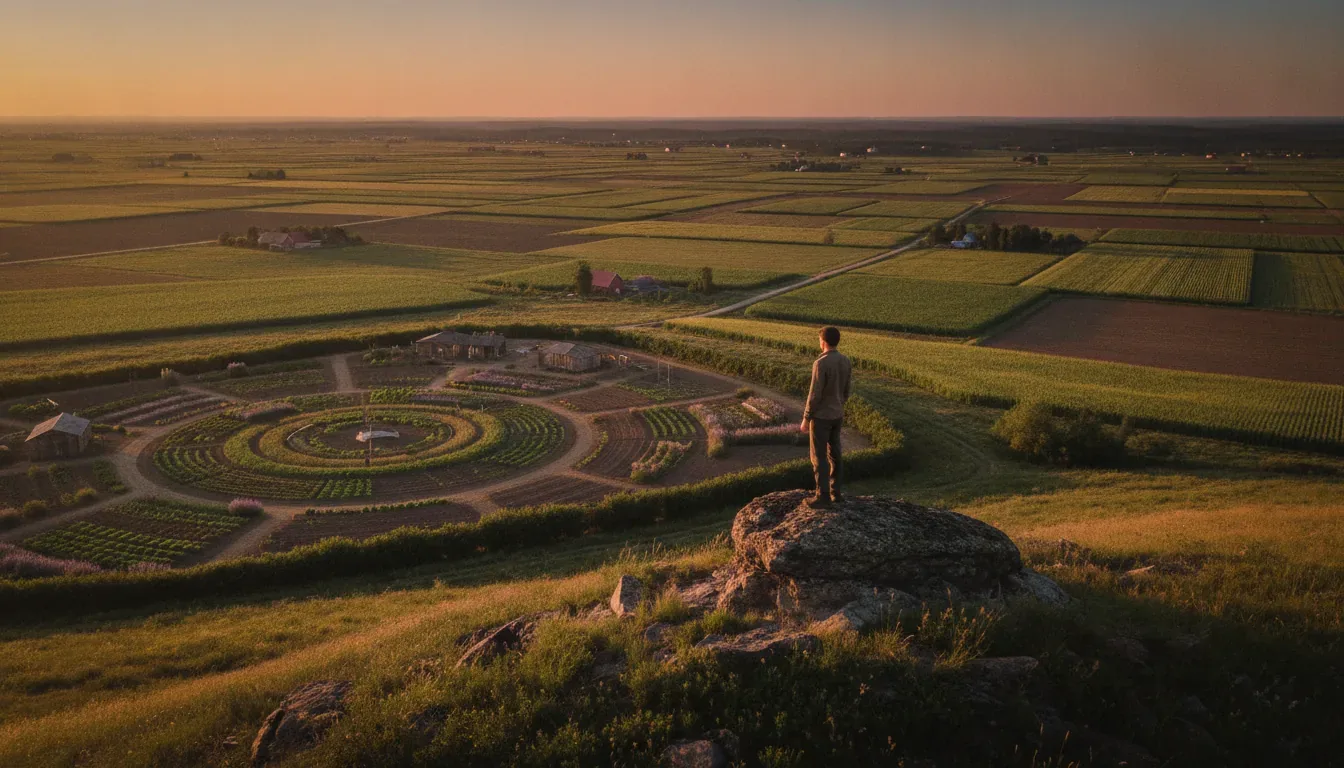
The main difference is what each brand is built around. Hasiru builds theme-based managed farmland, where every project is shaped by a distinct lived theme that drives the architecture, planting, community spaces and on-ground experience. Hebbevu publicly positions itself around farming the land for produce, with long-horizon professional management and profit-sharing.
A theme is not a clubhouse bolted onto generic plots. It is an identity the whole project is designed around, so the place matches how you want to live and what you value, and it is managed for life after the sale. That themed, managed place is the thing you buy into with Hasiru.
For the background on who builds these projects, see the Hasiru story and team.
What exactly do you own when you buy
When you buy Hasiru farmland, you own a specific parcel through a registered Sale Deed executed in your own name. The deed conveys exclusive title to that parcel, identified by its own survey number, and the ownership is recorded in your name in the revenue records.
Every plot is individually surveyed and demarcated, the 11E sketch is approved in your name, the khata is mutated to you, and an individual survey number is assigned. Across the transaction you receive a full document set: a Payment Receipt and Letter of Promise at booking, a Sale Agreement, the Registered Sale Deed, and then the RTC, Encumbrance Certificate, Akarband, Mutation Register Extract, Patta Book and latest Tax Receipts, alongside a maintenance agreement with Hasiru.
Before any project opens, Hasiru verifies parent title going back 60 years or more, and checks the Encumbrance Certificate, RTC and mutation records, survey records, PTCL status, litigation history, Nil Tenancy and zoning. For the full breakdown, see what you actually own.
Who looks after the land after you buy, and how
Hasiru Care, the in-house team, looks after the land after you buy, under a formal maintenance agreement between you and Hasiru. Managed farmland means the brand keeps managing the land after the sale, and this is true of both Hasiru and Hebbevu. The honest difference is not whether the land is managed, but what is managed and why.
At Hasiru, the management keeps the themed place and your parcel in good order as part of the lived concept you bought into. Under a farmed-for-yield model, the management is oriented around cultivating and marketing produce. Both are real, ongoing management; they simply serve different purposes.
You can read how Hasiru Care manages your farmland in full.
Where are the projects located
Hasiru operates on the Bangalore and Karnataka corridors, so its projects sit within the belt most buyers searching for managed farmland near Bangalore have in mind. Location shapes access, weekend use and the day-to-day reality of ownership, so it is worth pinning down early.
Before you decide between any two brands, confirm where each one’s projects actually sit. Hebbevu is not active on the Bangalore corridors, so if proximity to the city matters to you, check its current locations directly. You can see Hasiru projects and the corridors they sit on for yourself.
Does Hasiru promise returns or yields
No. Hasiru does not lead with projected returns or yields. What you buy is ownership of a specific titled parcel and a themed place managed for life, not a forecast of financial gain.
In a category where a lot of messaging leans on yield and profit projections, choosing not to headline returns is a deliberate stance. It keeps the decision anchored to what can be verified: the title in your name, the documents, the theme and the management. If produce is ever part of a project, it is not presented as a projected financial return.
What happens to your land if the company stops operating
Your land stays yours. Because you hold individual registered title to your parcel in your own name, the land remains your property regardless of what happens to the company. The title is independent of the brand that sold it to you.
This is the category’s defining worry, and the answer here is structural rather than a reassurance. Ownership sits with you on the Sale Deed and in the revenue records, not with Hasiru, and the separate maintenance agreement that governs ongoing management does not affect who owns the parcel. If you want to see how buyers verify Hasiru before they commit, the trust page walks through it.
Can you sell or exit your Hasiru farmland
Yes. You are free to sell or transfer your Hasiru farmland. Hasiru follows a Right of First Refusal policy, which means it has the first option to match a sale before you sell to an outside buyer.
Because the title is in your name, the parcel is yours to pass on by sale, transfer or succession. The Right of First Refusal governs how a sale is offered, not whether you may sell.
How much does it cost
Pricing depends on the project and the format you choose, so the exact figures sit on the project pages and are confirmed at a site visit. Hasiru formats span entry farmland through premium farmvilla, so you self-select the level that fits your budget and use.
Because the offer ranges across formats, a single headline price would not tell you much on its own. The straightest way to understand cost is to look at the projects and the formats, then confirm the specifics for the one that suits you.
Hasiru Farms and Hebbevu at a glance
Here is the model-level contrast at a glance. The Hasiru column states specifics from our own records; the Hebbevu column reflects its public positioning only, at brand level.
| Trait | Hasiru Farms | Hebbevu |
|---|---|---|
| Core concept | Theme-based managed farmland, a lived place with an identity | Managed farmland farmed for produce |
| What you own | Individual registered Sale Deed in your name, with a full document set (RTC, EC, khata, 11E sketch, survey number) | Managed farmland with long-horizon professional management and profit-sharing; confirm buyer title terms directly |
| Post-sale management | In-house Hasiru Care, under a maintenance agreement | Long-horizon professional management; the brand manages the land after the sale |
| Where the land is | Bangalore and Karnataka corridors | Not active on the Bangalore corridors; confirm current locations directly |
| How value is framed | Ownership and a lived theme, not led by projected returns | Produce yield and profit-sharing |
| Formats | Entry farmland through premium farmvilla | Confirm directly |
Frequently asked questions
What makes Hasiru Farms unique?
Hasiru builds theme-based managed farmland, where each project is designed around a distinct lived theme. You own a specific parcel through a registered Sale Deed in your own name, Hasiru Care manages the land, and the brand does not lead with projected returns.
Is buying managed farmland worth it?
It depends on what you want from it. Managed farmland like Hasiru’s suits a buyer who wants to own a titled, themed place that is looked after for them. It is not a quick financial-return product, and Hasiru does not present it as one.
Does Hasiru quote an income or profit per acre?
No. Hasiru does not quote income or profit-per-acre figures and does not lead with returns. The value it puts forward is ownership of a titled parcel and a themed place managed for life.
Are there yearly maintenance fees?
A maintenance agreement exists and Hasiru Care manages the land after the sale. Fee specifics are confirmed case by case at a site visit, so they are not quoted here.
Can non-agriculturists buy Hasiru farmland?
Yes. There is no restriction on non-agriculturist buyers purchasing Hasiru farmland. The specific documents and eligibility for your case are confirmed during the buying process.