If you are weighing Mogg’s Estates, you are really choosing between two ways of owning managed farmland near Bangalore. Both let a team run the land day to day, but the models underneath are different, and so is what you hold on paper. Here is the honest difference, and who each one suits.
Both companies let you own farmland that a team runs for you. Mogg’s Estates develops and sells farmland plots and then manages them on your behalf, positioned around farmland as an eco-friendly asset. Hasiru Farms builds a distinct theme into each project, manages it in-house after the sale through a signed Maintenance Agreement, and does not lead with promised returns. Operating since 2021, Hasiru has delivered 100+ acres for 250+ families.
TL;DR
Mogg’s sells developed farmland plots and frames them as an eco-friendly asset. Hasiru builds a named theme into each project, holds your ownership as an individual registered Sale Deed, manages in-house under contract, and does not promise returns. Which fits depends on whether you want an investment framing or a themed place you own outright and can trust after you pay.
Table of Contents
Weighing the Options Side by Side
Mogg’s Estates suits a buyer who treats farmland mainly as an eco-friendly investment and wants a developed plot managed for them. Hasiru Farms suits a buyer who wants land with a distinct theme and identity, clear individual ownership on paper, and honest framing over promised returns.
Mogg’s, in its own words, offers direct access to the asset class of farmland and positions the land as a sustainable, eco-friendly holding, with marketing built around returns, appreciation and passive income. If that framing fits how you think about farmland, and a developed plot you visit occasionally suits your plans, Mogg’s is built for you.
Hasiru is built for the buyer who wants the land to mean something beyond a line in a portfolio. Every Hasiru project is built around a distinct lived theme, and that theme drives the architecture, the planting and the shared spaces. You hold individual registered title, the management is done in-house under a signed agreement, and nobody quotes you a yield.
Hasiru also spans entry farmland through premium farmvilla formats, so you can self-select the level that fits without changing operator.
What is the core difference in model
The core difference is theme versus plot. Mogg’s develops farmland and sells you a plot it then manages; Hasiru builds a named theme into the whole project and manages it in-house for the life of your ownership.
Mogg’s states its model plainly: it locates the land, develops the plots, sells them to you, and once the sale is completed, manages the land on your behalf. That is a develop-and-sell plot model with post-sale management, framed around farmland as an eco-friendly asset class.
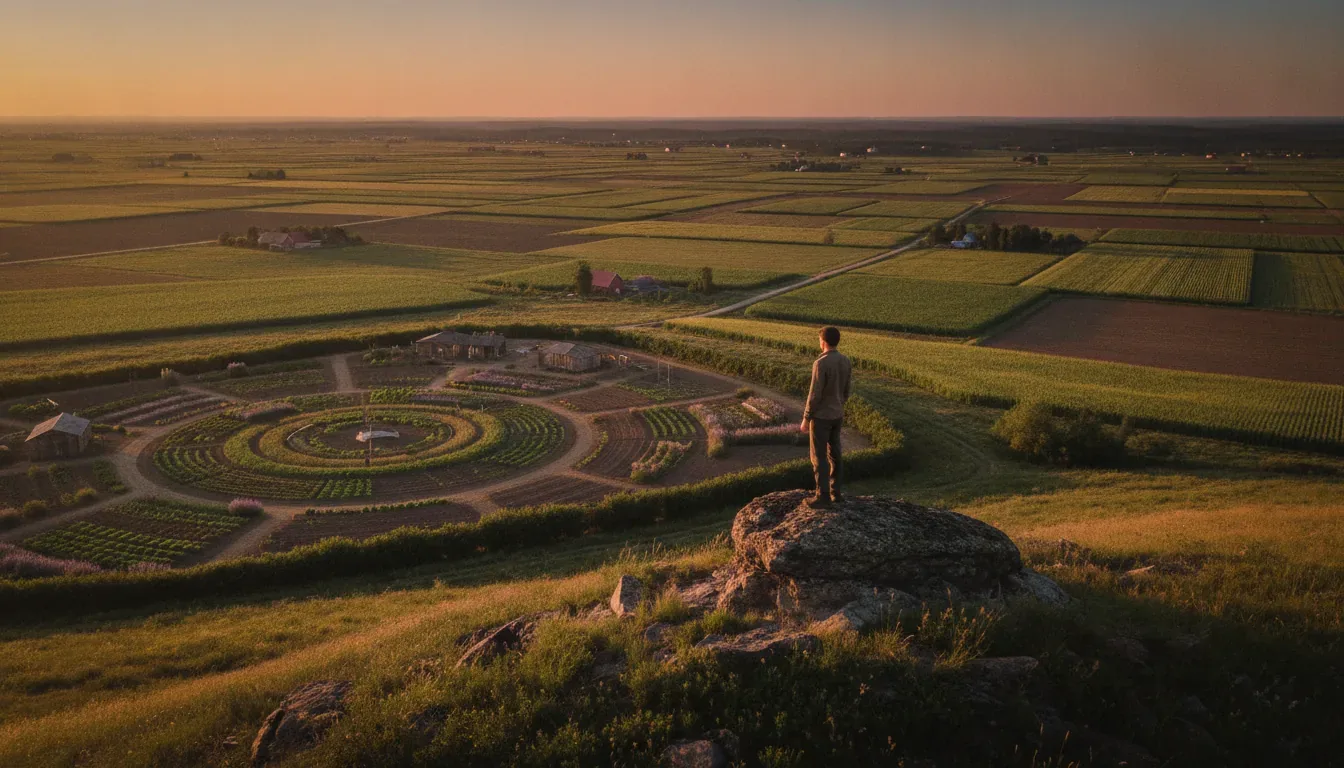
Hasiru starts from the theme. We build a named theme into the land and stay to manage it. The theme is not decoration added to generic plots; it shapes what the project is, from the layout to the planting to the community spaces, so the land aligns with how you actually want to use it. You can read the story and team behind Hasiru and see Hasiru’s themed projects to judge that for yourself.
What does “managed” actually mean at Hasiru
At Hasiru, managed means in-house and contractual: a formal Maintenance Agreement is signed with every owner, and the work is done by Hasiru’s own specialists, not handed to a sales desk.
Both companies use the word managed, so the specifics are what matter. Hasiru’s management runs on a signed Maintenance Agreement between you and the company that sets out the upkeep of your farmland. The people doing the work are in-house: agronomy and civil functions are staffed by Hasiru’s own specialists, with pre-sales and sales as separate roles, so the land is built and looked after by people whose job is the land, not the sale. You can see how Hasiru Care manages your land in more detail.
What do I actually own, and is the title mine alone
You own the specific parcel in your own name. Every Hasiru buyer receives a registered Sale Deed executed in their own name, conveying exclusive title to the parcel purchased, with an individual survey number.
This is the question almost every buyer asks, and it is where a comparison shopper should look hardest. At Hasiru, ownership is individual, not pooled. Every plot is individually surveyed and demarcated before sale and assigned an individual survey number, with the 11E sketch and khata mutation in your name for plot sales, or direct khata mutation for whole-survey-number RTC sales.
The document set you receive is specific and checkable: a Payment Receipt and Letter of Promise at booking, a Sale Agreement before registration, the Registered Sale Deed at registration, then the RTC in your name, an Encumbrance Certificate, Akarband, Mutation Register Extract, Patta Book, the latest Tax Receipts, and a Maintenance Agreement with Hasiru. Before any project begins, due diligence covers parent title for 60+ years where available, EC, RTC and mutation records, survey records, PTCL verification, a litigation check, Nil Tenancy verification and zoning. The land is agricultural and its agricultural character is retained.
What happens to my land if the company stops operating
The land stays yours. Because you hold individual registered title through a Sale Deed in your own name, your ownership does not depend on the company continuing to operate.
The real fear in managed farmland is that your holding is tied to the manager, so if the company fails, the land is caught with it. At Hasiru that link does not exist for ownership. Your title is registered in your name to a specific parcel with its own survey number, so the parcel remains yours regardless of what happens to Hasiru as a company. Management continuity is a separate matter handled through the Maintenance Agreement, but the ownership itself is not pooled and not dependent on the company. See how Hasiru proves it.
Does Hasiru promise returns like the rest of the category
No. Hasiru does not lead with speculative returns. Not promising a yield is a standing principle, and it is the clearest line between Hasiru and much of the category.
Managed farmland is often sold on numbers: assured returns, appreciation multiples, passive income. Mogg’s own marketing leads with investment framing, including returns, land appreciation, passive income, tax-exempt agricultural income and portfolio diversification. Much of the wider category goes further, with specific figures.
Hasiru deliberately does not do this. The theme and the place are the point, not a promised financial return. If produce-sharing exists on a project, it is described factually as a feature of the managed model, never as a projected return. This is a trust position, and it is why the ownership documents and the Maintenance Agreement carry the weight here rather than a yield chart.
Are owners free to sell the land
Yes. Owners are free to sell or transfer their land. Hasiru follows a Right of First Refusal, so if you wish to sell, Hasiru is offered first refusal, and if it declines, you may sell to a third party.
Exit is a fair thing to check before you buy. At Hasiru, you can sell or transfer your land as the owner. The Right of First Refusal (ROFR) means Hasiru gets the first option to buy when you decide to sell; if Hasiru declines, you are free to sell to a third party, carried out through Hasiru per the agreed terms. Because the title is yours individually, the decision to sell is yours.
Hasiru Farms vs Mogg’s Estates: the two models at a glance
This compares model traits only, not scale or price. The Mogg’s column uses only Mogg’s own published wording.
| Model trait | Mogg’s Estates (their own published wording) | Hasiru Farms |
| Core concept | Agricultural asset management offering direct access to farmland as an eco-friendly asset class | Theme-based managed farmland, with a distinct lived theme built into each project |
| Post-sale management | Manages the land on your behalf once the sale is completed | In-house management under a signed Maintenance Agreement with every owner |
| Returns framing | Marketing leads with investment framing: returns, appreciation and passive income | Does not lead with promised returns; the theme and the place are the point |
Frequently asked questions
Who owns Mogg’s Estates?
Mogg’s Estates is the brand of Mogg’s Agritech Pvt. Ltd., headquartered in Jayanagar, Bengaluru.
Is managed farmland a good investment?
Managed farmland can suit buyers who want agricultural land that a team maintains, but treat any promised return with care. Hasiru does not sell farmland as a yield product; the value is the themed place you own outright through a registered Sale Deed, not a projected income.
Which managed farmland company is best in Bangalore?
There is no single best; it depends on what you want. If you want farmland framed as an eco-friendly investment, that points one way. If you want a themed place with individual registered title and in-house management, that points to Hasiru. Decide on the model first, then the brand.
What services does Mogg’s Estates offer?
By its own description, Mogg’s Estates is an agricultural asset management company that locates and develops farmland, sells plots to buyers, and manages the land on their behalf after the sale, positioned around farmland as an eco-friendly asset.
If the themed, in-house model is what you are after, see Hasiru’s themed projects to see how it looks on the ground. You are welcome to visit and walk a site before you decide.