Introduction
The concept of owning farm plots near Bangalore has evolved from a niche pursuit into a mainstream movement shaped by sustainability, wellness, and conscious living. For many urban professionals, farmland represents more than a financial investment it embodies a return to balance, a way to live closer to nature while retaining the advantages of modern connectivity. As Bangalore expands outward, the city’s peripheries stretching toward Kanakapura, Hosur, and Chikkaballapur are transforming into thriving ecosystems where agriculture, conservation, and community living converge.
This shift reflects a global trend toward sustainable land ownership. Rising urban density and environmental degradation have intensified the search for green sanctuaries that offer both peace and purpose. Farmland investment near Bangalore now extends beyond traditional cultivation; it has become a platform for eco-living, biodiversity restoration, and regenerative agriculture. Managed eco-farms and community-based farmland projects combine permaculture principles with practical infrastructure, creating landscapes that are self-sustaining and deeply human.
The modern nature lover no longer views farmland merely as a plot of soil, but as a living system a place where trees, soil, water, and people coexist symbiotically. The appeal lies in transforming these spaces into food forests, wellness retreats, or co-managed eco-communities that embody both environmental ethics and long-term value. This evolution aligns perfectly with the sustainability ethos emerging around Bangalore, where progressive developers such as Hasiru Farms are redefining rural living through ecological design and transparent governance.
For those who seek a balance between economic prudence and ecological responsibility, farm plots near Bangalore offer an entry point into sustainable living with measurable returns. They are a tangible bridge between modern aspirations and natural abundance land that generates not just crops or profits, but peace of mind and a deeper sense of belonging.
Key Takeaways / TLDR:
- Farmland near Bangalore is evolving into a sustainable living choice for nature-focused buyers.
- Eco-farms combine regenerative agriculture, permaculture, and community governance.
- Locations such as Kanakapura and Hosur are emerging as eco-living corridors.
- The appeal lies in both environmental and lifestyle value—tranquility, self-sufficiency, and ethical investment.
- Hasiru Farms exemplifies Bangalore’s growing sustainable living movement.
Table of Contents
Nature as Investment: The Value of Ecosystem Thinking
Nature-led investment reframes how farmland value is understood. Instead of measuring worth solely in rupees per acre, it measures vitality—soil richness, water availability, biodiversity density, and the ecosystem’s capacity to regenerate itself. Farm plots near Bangalore, particularly in the southern and eastern corridors, demonstrate how ecological health translates directly into long-term financial and emotional returns.
Ecological capital operates on principles of self-renewal. Fertile soil supports sustained yields, while balanced water systems reduce irrigation costs and crop failure risk. A single mature mango tree, for example, doesn’t just yield fruit; it enriches microclimates, stabilizes soil, and attracts pollinators that improve surrounding productivity. Biodiversity amplifies resilience—mixed cropping, natural pest control, and perennial trees all build a regenerative loop that stabilizes the investment.
Beyond biology, there is also what environmental economists call “aesthetic capital.” Properties surrounded by green corridors, birdlife, and water bodies tend to appreciate faster due to their emotional and visual appeal. Investors increasingly equate this serenity and beauty with exclusivity and long-term demand. Buyers today value clean air, fertile soil, and natural soundscapes as much as they once valued marble flooring or urban convenience.
Farm plots that integrate natural capital into their design—such as those developed under managed eco-farming models—tend to maintain productivity and attractiveness across decades. Developers like Hasiru Farms adopt biodiversity mapping and soil regeneration strategies before cultivation even begins. This pre-emptive ecosystem design ensures sustainability without compromising aesthetics or yield.
Investing in nature around Bangalore is not speculation; it’s a form of stewardship. Each planted tree, each maintained water channel, and each native species reintroduced contributes to cumulative land value. The investors who recognize land as a living asset—one that appreciates because it thrives—stand to benefit financially, ecologically, and emotionally in the decades ahead.
Core Ownership & Stewardship Models for Eco-Living
Farm plots near Bangalore cater to varied lifestyle goals, offering multiple ownership and stewardship models suited to different degrees of involvement. The most common frameworks include raw land ownership, managed eco-farms, co-governed communities, and hybrid stewardship formats. Each balances autonomy, effort, and ecological responsibility differently.
Raw farmland ownership appeals to those seeking complete independence. Buyers directly manage cultivation, design, and maintenance, allowing full creative freedom. However, this model demands consistent engagement—soil management, crop rotation, and compliance with agricultural norms. It suits individuals passionate about permaculture or those building long-term self-sufficient homes.
Managed eco-farms, on the other hand, integrate professional supervision with ecological expertise. The investor retains legal ownership, while the management entity oversees farming operations, irrigation, and periodic soil health reports. Such projects often include shared amenities like composting zones, water-harvesting systems, and solar setups. For working professionals or NRIs, this format offers sustainable living without logistical burdens.
Co-governed or community-based farmland models combine private ownership with shared responsibilities. Members collectively fund and manage common resources—roads, trails, fences, or community gardens. This structure not only distributes costs but also builds social cohesion, allowing residents to shape an ecologically conscious neighborhood together. Governance is often managed through periodic meetings and digital dashboards for transparency.
Hybrid stewardship models blend independence with guided support. Owners participate in land design, select preferred crops, or engage in weekend farming activities, while core maintenance remains professionally managed. This format attracts urban residents who want hands-on connection without operational stress.
Each model aligns differently with sustainability goals and personal priorities. The key is understanding one’s level of commitment, time, and ecological literacy. Managed and hybrid models tend to scale better for sustainable development since they centralize environmental expertise while preserving individual ownership.
Eco-living around Bangalore thrives on this diversity. Whether one envisions a food forest, a regenerative orchard, or a shared nature community, stewardship models now exist to match both ambition and conscience. Choosing the right model transforms land ownership from mere possession into participation—an active role in nurturing nature while securing enduring value.

Legal & Environmental Zoning Essentials for Ecological Plots
Buying farm plots near Bangalore for sustainable living requires careful navigation of Karnataka’s land and environmental regulations. The region’s unique legal framework governs who can buy farmland, how it can be used, and what kind of ecological structures can be built. For those seeking to live close to nature, understanding these boundaries ensures both compliance and conservation integrity.
The Karnataka Land Reforms Act defines farmland ownership eligibility and usage. Historically, only agriculturists could purchase agricultural land, but recent relaxations have opened pathways for non-agriculturists under specific conditions. Investors must confirm the land classification—agricultural, converted, or green belt—through records such as the Record of Rights, Tenancy, and Crops (RTC) and mutation extracts. Conversion, if needed, is authorized by the Deputy Commissioner’s office and accompanied by a conversion certificate.
Environmental zoning adds another dimension. Farm plots near forest boundaries, lakes, or catchment zones may fall under eco-sensitive regulations. The National Green Tribunal and the Karnataka State Pollution Control Board oversee guidelines that restrict construction and chemical use in such zones. Land near protected forests, including Bannerghatta or Devarayanadurga, often carries specific buffer zone limitations that prohibit permanent structures beyond a defined distance.
Eco-living projects must also consider watershed management and groundwater extraction limits. Permissions for borewells or irrigation channels depend on hydrogeological surveys. Sustainable farm communities typically rely on rainwater harvesting, recharge pits, and natural ponds instead of deep borewells, aligning with both environmental compliance and regenerative design.
Documentation is critical. Buyers should verify encumbrance certificates (EC), land tax receipts, and ownership continuity through the “Mother Deed.” Environmental clearances or no-objection certificates may be needed for solar installations, eco-housing, or small farm retreats.
While these steps can seem procedural, they safeguard long-term ecological and legal security. Clean land titles and environmentally aligned approvals not only minimize risk but also enhance resale potential. Farmland aligned with regulatory and ecological frameworks earns higher credibility among urban and institutional buyers.
Sustainable living near Bangalore flourishes where law and nature coexist. When developers integrate legal compliance into ecological design—like Hasiru Farms does—the result is land that grows in both value and vitality, rooted in legality and living systems.
Corridor Ecology & Landscape Differentiation Around Bangalore
Bangalore’s landscape unfolds in distinct ecological corridors, each offering a unique mix of soil quality, rainfall, biodiversity, and development momentum. Understanding these natural patterns helps nature-minded investors identify where sustainable living aligns best with long-term ecological and financial growth.
The Southern Corridor, covering Kanakapura, Thalli, and Hosur regions, is Bangalore’s most sought-after zone for eco-farm projects. The region’s red loamy soil, gentle elevation, and consistent rainfall create ideal conditions for fruit orchards, agroforestry, and organic cultivation. Managed eco-farms in this belt often integrate teak, mango, and sandalwood with native shade trees, creating layered, self-sustaining ecosystems. Its proximity to the NICE Road and expanding suburban zones makes it ideal for those seeking a balance between accessibility and tranquility.
The Northern Corridor—stretching toward Devanahalli and Chikkaballapur—benefits from proximity to the international airport and major highways. The terrain here is drier, making water harvesting systems essential. Many farms employ contour bunding, check dams, and solar-powered irrigation to sustain cultivation. The region’s landscape is well-suited to hardy timber and native grasslands, which attract pollinators and small wildlife.
The Eastern Corridor, encompassing Sarjapur and Malur, offers fertile black soil and higher rainfall but also experiences faster urbanization. Here, eco-communities thrive on smaller, well-managed parcels, focusing on intensive permaculture or micro-farming. These plots often blend farm stays and experiential tourism with productive agroforestry.
The Western Belt—toward Tumkur and Nelamangala—retains larger tracts of farmland at lower prices. Although industrial corridors are emerging, eco-farms here depend on soil restoration and careful water management due to variable fertility.
Each corridor presents distinct opportunities. Southern and eastern zones suit biodiversity-oriented projects; northern and western areas are better for long-term appreciation through restoration and rewilding. Smart investors match their sustainability goals to each corridor’s ecological identity, ensuring the land’s purpose aligns with its natural rhythm.
In 2025, the new measure of land value around Bangalore is not just distance from the city but the resilience of its ecosystem. Corridors rich in biodiversity and water security will define the next era of regenerative living and conscious investment.
Design Strategies for Eco-Farm Plots
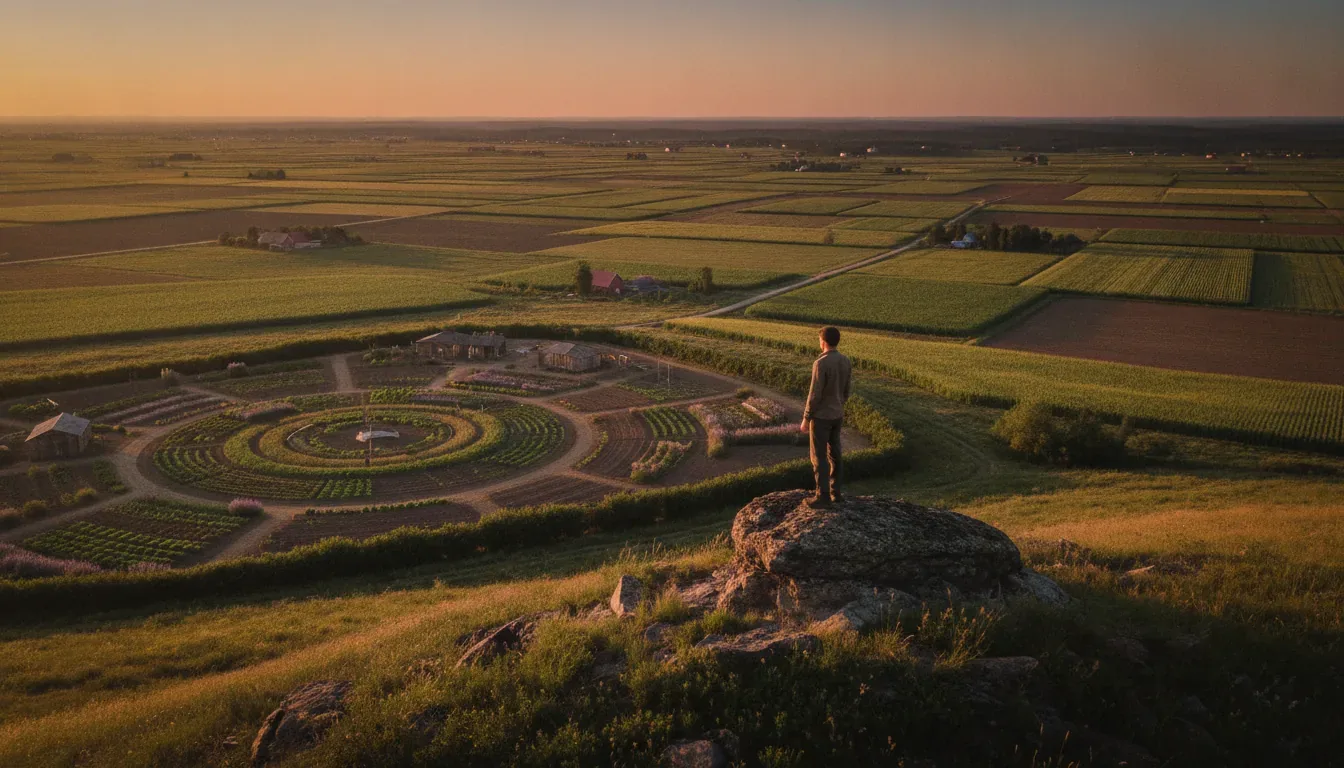
Sustainable farm plots succeed when their design aligns with natural systems rather than imposing upon them. The most successful eco-farms near Bangalore combine principles of permaculture, agroforestry, and regenerative design to create living landscapes that balance beauty, productivity, and ecological stability.
A foundational principle is diversity through design. Food forests—layered ecosystems composed of trees, shrubs, herbs, and root crops—form the backbone of regenerative agriculture. Each layer supports the other: trees provide shade and organic matter, shrubs enrich pollination, and ground crops prevent erosion. Native species like neem, tamarind, and pongamia often serve as anchor plants, stabilizing soil and providing habitat for beneficial insects.
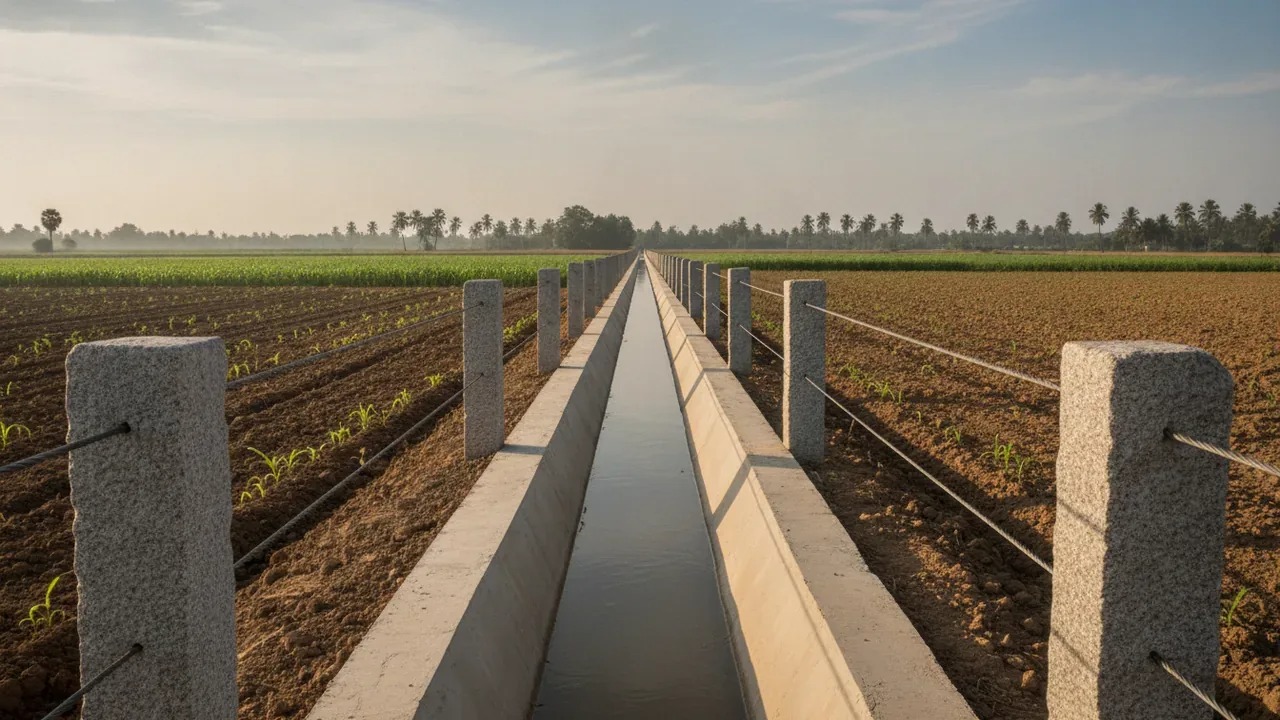
Water design determines a farm’s long-term viability. Rainwater harvesting structures, percolation ponds, and swales direct seasonal rainfall into underground aquifers, ensuring year-round hydration. Projects like Hasiru Farms integrate water zoning that channels runoff into storage ponds while using greywater systems for irrigation. These self-sustaining loops reduce dependency on external sources and align with both environmental regulations and cost efficiency.
Ecological buffers—strips of native vegetation—protect the land from soil erosion, noise, and external pollutants. They also support biodiversity corridors that attract birds, pollinators, and small mammals, maintaining the ecological web around the farm.
Design also accounts for human experience. Walking trails, meditation groves, and open-air seating areas transform farmland into immersive landscapes that rejuvenate residents. Buildings, when necessary, follow eco-architecture principles—using mud blocks, passive cooling, and solar energy. Lighting and fencing are minimal to maintain night ecology and wildlife flow.
Each farm’s design reflects its corridor’s natural character. In wetter southern zones, layered forests thrive; in northern drylands, contour planting and drought-resistant crops sustain balance. This alignment between ecology and aesthetics creates spaces that feel natural yet curated—a hallmark of true sustainable living.
Farm plot design is not decoration; it’s ecological choreography. When every element—soil, water, flora, and structure—interacts purposefully, the result is a landscape that grows richer with time. For investors and nature seekers alike, such design transforms farmland into a living legacy that nurtures both the earth and those who inhabit it.
Revenue & Monetization for Nature-Lovers
Sustainable living and financial returns can coexist when farmland is viewed as a regenerative asset rather than a speculative one. The best eco-farm projects near Bangalore demonstrate that profitability can flow naturally from ecological balance. Their monetization strategies rely on diversified income sources that align with environmental stewardship rather than industrial farming.
The first revenue stream comes from productive agroforestry. By combining fruit trees, timber species, and perennial crops, owners generate consistent yields without exhausting soil. Mature mango and chikoo trees offer short-term income, while sandalwood, teak, or mahogany provide long-term appreciation. A well-designed agroforestry model typically starts generating meaningful returns within three to five years.
The second stream lies in eco-tourism and experiential stays. Farmstays, wellness retreats, and forest cottages attract Bangalore’s urban population seeking weekend escapes. Managed eco-communities often integrate small-scale hospitality with organic food experiences or workshops on composting and sustainable living. This hybrid model turns farmland into a lifestyle brand while maintaining ecological integrity.
Community-supported agriculture (CSA) is another sustainable revenue format. Residents and surrounding city dwellers subscribe to seasonal produce baskets, ensuring steady income for the farm while reducing dependency on market volatility. Such arrangements thrive when farms cultivate diverse crops using organic or regenerative methods, appealing to health-conscious consumers.
Emerging markets also reward carbon and biodiversity credits. Farms that restore native vegetation and sequester carbon can qualify for offset programs. While this income takes time to accrue, it contributes to long-term asset appreciation and aligns with corporate ESG demand.
Finally, leasing and co-management models offer predictable income with minimal effort. Professional operators cultivate the land or run eco-experiences while owners receive a fixed or shared return.
The essence of monetizing sustainable farmland lies in designing revenue around life-sustaining systems rather than extractive processes. Each stream complements the others, creating resilience against market shifts or climate disruptions. Farm plots near Bangalore can therefore act not just as eco-havens but as self-sustaining financial ecosystems—green portfolios that yield peace, produce, and prosperity in equal measure.
Risks & Mitigation in Eco-Farm Investments
Every investment in farmland carries inherent risk, but eco-farms introduce both new vulnerabilities and opportunities for stability. Success depends on anticipating environmental, operational, and legal risks before they evolve into losses.
Environmental risk is the most visible. Irregular rainfall, soil depletion, or invasive species can affect yield. The mitigation lies in biodiversity planning. A multi-layered farm with native trees, water-harvesting systems, and organic soil-building practices is naturally more resilient to climatic variations. Integrated pest management replaces chemical dependency, protecting both crops and pollinators.
Water risk remains a critical concern across Bangalore’s northern and western corridors. Shallow borewells and excessive extraction have lowered groundwater tables. Sustainable farms counter this through decentralized water systems—swales, ponds, percolation pits, and rooftop catchments. Monitoring recharge data and seasonal storage capacity should be part of every project’s operational audit.
Operational risk stems from management gaps. In managed eco-farms, poorly structured contracts or lack of transparency can disrupt returns. Reliable developers provide digital dashboards, periodic soil and yield reports, and independent audits. Investors should review governance frameworks and ensure clarity on revenue-sharing ratios, cost responsibilities, and exit clauses.
Regulatory risk involves land use and compliance. Changes in zoning or buffer rules can restrict certain activities. Acquiring land with verified titles, clear conversion records, and current tax receipts ensures legal continuity. Environmental clearances, if required, must be obtained before initiating any structural work.
Market risk arises when resale liquidity or demand for eco-plots fluctuates. However, this is partially offset by increasing urban interest in wellness-based living. Properties that maintain legal transparency and ecological documentation retain steady value, even during market slowdowns.
Finally, community risk—differences in shared governance or maintenance costs—can affect cohesion. The solution is participatory management, where decisions on resources, common infrastructure, and long-term goals are democratically managed.
Eco-farms prosper when risk management is woven into their design. Farms that document soil health, water data, and biodiversity metrics demonstrate measurable stability—something no conventional property can match. The more an investor aligns with ecological logic, the lower the long-term volatility of the asset.
Hasiru Farms’ Eco-Living Promise
Hasiru Farms represents a benchmark in Bangalore’s eco-living ecosystem. Its projects are designed not merely as agricultural ventures but as regenerative landscapes where people and nature cohabit in balance. Every project is guided by the philosophy that land, when nurtured responsibly, can yield abundance across generations.
Hasiru Farms selects sites based on ecological potential, prioritizing soil fertility, water table health, and biodiversity corridors. Each location undergoes hydrological mapping before development begins, ensuring that irrigation systems are regenerative rather than extractive. Agroforestry layouts are customized to the native species of the region, integrating fruit, timber, and medicinal trees to sustain both ecology and revenue.
Community stewardship is central to Hasiru’s approach. Landowners participate in governance frameworks that outline rights, responsibilities, and shared infrastructure policies. Maintenance funds, soil health tracking, and transparent audits form part of every project’s structure. This participatory model ensures accountability while cultivating a sense of collective ownership and belonging.
Hasiru’s ecological blueprint extends to resource cycles. Rainwater harvesting, composting, and renewable energy systems are integrated into each project’s foundation. Built structures, when included, follow eco-architecture principles—mud blocks, passive cooling, and low-light pollution. Every element is intended to maintain harmony with the surrounding ecosystem.
Beyond infrastructure, Hasiru’s projects emphasize community and experience. Many farms incorporate learning spaces, farm stays, and nature trails that reconnect residents with the rhythms of land and life. Investors often evolve from property owners to active custodians, participating in planting drives, workshops, and seasonal festivals that reinforce environmental consciousness.
Hasiru Farms distinguishes itself by merging ecological integrity with investment clarity. Transparent documentation, audited performance, and legal diligence accompany every plot, ensuring both environmental and financial security. For professionals seeking sustainable living around Bangalore, Hasiru Farms provides a living model of how regenerative design, governance, and human values can coexist on the same piece of land.
Conclusion
The search for farm plots near Bangalore is no longer just about owning land—it has become a movement toward conscious, sustainable living. As urban life grows faster and more crowded, the countryside offers something irreplaceable: balance, peace, and connection. Sustainable farmland ownership combines these qualities with long-term financial sense, creating an investment rooted in both nature and value.
The modern investor sees farmland differently today. It is not merely an acre of soil; it is a living ecosystem that generates health, wealth, and heritage. The rising popularity of managed eco-farms and regenerative projects reflects a cultural transformation. People want to live closer to the land without abandoning convenience, and developers who understand this vision—like Hasiru Farms—have built frameworks that make it possible.
Sustainability in farmland is not a trend; it’s a strategy for resilience. Soil health, water conservation, and biodiversity are not only ecological imperatives but financial ones. Land that regenerates itself continues to yield—economically, socially, and emotionally. As environmental pressures rise globally, eco-conscious farmland in Bangalore’s green corridors becomes both a refuge and a future-proof investment.
For nature lovers, buying farmland near Bangalore offers more than a return on investment—it offers a return to purpose. It allows a lifestyle of grounded simplicity and meaningful impact, where ownership contributes to restoration rather than depletion. Whether envisioned as a food forest, a retreat, or a community-managed farm, every well-designed eco-plot becomes a step toward living harmoniously with the earth.
Hasiru Farms embodies this balance by merging legal transparency, regenerative agriculture, and participatory stewardship. Its model demonstrates how land can thrive when it is treated as a shared legacy rather than a transaction. The future of sustainable living around Bangalore lies in such harmony—where the soil regenerates, the water sustains, and communities grow in rhythm with the landscape.
For those seeking a life surrounded by trees instead of traffic and bird calls instead of notifications, now is the time to choose consciously. The most rewarding investments are those that let both the earth and the investor grow together.
FAQs on Buying Farm Plots Near Bangalore for Sustainable Living
1. What makes farm plots near Bangalore ideal for sustainable living?
The region’s moderate climate, fertile soil, and expanding infrastructure make it suitable for agroforestry, organic cultivation, and eco-community development. Managed eco-farms near Kanakapura and Hosur are particularly suited for nature-oriented lifestyles.
2. Can non-agriculturists buy farmland near Bangalore?
Yes, under Karnataka’s revised land reforms, non-agriculturists can invest in certain agricultural lands or converted eco-farm projects, provided they meet zoning and land-use compliance requirements.
3. What are the essential legal checks before purchasing a farm plot?
Buyers should verify the Record of Rights (RTC), Encumbrance Certificate, and conversion status. It’s also important to check environmental buffer restrictions and water-use permissions to ensure long-term sustainability.
4. How can farmland generate revenue while remaining eco-friendly?
Farm plots can yield returns through fruit trees, timber plantations, eco-tourism, farmstays, carbon credits, or leasing models. Agroforestry and regenerative agriculture maintain productivity without damaging the ecosystem.
5. Why choose Hasiru Farms for sustainable farmland investment?
Hasiru Farms integrates environmental science, transparent governance, and regenerative agriculture into every project. Its community-driven approach ensures ecological stability, legal clarity, and genuine eco-living opportunities near Bangalore.