Introduction: Why Farmland Laws Matter for Bangalore Investors
Farmland laws in Karnataka shape who can own agricultural land, how much can be held, and under what purposes it may be used. These regulations carry direct implications for anyone considering farmland investments near Bangalore, particularly through managed farmland models that package ownership with professional stewardship. Historically, the Karnataka Land Reforms Act of 1961 imposed stringent restrictions to prevent concentration of agricultural land in the hands of non-farming elites. The intent was to protect cultivators and ensure equitable distribution of land resources.
The 2020 amendments shifted this legal landscape in a profound way. By repealing Sections 79A and 79B, the state government allowed non-agriculturists and companies to purchase farmland, opening the market to a wide spectrum of urban professionals and institutional buyers. For Bangalore, a city with rising demand for lifestyle-led farmland retreats and structured rural investments, this liberalization has been pivotal. It has spurred the growth of managed farmland projects that combine compliance oversight with modern amenities.
Yet the story does not end there. Farmland laws remain layered, with ceilings on holdings under Section 63, conversion norms under Section 109, and continuous policy debates about whether liberalization serves farmers or speculative interests. In 2024, political discussions resurfaced around the idea of reinstating 79A and 79B, signaling that policy direction is not static. For investors, this means understanding not only the letter of the law but also its trajectory, debates, and market consequences.
TLDR / Key Takeaways
- Karnataka’s farmland laws regulate ownership, landholding ceilings, and permitted uses.
- The 2020 repeal of 79A and 79B opened farmland to non-agriculturists and companies.
- Managed farmland models gained traction as compliance-friendly investment structures.
- Ongoing debates in 2024 suggest potential policy reversals, requiring careful monitoring.
Karnataka Land Reforms Act, 1961 – Foundations and Intent
The Karnataka Land Reforms Act of 1961 emerged as part of India’s post-independence agrarian reforms. Its central purpose was to dismantle feudal-style land concentration and strengthen the rights of cultivators. The law introduced ceilings on landholding, tenancy regulation, and restrictions designed to preserve farmland for agricultural use rather than speculative transfer.
Key provisions included Section 79A, which barred non-agriculturists from acquiring farmland, and Section 79B, which restricted companies, trusts, and other non-farming institutions from holding agricultural land. Section 63 imposed ceilings on how much land an individual or family could own, while Section 109 allowed exemptions for industrial, educational, or housing use under state approval. Together, these clauses created a legal framework that prioritized farmer protection over external investment.
The intent was as much social as economic. Policymakers viewed farmland not merely as an asset but as a livelihood resource. Concentrating land in the hands of non-farming elites was seen as a threat to rural stability. By restricting eligibility, the Act aimed to redistribute land, limit speculation, and preserve the agricultural economy. For decades, these restrictions defined Karnataka’s rural property market and shaped urban investors’ limited participation.
Despite its protective ethos, critics argued that the Act constrained capital infusion into agriculture and limited modernization. By the 2000s, voices emerged calling for liberalization, citing the need for better productivity, irrigation infrastructure, and rural development funding. These tensions set the stage for the 2020 amendments.

The 2020 Amendments – Liberalizing Farmland Ownership
The 2020 reforms marked the most significant shift in Karnataka’s farmland laws in decades. By repealing Sections 79A and 79B, the state government dismantled the prohibition on non-agriculturists and companies purchasing farmland. This change meant that professionals, NRIs, trusts, and corporate entities could directly invest in agricultural land without having to prove an agricultural background or engage in complex legal structuring.
The rationale behind the repeal was rooted in modernization and liquidity. Policymakers argued that opening farmland markets would attract capital, promote scientific farming practices, and unlock rural economic potential. It was also framed as an effort to make agriculture more attractive to younger generations by integrating it with lifestyle, tourism, and wellness sectors.
However, not all restrictions disappeared. Section 63’s ceiling on maximum landholdings remains in force, limiting how much land an individual or entity can accumulate. Land conversion for non-agricultural purposes still requires approvals under Section 109. Documentation such as RTC records and encumbrance certificates continues to be essential for legal transfer.
For investors in Bangalore, the amendment created a surge of opportunities. Managed farmland projects proliferated, offering turnkey compliance, community-based ownership models, and bundled amenities. Yet concerns from farmer groups about speculative buying and potential corporate dominance also grew louder. The policy thus delivered both expansion of market access and renewed debates on the balance between investment freedom and farmer protection.
Policy Watch: The 2024 Debate on Restoring 79A and 79B
Policy discussion in 2024 placed Sections 79A and 79B back on the table. The central question was simple: did the 2020 liberalization invite productive investment into agriculture or encourage speculative accumulation of farmland near urban corridors such as Bangalore? Farmer associations argued that repealing eligibility bars tilted bargaining power toward capital-rich buyers. Policy voices supportive of liberalization countered that capital, agronomy services, and market linkages were necessary to modernize agriculture and lift rural incomes.
For investors and developers, the practical issue is uncertainty. A return of 79A and 79B would again screen buyers based on agricultural status or institutional identity. Transitional clauses could protect registered transactions, yet pipeline deals might need to pause until clarity arrives through notifications or rules. Scenario planning helps maintain momentum. One pathway assumes no reversal, keeping the 2020 framework intact. Another assumes selective reinstatement with thresholds, such as tighter scrutiny for institutional purchases above a certain acreage. A third envisions conditional permissions linked to proof of agricultural use or productivity benchmarks.
Signals worth tracking include cabinet notes, assembly debates, committee references, and departmental circulars. Investors often focus on two filters: whether ongoing purchases remain valid and whether ceilings or reporting duties will change. Developers monitor language on ancillary infrastructure, since amenities that resemble urban layouts attract stricter review. In the interim, legal hygiene becomes the best buffer. Clear title, compliant landholding under Section 63, and visible agricultural activity reduce regulatory exposure. Managed farmland projects that document soil work, crop calendars, and water stewardship demonstrate agricultural use in a tangible way. If policy tightens, documentation already in place becomes a valuable shield.
Practical Guide to Buying Farmland Post-2020
The 2020 amendments widened the buyer pool, yet diligence remains the anchor. Start with identity and eligibility checks, followed by a paper trail audit. Core records include RTC or Record of Rights, Tenancy and Crops, mutation extracts, survey and hissa details, and an encumbrance certificate across a minimum 30-year window. Cross-verify boundaries through the village map and field measurement book. Flag exclusions such as gomala land, forest land, tank beds, and grant lands restricted under special statutes. Zoning under local planning authorities and green belt markings should be reviewed alongside any acquisition.
Ceiling compliance under Section 63 still applies. Compute holdings by family unit or entity structure, including existing agricultural land in Karnataka. Purchases near the limit require careful structuring and ongoing reporting discipline. For non-agricultural use, conversion permissions are processed under Section 109 and related rules. Without conversion, construction must remain ancillary to agriculture, such as tool sheds, pump rooms, or modest caretaker units.
Title checks extend beyond the Land Reforms Act. In Karnataka, investors often review PTCL risks linked to certain historical grants, inam abolition records, and any ongoing land tribunal matters. Water rights and borewell registrations should match aquifer norms, with energy connections aligned to agricultural use where applicable. Payment trails, stamp duty, and registration entries must be clean and synchronized with possession.
Post-registration, initiate mutation to update revenue records, then set a compliance calendar. Tasks include RTC updates each season, property tax where notified, boundary stones maintenance, and crop documentation. Insurance for crop and liability can de-risk early seasons. Where third-party management is engaged, the farm management agreement should define scope, inputs, produce rights, and reporting cadence. A clean compliance file allows for easier refinancing or exit and keeps policy risk manageable.
Farmland Laws and Managed Farmland Projects in Bangalore
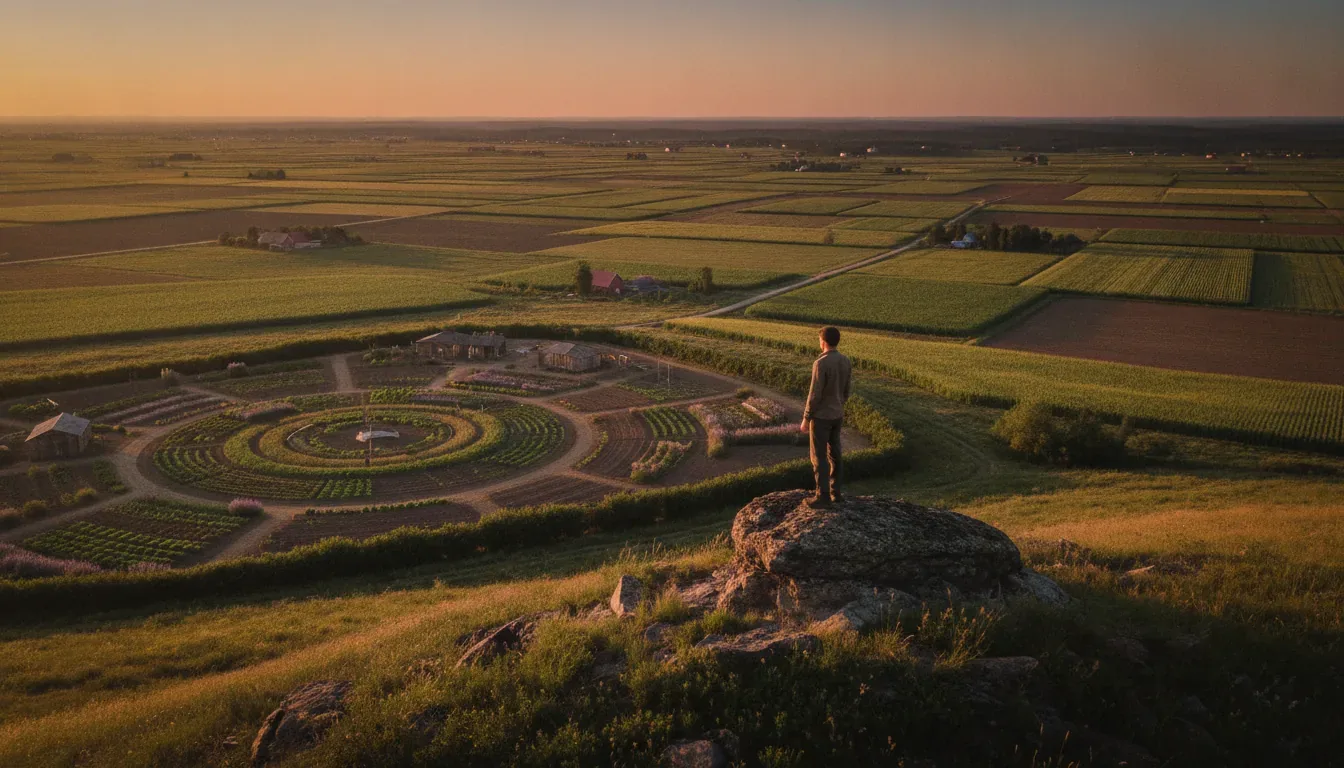
Managed farmland gained traction after 2020 because it compresses legal, agronomy, and operational tasks into a single framework. The legal backbone typically blends clear titled parcels, pooled services, and governance that enforces agricultural use. Structures vary. Some projects use direct co-ownership with internal bylaws. Others adopt association, LLP, or society formats to centralize maintenance, irrigation, and staff obligations. The constant across models is an agricultural use case documented through crop plans, water budgets, and soil work logs.
Compliance lives in the details. Section 63 tracking is monitored at the buyer and entity level to keep holdings within limits. Section 109 conversion is sought only where a use case clearly requires it, such as hospitality blocks. Many Bangalore-oriented developments avoid conversion by designing amenities that are genuinely ancillary to agriculture. Tool sheds, produce processing, seed storage, and nursery spaces fit comfortably within the agricultural narrative. Club-like facilities are kept compact and seasonal to prevent classification drift.
Risk controls separate mature projects from marketing-heavy experiments. Title chains are digitized, RTCs are reconciled to the latest season, and all easements and access roads are evidenced. Water extraction follows notified limits and micro-irrigation is recorded to showcase responsible use. Standard operating procedures guide pest management, organic inputs, and harvest cycles so that agricultural activity is visible through the year. Governance documents allocate decision rights for capex, replanting, or crop switches, reducing disputes.
For Bangalore buyers, this packaging of land, compliance, and farm services addresses the time cost of rural ownership. It also creates a predictable exit story because the next buyer inherits a documented agricultural enterprise rather than a bare plot. If policy scrutiny intensifies, projects that can produce agronomic records, ceiling computations, and clean approvals sit on stronger ground. Managed farmland, when operated with discipline, converts legal complexity into a stable, audit-ready lifestyle asset aligned with Karnataka’s farmland laws.
Comparative Lens: Karnataka vs Other States
State rules create distinct pathways for farmland investment. Karnataka’s 2020 liberalization widened eligibility by repealing 79A and 79B, yet retained landholding ceilings under Section 63 and conversion controls under Section 109. The market signal is clear: agricultural use remains central, with scale restricted and non-agricultural use channeled through approvals.
Tamil Nadu follows a comparatively permissive stance on who may purchase agricultural land, but practical barriers appear through local revenue checks, subdivision limits, and conversion scrutiny near planning jurisdictions. Ceilings and tenancy legacies vary by district, and compliance often hinges on patta accuracy, field measurement records, and water source legality. The investment narrative tilts toward smaller, intensively managed parcels with strong water security.
Andhra Pradesh presents an agriculture-forward stance with active irrigation programs in certain belts, but investors encounter a rigorous documentary culture. Title consolidation, pattadar passbooks, and survey reconciliation are crucial, particularly where historical reorganizations have altered village maps. Conversion for non-agricultural use is possible yet closely tied to notified plans and infrastructure corridors.
Maharashtra illustrates the opposite pole in many districts, where non-agriculturists face higher procedural friction. Agricultural background or permissions become gating items, and class change for land use can involve multi-agency review. Where permissions are secured, produce-linked value chains and agro-processing clusters can strengthen returns, but entry timelines tend to stretch.
For Bangalore-focused investors, Karnataka’s blend of widened eligibility plus ceilings yields a middle path. Liquidity benefits from the deeper buyer pool, while agriculture-first design keeps projects defensible under scrutiny. Cross-border comparisons suggest a priority stack that travels well: precise revenue records, verified water rights, and conversion restraint unless a clear non-agricultural use case exists. When these anchors are present, farmland behaves more like a documented enterprise and less like a speculative parcel, regardless of state.
FAQs
Which buyers can legally purchase farmland in Karnataka after 2020?
Non-agriculturists, companies, and certain institutions may purchase, subject to landholding ceilings and agricultural use unless conversion is granted.
What is the maximum landholding limit under Section 63?
Section 63 imposes ceilings that aggregate across family or entity holdings. Computation depends on land class and notified formulas. Professional computation is recommended before any additional acquisitions.
Is conversion mandatory to build structures on agricultural land?
No. Agricultural use allows ancillary structures such as tool sheds, pump rooms, and modest caretaker units. Non-agricultural uses or larger built environments require conversion permissions under Section 109 and related rules.
Could restrictions similar to 79A and 79B return?
Policy debate in 2024 included calls for restoration. If reinstated, screening of non-agriculturists or institutions could resume. Registered transactions are generally protected, but pipeline deals would need to align with any new rules.
How do managed farmland projects stay compliant?
By maintaining clear title chains, tracking Section 63 ceilings at buyer and entity levels, documenting crop activity, and limiting non-agricultural amenities. Where required, they seek conversion only for specific blocks with a defined use case.
What documents are critical during diligence?
RTC extracts, mutation entries, survey and hissa details, encumbrance certificates across a long lookback, village maps, FMB or comparable measurement records, water and energy permissions, and any tribunal or grant-related orders.
Conclusion: Navigating Karnataka’s Farmland Laws After the 2020 Amendments
Karnataka’s farmland regime is defined by balance. The 1961 Land Reforms Act aimed to preserve equity and prevent speculative concentration, while the 2020 repeal of Sections 79A and 79B widened access for non-agriculturists and companies. This liberalization created space for Bangalore’s urban professionals, NRIs, and institutions to participate in farmland ownership, and it fueled the rise of managed farmland projects that package compliance with lifestyle amenities.
Yet ceilings under Section 63, conversion rules under Section 109, and documentary diligence remain as critical filters. Investors must still verify RTCs, mutation entries, and encumbrance history while respecting agricultural use norms. The 2024 debate over reinstating restrictions highlights the fluidity of policy and the need for vigilance.
Managed farmland projects have positioned themselves as a resilient model by embedding agricultural activity, transparent governance, and compliance documentation. They offer investors a structured way to access farmland without exposure to regulatory blind spots. The strategic takeaway is clear: long-term confidence comes from alignment with the law’s agricultural core, not circumvention of it. Bangalore’s farmland market will continue to grow, but the investors who thrive will be those who read the law not only for what it permits today, but also for how it evolves tomorrow.