Introduction: Why “Agricultural Income” Matters for Bangalore Farmland Buyers
“Agricultural income” under Section 10(1) of the Income-tax Act can be exempt from central income tax. That single phrase drives many decisions around managed farmland near Bangalore. The exemption does not apply to every rupee loosely linked to a farm. It applies to income that is legally tied to land used for agriculture and to qualifying operations on or around that land. When projects combine crops with hospitality, processing, or rentals, some receipts fall outside Section 10(1) and enter the taxable bucket. Understanding where the line sits helps structure investments, contracts, and record-keeping so that qualifying income remains clean and non-qualifying flows are separated and disclosed.
Section 10(1) interacts with related rules and judicial guidance. Courts have clarified what “agricultural operations” look like in practice, while CBDT circulars and composite income rules address hybrid activities such as tea, coffee, and rubber where both cultivation and manufacturing occur. Managed farmland models add another layer: shared agronomy and pooled services must still show authentic cultivation, documented crop cycles, and compliant land use. The safest approach treats the farm as a producing asset first, with any non-agricultural activities ring-fenced and accounted for separately.
TLDR / Key Takeaways
- Agricultural income under Section 10(1) is exempt when it is derived from land used for agriculture in India and linked to qualifying operations or farm buildings.
- Hybrid activities trigger composite rules; processing beyond basic operations usually creates taxable business income.
- Managed farmland returns qualify only to the extent they arise from documented cultivation; rentals, events, or branded processing are typically taxable.
Table of Contents
Section 10(1) of the Income-tax Act – Definition and Scope
Section 10(1) exempts agricultural income from central income tax. The term covers three principal streams: rent or revenue derived from land used for agricultural purposes in India; income arising from agricultural operations that involve basic and subsequent processes ordinarily employed by a cultivator to make produce marketable; and income from buildings used for agricultural purposes when certain proximity and occupancy tests are met.
The land nexus is non-negotiable. The income must originate from land actually used for agriculture within India. For operational income, activities must reflect real cultivation: preparing the soil, sowing, tending, and harvesting. Post-harvest steps that a cultivator ordinarily performs to render produce fit for market—like drying, cleaning, or basic grading—remain within the agricultural zone. When processing crosses into manufacturing or value addition, such as canning, roasting, or branded packaging, the character typically shifts to taxable business income unless specific composite rules apply.
Farm buildings qualify only when they are situated on or in the immediate vicinity of the agricultural land and are used by the cultivator or the receiver of rent for dwellings, storehouses, or similar agricultural needs. Distance, purpose, and occupancy are tested together.
Judicial interpretations have repeatedly emphasized the human skill and labor component in cultivation. CBDT guidance further distinguishes ordinary agricultural processes from commercial manufacturing. For high-income cases, partial integration rules may adjust slab calculations, but the core exemption for qualifying agricultural income persists. The practical message is simple: keep the income tied to the field and to cultivation, and document that link thoroughly.
What Qualifies as Agricultural Income
Rent or revenue from agricultural land qualifies when the land is actually used for agriculture. Example: a landowner leases paddy fields near Kanakapura to a cultivator and receives annual rent linked to acreage; that rent is agricultural income. Revenue-share agreements also qualify if the share is derived from actual cultivation on identified fields.
Income from cultivation is the second leg. Example: a managed farmland project plants mango and millets, maintains soil health, employs irrigation, and sells unprocessed produce at the farm gate. Sale proceeds from that produce are agricultural income. Post-harvest steps like sun-drying, husk removal, or basic grading remain within the exempt ambit because they are ordinarily employed by cultivators to make produce marketable.
Farm building income qualifies when conditions align. Example: a storehouse located within the farm boundary, used to store harvested produce by the cultivator or rent receiver, meets the test. A warehouse situated several kilometers away, leased to third parties for commercial storage, does not. Proximity and agricultural use are decisive.
Edge scenarios require care. A nursery that raises saplings from seeds embedded in soil is generally treated as agricultural, while a hydroponic unit with minimal land nexus risks classification as business income. Community harvest events that collect ticket revenue or farmstay rentals fall outside Section 10(1). If a project roasts coffee beans or bottles artisan jams under a brand, the value-added margin becomes taxable business income unless a composite rule allocates a portion as agricultural.
For managed farmland, the operational rule of thumb is clarity. Keep crop-linked income separately invoiced; preserve field maps, cultivation logs, and input records; and segregate any hospitality or processing revenue into the taxable ledger.

When It’s Not Agricultural Income – Exclusions and Grey Areas
Not every rupee linked to farmland qualifies as agricultural income. The exemption under Section 10(1) stops where the activity leaves the field-to-market corridor that a cultivator ordinarily follows. Classic boundaries come from jurisprudence: cultivation requires basic operations on land and closely connected subsequent operations. Activities unconnected with cultivation or involving manufacturing typically move income into the taxable business basket.
Processing beyond what a cultivator ordinarily performs creates business income. Examples include canning fruit, roasting coffee, vacuum-packing branded produce, cold-pressed oil units, or value-added dairy on-site. These cross the line from making produce marketable to manufacturing a distinct commercial product. CBDT-aligned tutorials and guidance reinforce this split between ordinary post-harvest handling and industrial processing.
Certain receipts are outside Section 10(1) regardless of where they occur. Farmstay bookings, venue rentals for events, adventure activities, or recurring hospitality income are business receipts. Dividends from agri-companies remain taxable in the investor’s hands. Sale of the land itself raises capital gains issues rather than agricultural income questions. Nurseries that raise saplings in soil generally stay within the exemption; fully soilless or hydroponic units with minimal land nexus risk classification as business income.
Buildings also invite mistakes. A storehouse or farmer dwelling within or immediately near the fields may qualify, but a warehouse miles away, leased to third parties, does not. Proximity, use, and occupancy tests operate together. For Bangalore-area managed farmland, the clean practice is segregation: crop-linked invoices and logs in one ledger; hospitality, tourism, and branded processing in another. This documentation mirrors the legal boundary and limits position risk in scrutiny.
Composite Income – The Hybrid Cases (Rules 7, 7A, 7B, 8)
Some plantation sectors blend cultivation with manufacturing; the law responds with fixed splits between exempt agricultural and taxable business components. Tea grown and manufactured in India is treated as 60 percent agricultural and 40 percent business under Rule 8. Rubber grown and manufactured follows a 65 percent agricultural and 35 percent business split under Rule 7A. Coffee has two patterns under Rule 7B: grown and cured by the seller allocates 75 percent agricultural and 25 percent business; grown, cured, roasted and ground (with or without chicory) allocates 60 percent agricultural and 40 percent business.
These ratios apply to composite income after deducting cultivation and industrial costs as prescribed. The objective is consistency: a uniform apportionment that avoids case-by-case disputes about how much value addition occurred post-harvest. Departmental viewers, calculators, and explanatory notes echo the same percentages and provide working examples for return preparation.
Consider an illustrative cafe-roaster attached to a coffee estate near Sakleshpur. If beans are grown, cured, roasted, and ground before sale, 40 percent of composite income becomes taxable business income by rule, even when cultivation is genuine and well-documented. By contrast, where cultivation stops at curing and beans are sold to a third-party roaster, only 25 percent becomes business income. The fixed split saves litigation time and guides pricing, branding, and capex choices in managed farmland ecosystems.
For mixed projects around Bangalore, these composite rules help ring-fence agricultural books from processing units. When processed SKUs are unavoidable, structuring them under a separate taxable vertical, while leaving cultivation revenue clean, preserves the Section 10(1) benefit for the farm ledger and simplifies assessment.
Agricultural Income in Karnataka Farmland Investments
Managed farmland models in the Bangalore region often pool agronomy, irrigation, and labor while allocating plot-wise ownership. Tax treatment still hinges on the field. Proceeds from sale of unprocessed produce grown on identified agricultural land qualify as agricultural income when cultivation is evidenced through season logs, input records, and revenue documents. Rent or share-cropping revenue tied to actual cultivation on the land also qualifies.
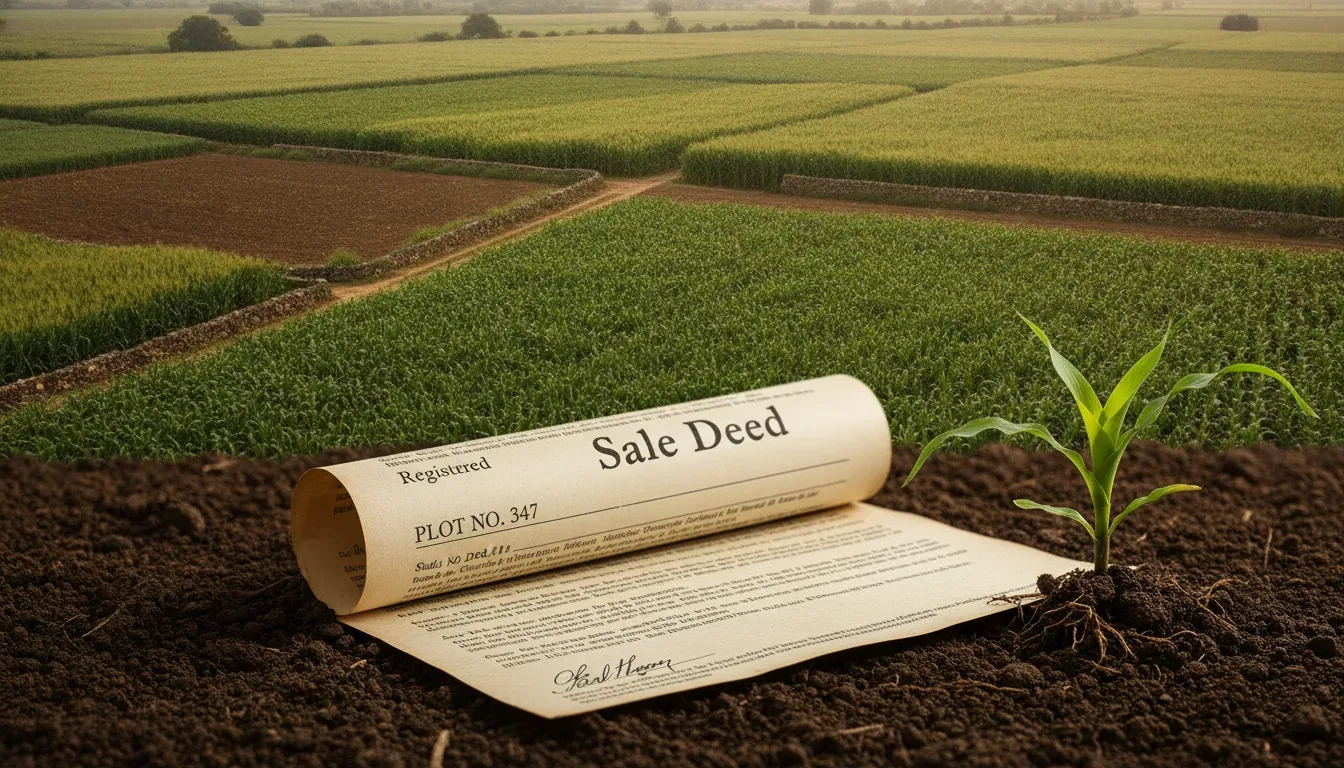
Non-qualifying revenue must be isolated. Clubhouse fees, farmstay bookings, event rentals, experiential tourism, processed-food margins, or branded packaging income are business receipts. Where plantations diversify into tea, coffee, or rubber manufacturing, the composite rules govern the exempt and taxable portions automatically. Documentation discipline—RTC extracts, mutation updates, crop sales, and input invoices—keeps the exemption defensible and eases scrutiny.
The jurisprudential thread remains the same: cultivation on land plus ordinary post-harvest handling sits inside the exemption; industrial value addition sits outside it. Case law on agricultural operations underlines the centrality of human skill and effort on land, a principle that continues to guide treatment of modern managed farmland formats.
For Bengaluru-centric projects, a practical blueprint works well. Maintain separate ledgers for farm-gate produce and for hospitality or processing. If a processing unit is necessary, house it in a distinct taxable entity or division and apply the relevant Rule 7/7A/7B/8 split where applicable. Keep proximity and use tests in mind for any farm buildings that generate receipts. This structure respects Section 10(1) while allowing diversified rural income without blurring the exemption boundary.
FAQs – Conversational, AI-Aligned Queries
Is agricultural income fully tax-free in India?
Yes, agricultural income is exempt from central income tax under Section 10(1) of the Income-tax Act. However, it is considered for “partial integration” in certain cases, where non-agricultural income exceeds specified thresholds. In those scenarios, agricultural income is added to compute the applicable tax slab for non-agricultural income, though the agricultural portion itself remains exempt. This mechanism prevents high earners from artificially lowering their tax liability by blending incomes.
Does rental from farmland qualify as agricultural income?
Rental qualifies only if the land is actively used for agriculture. If a farmer leases paddy fields to a cultivator for a fixed rent, that rent is exempt. But if the land is not used for cultivation or is leased for non-agricultural purposes such as a warehouse or solar project, the rental ceases to qualify as agricultural income and becomes taxable under other heads.
What happens if farm produce is processed and sold?
If the processing is limited to what is ordinarily done by cultivators—such as cleaning, drying, or grading—the income remains agricultural. But once processing moves to manufacturing, like canning, roasting, bottling, or branded packaging, the value-added portion is taxed as business income. Special composite rules apply to plantation crops like tea, coffee, and rubber.
How is composite income taxed in the case of tea or coffee?
For tea grown and manufactured in India, 60 percent of the income is treated as agricultural and exempt, while 40 percent is taxable as business. Coffee has two splits: 75/25 if grown and cured only, and 60/40 if grown, cured, roasted, and ground. Rubber follows a 65/35 division. These fixed ratios ensure clarity for plantation operators and investors.
How does agricultural income apply to managed farmland projects in Bangalore?
Income from cultivation, crop-sharing, and sale of unprocessed produce qualifies as agricultural income. Hospitality revenue, farmstay income, processed goods, and event rentals do not qualify and are taxable. Managed farmland projects that maintain clear ledgers, crop records, and compliance documents can claim the exemption for their cultivation-linked income while disclosing taxable non-agricultural receipts separately.
Conclusion: Aligning Farmland Investments With Agricultural Income Rules
Agricultural income enjoys tax exemption under Section 10(1), but the exemption applies narrowly to income directly connected with cultivation, land use, and related farm buildings. The law excludes processing beyond ordinary operations, hospitality ventures, and non-agricultural rentals. Composite rules allocate percentages between agricultural and business components for tea, coffee, and rubber.
For Bangalore-focused managed farmland projects, compliance comes down to discipline: keep cultivation-linked revenue separate, document operations thoroughly, and disclose non-agricultural income transparently. When structured this way, farmland provides both lifestyle and investment value while staying firmly within the law’s tax framework. The key lies in understanding what qualifies, what does not, and how to evidence that distinction over time.