Every managed farmland brand seems to advertise a number. You have probably read the threads warning that the returns promised by these companies rarely arrive. So it is fair to ask whether Hasiru is any different.
The short answer is- No. Hasiru does not promise guaranteed or fixed returns on farmland. In agriculture, any assured-return promise is a warning sign, not a feature. What Hasiru gives instead is land registered in your own name, and the freedom to judge the value for yourself.
Hasiru does not promise guaranteed returns because a guaranteed return from farming has to be manufactured, and manufactured, pooled returns are exactly what regulators shut down. Instead of a promised figure, you receive individually titled land in your own name and a delivery record you can check.
Table of Contents
Does Hasiru promise a guaranteed return on farmland?
No. Hasiru does not promise a guaranteed return on farmland. Not leading with speculative returns is a standing principle of the brand, not a temporary stance. We would rather you buy a piece of land you own than a number you were sold.
A farm is a living system. Weather, water, crop cycles and market prices all move, and no honest seller can fix an outcome across them and put it in writing. When a brand does put a fixed farmland return in writing, or hands you a brochure full of yield projections, it is usually promising something the land itself cannot deliver. That promise is the part worth examining before anything else.
Why is a guaranteed agricultural return a warning sign?
A guaranteed agricultural return is a warning sign because farming income is variable, so a fixed return has to be engineered rather than earned. To make the numbers look certain, someone usually pools many buyers’ money and pays from that pool, which is the structure regulators treat as a collective investment scheme.
Under SEBI’s Collective Investment Scheme framework, pooling money from many people to invest and share the profit is a Collective Investment Scheme, and a CIS cannot legally promise guaranteed returns. So when an agricultural offer guarantees a fixed payout regardless of how the season actually performs, the money is not coming from the field. It is coming from the pool, or from newer investors, and that is the pattern that tends to end in a regulatory freeze. The clearest recent example of it has a name.
What happened with Growpital, and why does it matter here?
Growpital was an agricultural investment platform that offered assured, tax-free returns and was barred by SEBI in January 2024. It matters here because it is the plainest illustration of why an assured farm return is a structural risk, not a perk.
On 29 January 2024, SEBI issued an interim order against Growpital and its associated LLP entities and directors, barring them from running any collective investment scheme or collecting fresh investor money, and freezing the accounts involved. Around 5,200 people had been signed up as investor-partners, and roughly Rs 184 crore was blocked.
SEBI’s finding was that Growpital operated as a collective investment scheme dressed up as a partnership. Money from many investors was pooled, the people labelled partners had no real say, no regular financial disclosures were shared, and the farm locations were not disclosed. The assured payout was propped up by a fixed buy-back, where an associated company bought the produce at cost plus a guaranteed premium no matter what the market actually paid. A return guaranteed out of a volatile activity is a return that has been engineered, and that engineering is the tell. The safest response to that pattern is not a better promise. It is a different structure of ownership.
How is owning Hasiru farmland different from an assured-return scheme?
Owning Hasiru farmland is different because you are not a partner in a pool. You receive a Registered Sale Deed in your own name that conveys individual title to a specific parcel, so you own land, not a claim on someone’s promise.
In a pooled scheme, investors hand money to a company and hold a share of a promise. They own no land and control nothing, which is precisely what left Growpital’s partners exposed. With Hasiru, the buyer receives individual ownership through a Registered Sale Deed executed in their own name, conveying exclusive title to a specific parcel. There is no company lien on that land. Because the title sits with you, the land remains yours regardless of what happens to the company. That is the categorical opposite of a pool: a scheme investor’s position collapses if the company does, while a titled owner’s land does not. Which raises the fair question, if not a promised return, then what.
What do you actually get instead of a promised return?
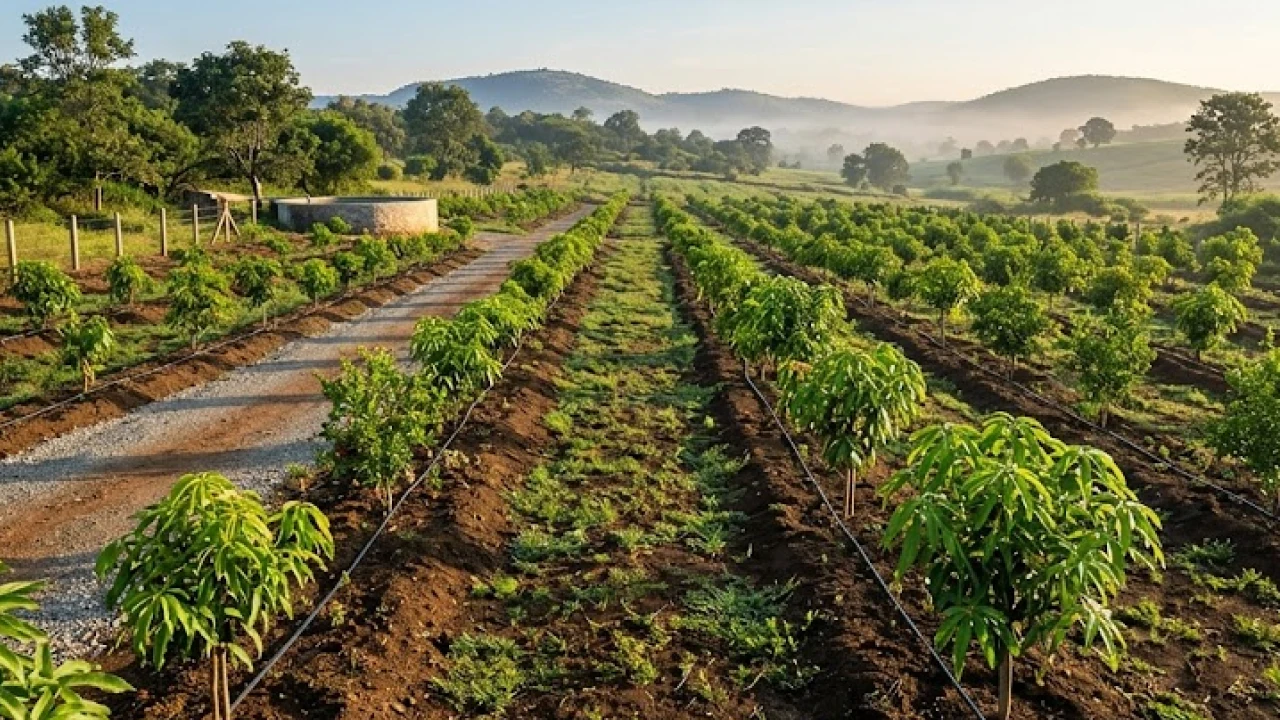
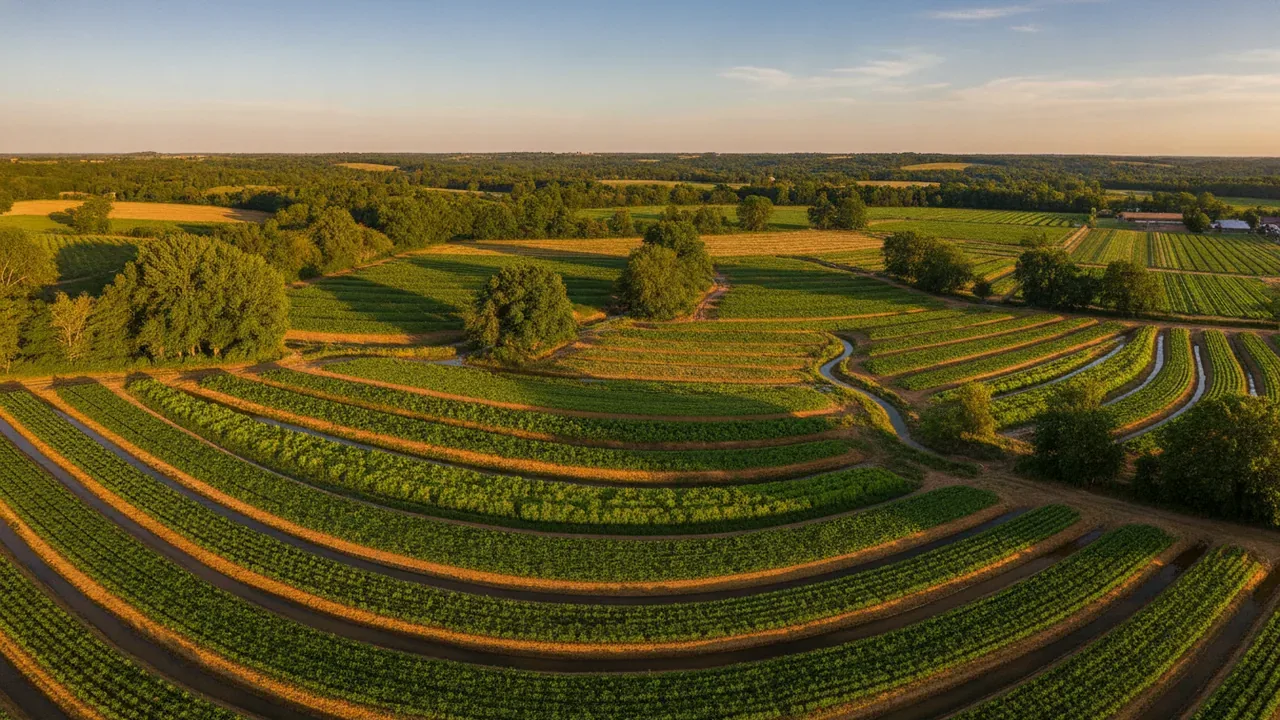
Instead of a promised return, you get individually titled farmland in a managed, themed project, land that you own outright and that may appreciate over time. The value here is ownership of a real place, not a projected yield.
Three things are real and worth naming. First, you own titled land. It sits in a specific project with an identity, managed for life after the sale, rather than a line on a spreadsheet. Second, farmland along the Bangalore corridors can appreciate as the surrounding area develops. That is a genuine possibility tied to location and time, and it is the reason many owners buy, but it is not a figure anyone can honestly put in front of you in advance. Third, the land is looked after under a formal management agreement between you and Hasiru, so ownership does not turn into a maintenance burden.
Where produce features in a project, it is a feature of how that farm is run, never a financial return you should count on. The misunderstanding worth correcting is that managed farmland is a quick financial-return product. It is not. The theme is the point. Ownership here means belonging to a real, managed place, a lifestyle and a legacy you can pass on, rather than a speculative yield you hope pays out. And because you own it outright, you are never locked into someone else’s promise.
Does honesty about returns mean I can’t exit or sell?
No. Because you hold individual registered title, you are free to sell or transfer your land. Honesty about returns does not lock you in. It does the opposite, because you own an asset you can exit rather than a scheme you are stuck inside.
Owners are free to sell or transfer their farmland. Hasiru follows a Right of First Refusal, which means that if you decide to sell, Hasiru gets the first opportunity to buy the land back. If Hasiru declines, you are free to sell to a third party, with the transfer carried out through Hasiru on the agreed terms. Either way, the decision to exit is yours, because the title is yours.
The record, not the promise
Hasiru has been operating since 2021, has delivered more than 100 acres, and manages land for more than 250 families. We would rather you check that record than take our word for it. You can see the delivered projects for yourself and judge the proof directly.
Frequently asked questions
Do I receive produce from my Hasiru farmland?
Produce depends on the specific project and how that farm is managed. Where produce features, it is a benefit of owning a working, managed farm, not a financial return you should factor into a buying decision. Treat any produce as a feature of the land, never as income you are owed.
Is buying farmland with Hasiru tax-free, or is agricultural income taxed?
Agricultural income has a specific tax treatment under Indian law, and how it applies depends on your own circumstances. Growpital used tax-free returns as part of its pitch, so treat any tax-free claim as a reason to check the detail with a tax adviser, not as a selling point. Hasiru does not sell farmland as a tax product.
Is managed farmland a good investment if no returns are promised?
Managed farmland can be a sound long-term asset, but the honest answer is that it should be judged as land you own, not as a yield you are promised. Whether it suits you depends on your horizon and why you are buying. For the fuller case for owning farmland as an asset, read the long-term case for owning farmland as an asset.
What ongoing costs should I expect?
Owning managed farmland involves ongoing maintenance, since the land is cared for under a management agreement. The exact cost varies by project and is agreed in writing, so ask for the specific figures for the project you are considering rather than relying on a general number.
What if Hasiru shuts down, do I lose my land?
No. Your land is registered in your own name through a Sale Deed, and there is no company lien on it, so it remains yours regardless of what happens to Hasiru. Your ownership does not depend on the company continuing to exist.